Why AMD is buying World Labs, the startup founded by AI ‘Godmother’ Fei-Fei Li
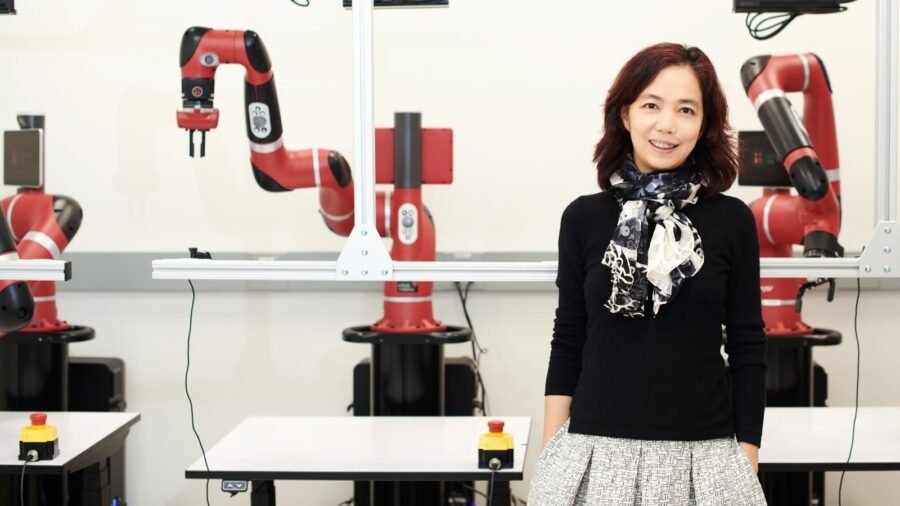
Born in Chengdu, China, Li moved to the U.S. at age 15 to study physics and computer science. She was admitted to Princeton University, where she earned a degree in physics. She later earned a Ph.D. in electrical engineering from the California Institute of Technology.
Story continues below.
Subscribe to see fewer ads.
Li joined Stanford’s faculty and, in 2006, began working on an idea to build a massive visual dataset — millions of labeled images — to train computers to “see” the way humans do. By 2009, Li and her team, with the help of crowdsourced workers, had labeled 3.2 million images.
Time Magazine named Li its Person of the Year in 2025.
She co-founded the Stanford Institute for Human-Centered AI (HAI) and AI4ALL, a nonprofit focused on increasing diversity in AI. She was also awarded the Queen Elizabeth Prize for Engineering alongside Geoffrey Hinton and Jensen Huang.
In 2024, Li co-founded World Labs, a spatial intelligence AI startup developing “large world models” designed to understand, perceive, and interact with 3D environments. The company raised $230 million within four months at a $1 billion valuation. By February 2026, it had raised $1.23 billion in total. Its investors include Nvidia, AMD, Autodesk, Andreessen Horowitz, and NEA. World Labs has since launched its first commercial product, Marble.
Story continues below this ad
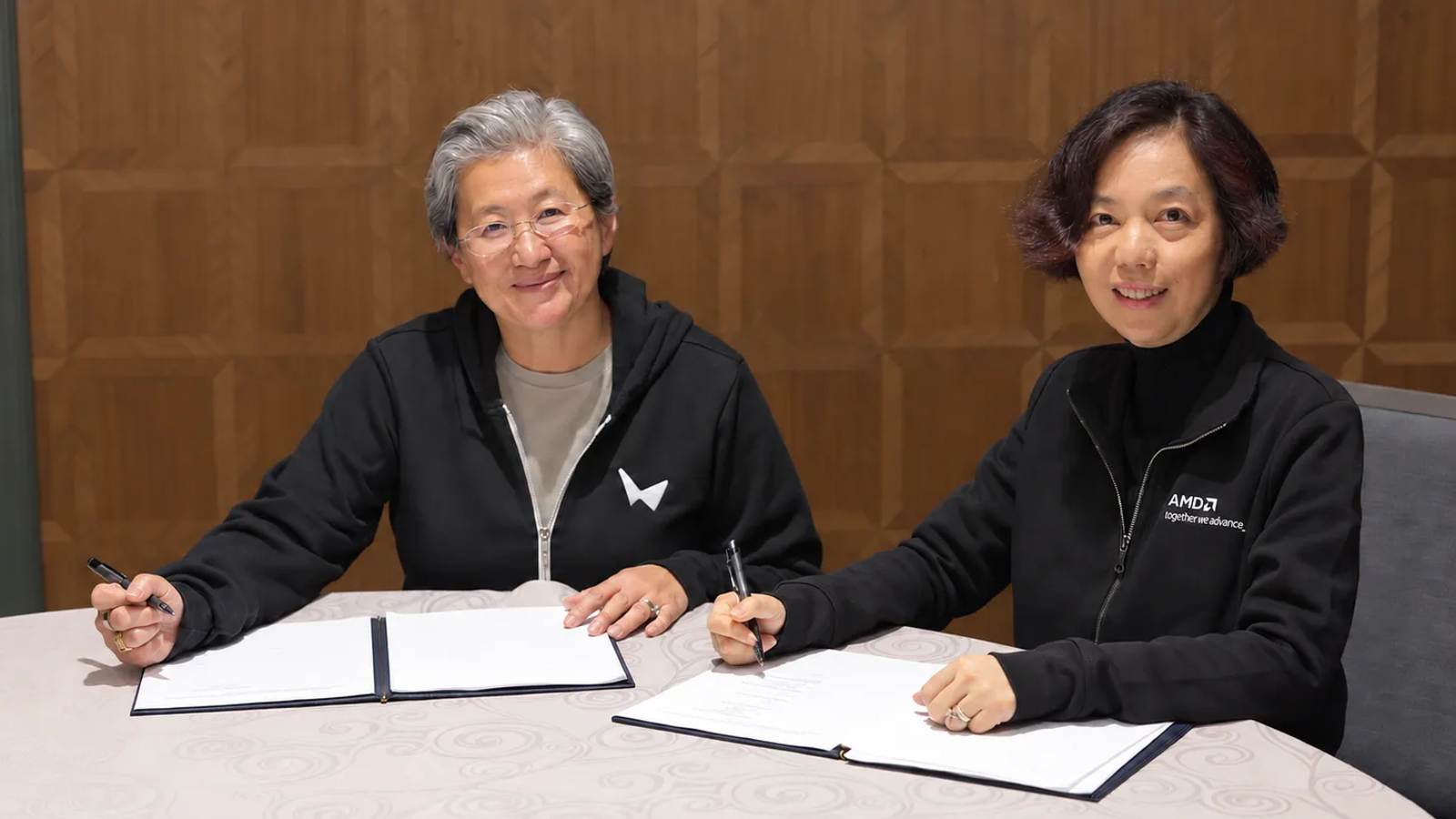 AMD CEO Lisa SU (left) and Fei-Fei Li (right).
Why is AMD buying Li’s World Labs?
For years, AMD is known for designing chips used in laptops and gaming consoles such as Sony Corp.’s PlayStation 5 and Microsoft’s Xbox. However, under CEO Lisa Su AMD has started to gain momentum as the chip giant. Its Helios rack-scale systems have become a strong rival to Nvidia’s Grace Blackwell and Vera Rubin Systems, with Microsoft, Meta, Oracle and OpenAI signing up as clients and committed to AMD’s AI chips in data centers. In fact, AMD expects its data center revenue to more than double by 2027, with revenue from AI graphics processing units (GPUs) growing well over 100 per cent.
However, in the fast growing market for artificial intelligence, owning a tech stack is even more important. As long as there is a need to consume more compute, who controls the frontier model development also comes into the play. To maintain the growth and become relevant, AMD’s acquisition of World Lab is part of the strategy. Right now, frontier models are owned by OpenAI, Anthropic and others.
World Labs has developed a world model, which can be used to simulate 3D environments from text, videos and panoramas. The company’s stated mission is “spatial intelligence”: foundation models that, in its words, “perceive, generate, reason, and interact with the 3D world.” Li laid out the thesis in her November 2025 essay From Words to Worlds.
The question, then, is: What will AMD gain by acquiring World Labs?
Story continues below this ad
The answer is that World Labs could help AMD develop robots and other forms of physical AI. AI models have made remarkable progress and appear increasingly humanlike in their ability to generate images, text, and video when prompted. However, so far, these algorithms have largely remained confined to the digital world rather than the physical, three-dimensional world.
What AMD and World Labs could seek to develop together is physically intelligent AI: systems capable of perceiving, understanding, and navigating the physical world. That could pave the way for robots and other physically grounded AI applications. But achieving that won’t be easy.
The current generation of AI models is trained primarily on text, but LLMs aren’t designed to pilot robots, drive autonomous cars, or perform actions that require physical precision. Recognising the shortcomings of existing LLMs, Li’s startup is working on a different class of AI: world models that can understand and navigate the physical world.
 Physical AI is the next big thing in tech.
Right now, both AMD and World Labs haven’t disclosed what exactly they are working on but the lab’s next-generation world models may help AMD to improve its chips and make them ready to be used in robots and physical AI applications.
Robotics has already become Silicon Valley’s most decisive push into the physical AI boom. There is growing interest in commercialising humanoid robots that can move their mechanical bodies like humans and be deployed in homes and factories. China currently leads the race in humanoid robotics and is well ahead of the US.
Story continues below this ad
Li is taking charge as AMD’s chief scientist and an executive vice president at the company. In her post after the deal was announced, Lei said that her goal is to make a leading frontier research organisation.
“Together, we are committed to building out an end-to-end open AI ecosystem spanning hardware, software, platforms, and widely accessible open models,” Li wrote on Linkedin.

Buying a laptop in 2026? Here’s why the right budget isn’t the cheapest one
By Sohail Khan · 29 Sep
10 best wireless headphones for gym: Comfortable earbuds and neckbands for active workouts
By Sohail Khan · 29 Sep
Apple releases iOS 27.0.1 update to fix iPhone 18 Pro camera and UI issues
By Sohail Khan · 29 Sep
Leave a Reply