Like students of the past, Gen Z is telling truth to power — government should listen
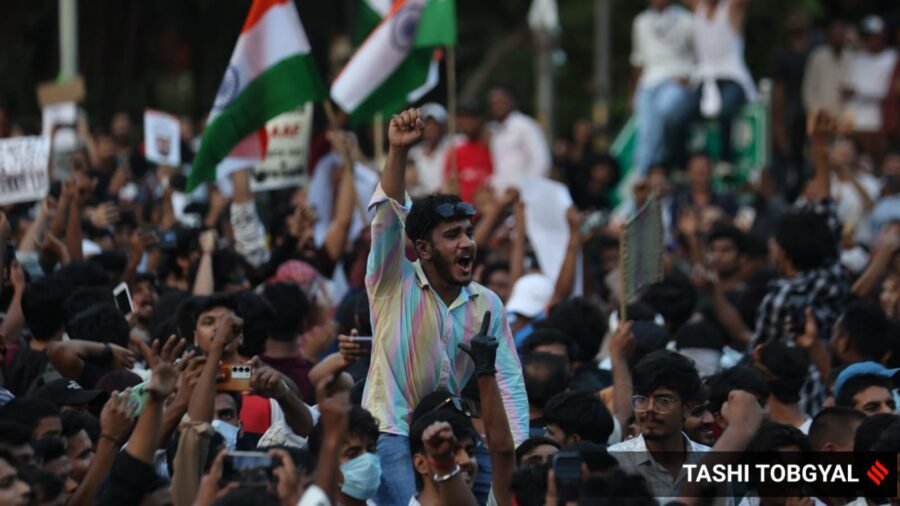
On many occasions since Independence, India has witnessed student disenchantment and turmoil. No two periods of history are the same. Each such moment is rooted in the issues of concern and contemporary challenges of the time.
Dissent is an integral part of democratic politics, and the right to protest is a fundamental political right. The 2026 uprising by India’s students following the NEET exam paper leaks and the government’s failure to respond with the required sensitivity promptly aggravated the situation. This has been a defining moment and a wake-up call.
Advertisement
The sons and daughters of India, overwhelmed by anxiety and concerned about the future, stood up in unison with courage and conviction to speak truth to power, made the government bend and had their voices heard to force political accountability. The blanket of fear and intimidation enveloping society in recent years was bravely lifted. In their unity, students rejected the false lines of division on caste, language, region and religion. It is refreshing and reassuring to see that India’s youth are worthy inheritors of the legacy of the founding fathers of the Republic and an inclusive constitutional democracy.
The Cockroach Janta Party (CJP) originated as a satirical online response to a belittling comment. The authoritarian and stubborn approach of the government, carried away by years of unchecked power, was seen in its resistance to the demand for Education Minister Pradhan’s resignation. This was a serious mistake.
The movement was leaderless and organic. The protests were spontaneous and rapidly transformed into a mass movement binding students across the length and breadth of India. Both the government and the BJP may be relieved that the movement did not have a charismatic leader with moral authority like Jayaprakash Narayan in the 1970s.
Advertisement
This was an outpouring of pent-up resentment, despair and anger among Gen Z over deep-rooted social and economic grievances: These included outrage against a broken education system, rising youth unemployment, with 30 per cent of graduates jobless, and yawning inequality.
The setting up of a high-powered committee under Nandan Nilekani and the enactment of strong laws alone may not suffice. There is no simplistic solution to fix a systemic collapse of this magnitude. In response to the 2024 NEET-UG paper leak, a high-level committee chaired by a former ISRO chief was constituted and strong laws were enacted. It did not deal with the problem, and the CBI filed a closure report in the only case filed before the fast-track court.
A technological fix alone will not help. For reforms to succeed, the underlying causes have to be addressed. Stakeholder consultations are essential to make the reform process democratic and meaningful. The views of students, teachers, and subject experts should be received with an open mind. As education is on the Concurrent List, states have a critical role to play and should be consulted. Education reforms should lead to a renewal and restoration of both the integrity and credibility of the system and help regain the lost trust and confidence.
Democracies are dynamic and need to adapt and change. India has seen youth and student uprisings after Independence for reforms, rights and change to meet the challenges of that time.
After the 1968-69 student revolt in the universities of Europe, Indian campuses erupted in 1972 demanding education reforms, jobs, and elected university bodies with adequate student representation.
As a 19-year-old student activist and participant, I saw the government’s response and the administration’s handling of the protests back then. Initially, it was almost stereotypical: routine police restrictions on rallies and marches; gheraos of VCs and campus shutdowns led to the detention of leaders.
As the strike continued into the second week, the central government reached out to students. Prime Minister Indira Gandhi called a meeting in Delhi and met a representative group of over 60 leaders from different universities. She listened to them patiently for almost four hours in a spirit of accommodation. Genuine demands were considered and accepted. The strike was called off and normalcy was restored. That was truly an overwhelming experience.
Two years later, in 1974, the Navnirman Andolan by Gujarat students and the JP-led students’ agitation in Bihar were defining moments of Indian politics, resulting in the fall of the Gujarat government and the eventual toppling of PM Indira Gandhi and the Congress government.
The moral force of a peaceful democratic protest cannot be underestimated. The use of disproportionate force calls for course correction. Orchestrated statements and the vilification of protesters for a few aberrations will be counterproductive. This is the time to heal and revisit the protocols of crowd management and control in civilian protests by police and paramilitary forces. The police have an important duty to perform. Students and police cannot be perceived as combatants in a conflict. The response has to be humane and in sync with prevailing practices in all mature democracies. Violence, pellet guns, vulgarity and abuse cannot be accepted or endorsed.
India has a demographic dividend with a large working-age population. It is imperative to harness that abundant energy and potential through education, skilling and creation of employment opportunities. India is at an inflexion point of history and must seize the opportunity.
The writer is a Congress leader
The paradox of de-Sinification in global production
By Sohail Khan · 28 Sep
Letters to The Editor — September 28, 2026
By Sohail Khan · 28 Sep
Kashmir as India’s gateway to Eurasian opportunity
By Sohail Khan · 28 Sep