Just Like That: 50 years on, why Mukesh’s voice still still resonates today
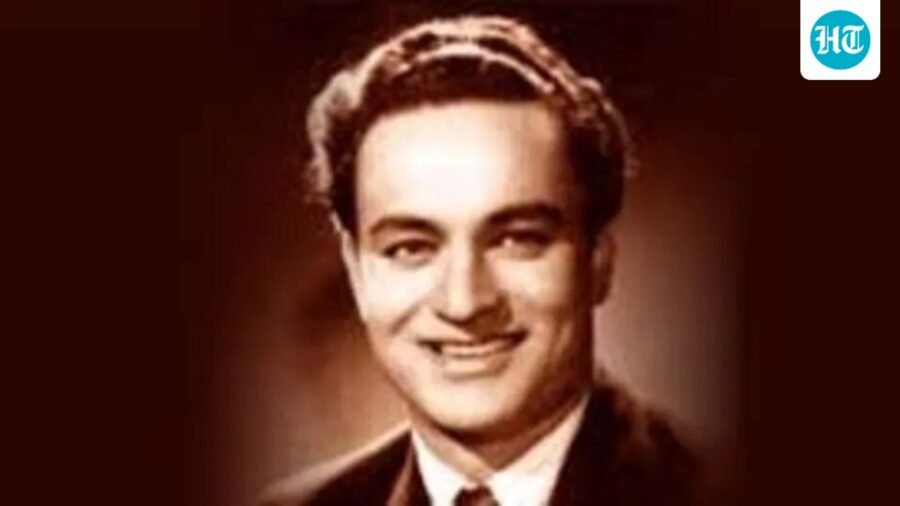
Fifty years after his death, legendary singer Mukesh’s soulful voice, timeless songs and emotional depth continue to resonate with generations of listeners.
Published on: Aug 30, 2026, 06:00:30 IST
Prefer HTon Google
Share via
Copy link
Fifty years after his death, Mukesh’s voice remains inseparable from the emotional memory of generations of Indians. Unlike singers celebrated for vocal virtuosity, Mukesh’s enduring appeal lay in the vulnerability, melancholy and warmth that made his songs feel deeply personal. From Awaara Hoon and Kabhi Kabhie Mere Dil Mein to Kahin Door Jab Din Dhal Jaye, his voice continues to resonate across generations.
Mukesh, whose full name was Mukesh Chand Mathur, was only 53 when he died of a heart attack in Detroit, America, while on a concert tour with Lata Mangeshkar on August 27.
What distinguished Mukesh was not the conventional grandeur of his voice. He did not possess the dazzling vocal virtuosity of Mohammed Rafi, the extraordinary range of Manna Dey, the sensual delicacy of Talat Mahmood, or the effortless versatility of Kishore Kumar. Mukesh's gift was different. His voice had vulnerability. It seemed to come from somewhere within us—from memories of first love, separation, loneliness, friendship, disappointment, hope, and that indefinable sadness which is inseparable from the human condition.
In many ways, my life—and I am sure that of millions of others—was entwined with his songs. As a college student, when I did my yoga, I used to often put on his seven-album rendering of the Ramayan, which even today has 6.6 million hits on YouTube. When I joined the Indian Foreign Service and went in 1976 to the National Academy in Mussoorie for training, every night after dinner, sitting in the lounge, I would ask Ram Lal, who was in charge of the record player, to play two songs sung by Mukesh: Woh subah kabhi tau aayegi, and Phir na keeje meri gustakh nigahi ka gila.
His song Kabhie kabhie mere dil mein khayal aata hai, could easily figure among the most romantic songs of Hindi films. I recall that one day, when I wanted Renu, my wife-to-be, to hear it, I did not immediately have the money to buy an EP album to play it. Surendra Singh, the cook in our home, lent me the money and went post haste to the market to procure it.
Mukesh’s advent into playback singing is itself an unlikely story. Born in Delhi on July 22, 1923, into a large family, he was not initially destined for the cinema. A music teacher who came to teach his sister noticed the young Mukesh listening from an adjoining room and imitating what he heard.
After a brief spell working in the Public Works Department, Mukesh left for Bombay in 1940, encouraged by his mother despite his father's reservations. In Bombay, his distant relative Motilal, the well-known actor, helped him. In those days, the distinction between actor and singer was not as clearly established as it later became. Mukesh therefore made his screen debut as an actor-singer in Nirdosh in 1941, opposite Nalini Jaywant. He sang in the film, but neither the film nor the song made an impact. The production company closed, and Mukesh was left without work. He tried several occupations, including selling dry fruits and film distribution.
There was another obstacle. Mukesh was deeply influenced by K. L. Saigal and, in his early years, imitated him. His first significant success, Dil Jalta Hai To Jalne De, from Pehli Nazar in 1945, bore the unmistakable imprint of Saigal. The story is almost legendary: Saigal reportedly heard the song and wondered when he had recorded it. But imitation could never become Mukesh's destiny.
His great partnership with Raj Kapoor firmly launched Mukesh. Mukesh became, in effect, Raj Kapoor's singing voice. From Awaara and Shree 420 to Sangam and Mera Naam Joker, he gave voice to Kapoor's screen persona—the romantic idealist, the vulnerable clown, the common man, the eternal wanderer. Mukesh reportedly sang more than a hundred songs for Raj Kapoor during his career.
Consider the astonishing range of his enduring repertoire. Awaara Hoon became an anthem of the wandering Indian, cheerful on the surface but carrying an undercurrent of existential uncertainty. Mera Joota Hai Japani combined innocence, patriotism and cosmopolitan self-confidence with remarkable ease. Dost Dost Na Raha gave friendship the poignancy of betrayal. Jeena Yahan Marna Yahan became almost a philosophical statement about the theatricality and transience of life. And songs such as Saranga Teri Yaad Mein, Sawan Ka Mahina, Kahin Door Jab Din Dhal Jaye, Ek Din Bik Jayega Mati Ke Mol continue to demonstrate how effortlessly Mukesh could move between romance, reflection and melancholy.
Then there are other songs that remain evergreen: Chandan Sa Badan, Jhoomti chali haws, Suhana Safar Aur Yeh Mausam Haseen, Jaane Kahan Gaye Woh Din, Kisi Ki Muskurahaton Pe Ho Nisar, and the hauntingly philosophical Kai Baar Yunhi Dekha Hai. For the latter, from the film Rajnigandha, Mukesh received the National Film Award for Best Male Playback Singer in 1974.
One of my great favourites is a ghazal sung by Mukesh, but not for films: Tere labon ke muqabil ghulab kya hoga. Fifty years is a long time in popular culture. Voices disappear, fashions change, musical conventions evolve and heroes are replaced. Yet, even now, when I hear Mukesh’s voice, I know his appeal will never diminish.
Pavan K Varma is an author, diplomat, and former member of Parliament (Rajya Sabha). The views expressed are personal
See Less

Think It’s Acidity? These Signs Could Point To Something Else
By Sohail Khan · 30 Aug
Left On Read? Why A Delayed Reply Can Send Your Mind Into Overdrive
By Sohail Khan · 30 Aug
Know What Your Daily Routine Says About Your Priorities
By Sohail Khan · 30 Aug
Leave a Reply