The IIT dream that turned into a scam
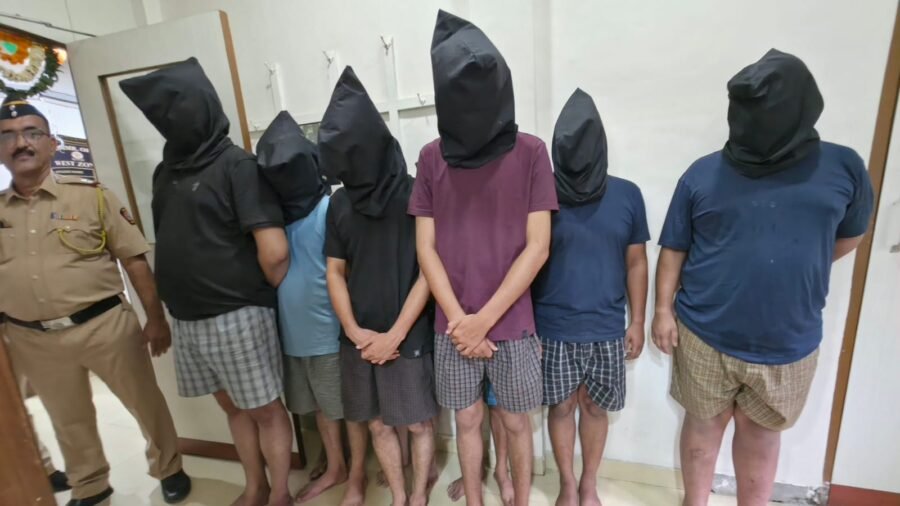
He had once gone to Kota with the same ambition as thousands of students who arrive there every year to crack the IIT entrance examination and become an engineer. Yuvraj Kumar Sharma alias Sonu Kumar, 35, did not make it to an IIT. He eventually studied civil engineering at MIT Academy in Pune, graduating in 2016. Years later, according to the police, he was running an operation that allegedly preyed on students with precisely the ambition he had once pursued himself.
What started as a coaching centre and an admission consultancy eventually became, police allege, a seasonal admission racket run through two bogus call centres in Pune. The operation would spring to life when engineering admissions began, find anxious parents and students through social media, promise seats in reputed colleges and then disappear before the admission lists were announced.
The racket came to light after a mother from Powai approached the police alleging that she had been cheated of Rs 16.5 lakh.
Story continues below this ad
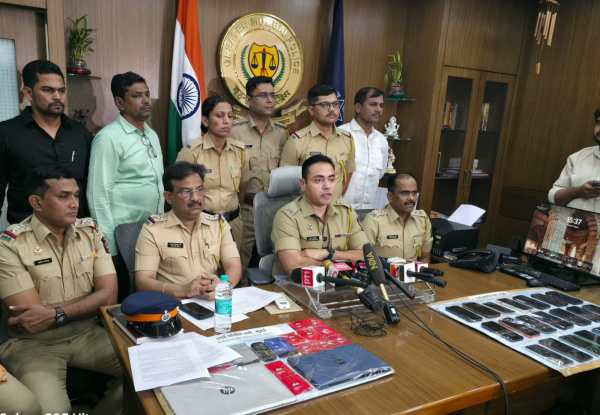 Police contacted the banks and managed to freeze Rs 16 lakh of the amount allegedly transferred by Swami. Following police intervention and a court order, the entire amount was returned to her, Deputy Commissioner of Police Datta Nalawade said.
Gracy Peter Swami, 47, had come across an Instagram account called “techorbit1111”, through which she was allegedly promised admission for her son to the International Institute of Information Technology, Hyderabad. She paid Rs 16.5 lakh, but the promised admission did not materialise.
Her complaint eventually led investigators to a much larger operation.
Police contacted the banks and managed to freeze Rs 16 lakh of the amount allegedly transferred by Swami. Following police intervention and a court order, the entire amount was returned to her, Deputy Commissioner of Police Datta Nalawade said.
Investigators then followed the digital trail.
Five mobile phones allegedly used by the suspects were identified. Their locations and other technical evidence led police to two rented apartments in Viman Nagar and Lohegaon and the third floor of City Vista Building in Kharadi. Raids were conducted on August 16.
Ten people were found working in the call centres.
Story continues below this ad
Police allege that they were not operating an ordinary consultancy. The group had built a system around the admission season, using social media to find potential victims and a team of engineers and students to make the operation appear credible.
THE ADMISSION SEASON SCAM
According to investigators, the group created paid Instagram and Facebook accounts using bogus SIM cards. They monitored posts and enquiries from students and parents looking for admission to engineering colleges.
Once a prospective victim was identified, the callers got in touch.
The pitch was that a seat could be arranged in a reputed engineering institute through a management or NRI quota. Meetings were arranged with students and their parents, mostly outside college campuses.
Story continues below this ad
At these meetings, police allege, one of the accused would pose as someone connected to the college administration. Money would then be collected in the name of admission fees, often in cash.
For parents who insisted on making an online payment, the group allegedly had another system.
Police said the accused opened a bank account in 2024 to receive such payments. After the money was deposited, they allegedly approached petrol pump employees and offered them commissions to withdraw or collect the money after transferring it through Google Pay or debit cards.
Then came the part that investigators believe helped the operation evade detection.
The call centres would shut down.
Story continues below this ad
The phones and SIM cards used to contact victims would allegedly be destroyed. The operators would disappear before the college admission lists were announced.
By the time parents realised that the promised admission had not materialised, the people who had taken their money had vanished. “It was an interstate admission scam operated through two bogus call centres by engineers, some of whom were from prominent institutes,” Nalawade said.
The operation, according to police, had been running since 2019 and targeted students looking for admission to colleges in Pune, Delhi and other parts of the country.
Police have so far identified 30 mobile numbers allegedly used by the syndicate and found links to at least six similar cases registered in Mumbai, Nagpur, Uttar Pradesh and Karnataka. Seven people have approached police so far alleging that they paid money but did not get admission.
THE MAN BEHIND THE OPERATION
Story continues below this ad
For Kumar, police say, the admission business was not unfamiliar territory.
Yuvraj Sharma grew up in Panetalav in Patna district, Bihar. His parents were engaged in agriculture, while his grandfather was a teacher. Good at mathematics, Yuvraj was encouraged by his grandfather to pursue higher studies and was sent to Kota to prepare for engineering entrance exams. While attending coaching classes there, he also taught mathematics to other students.
After returning from his unsuccessful IIT attempt, Kumar secured admission to MIT Academy in Pune in 2012 and completed his civil engineering degree in 2016.
Unable to find a job after graduation, he started a coaching centre in Pune. He taught engineering aspirants as well as students in their first and second years of engineering.
Story continues below this ad
While running the centre, police said, Kumar began helping students secure admissions through management quotas. He initially charged commissions of Rs 2 lakh to Rs 3 lakh for each admission.
In 2019, he opened an admission consultancy, helping students with applications and other admission procedures for a fee. At the same time, he was working in the sales department of a real estate company.
Between 2019 and 2022, police said, he helped several people, including the children of government officials and businessmen, secure admission to engineering colleges in Delhi, Uttar Pradesh, Pune and Bengaluru.
The names of those students have not been disclosed as the investigation is continuing.
But the consultancy allegedly changed substantially in 2022.
Story continues below this ad
Kumar began hiring engineers and college students, offering them internships and three month experience certificates. More people joined through references and the operation eventually expanded into two call centres.
The centres operated mainly between March and July, and sometimes until August, coinciding with the admission season.
Police also said Kumar recently shut down his coaching centre after the NEET examination paper leak brought increased scrutiny on coaching centres preparing students for competitive examinations.
From teaching students to allegedly deceiving them, the arc of Kumar’s career had come full circle.
THE MONEY AND THE TRAIL
Story continues below this ad
The police have seized assets worth about Rs 1.35 crore allegedly linked to the racket, including a BMW and a Jaguar. They have also seized 22 mobile phones, 23 SIM cards, a laptop, two hard disks and seven debit cards.
Another Rs 24 lakh allegedly linked to the fraud has been frozen in bank accounts.
All the accused were brought to Mumbai on August 16 and arrested in connection with the case. They were produced before court and initially remanded to police custody. They are now in judicial custody and lodged in Taloja jail.
For investigators, however, the case may still be far from over.
The police are now going through the seized devices, contact lists and data to establish how many students and parents were approached and how many actually paid.
THE PEOPLE WHO HELPED SONU RUN THE CALL CENTRES
The group arrested along with Yuvraj Kumar Sharma alias Sonu Kumar was a mix of engineers, engineering students and an MBA student. For some, the admission racket appears to have been a job; for others, police say, it was presented as an internship.
Devendra Singh, 27
A native of Lucknow, Singh completed his schooling and civil engineering degree from a prominent engineering college there. Police have identified him as one of the engineers working with Kumar in the alleged admission operation.
Saurabh Singh, 26
Originally from Ghazipur in Uttar Pradesh, Singh moved to Pune after junior college. He completed an electrical engineering degree from Sinhgad College between 2018 and 2022 and later joined Kumar’s operation. Police allege that he was among those involved in running the call centre.
Dipendra Prajapati, 28
Prajapati comes from Jamshedpur, where he completed his schooling and junior college. He later moved to Bengaluru to study mechanical engineering. His father runs a metal shop in Jamshedpur. Police say Prajapati was part of the group working from the Pune call centres.
Shubham Sharma, 24
Sharma is from Noida and had already completed his engineering degree when he moved to Pune about two years ago to pursue an MBA. He was in the second year of the course when he was arrested. Police allege that he was working with Kumar during the admission season.
Saurabh Ravindra Kumar, 21
Unlike some of the others, Kumar was still pursuing his engineering degree. He was in his third year at a college in Noida when he became associated with Sonu, according to police.
The engineering students
Tushar Saini, Satvik Singh and Pranjal Singh were classmates at an engineering college in Noida. All three were still students when they came to Pune.
Their families, however, appear to have had a different understanding of what they were doing there.
According to Satvik’s maternal uncle, Jitendra Kumar, Satvik and Pranjal were introduced to Sonu through their friend Saurabh Kumar. They were told that they were joining an internship and would receive three month experience certificates.
They returned to Noida in June for their examinations and later travelled to their native places before coming back to Pune. Their families believed they were in Pune for an internship and, according to the uncle, did not know that they were allegedly working at the call centre.
The SIM card link
Abu Ishtiyak Saif, 21, a resident of Versova in Andheri, appears to have had a different role from the others arrested.
Saif is a SIM card vendor and police allege that he supplied bogus SIM cards to Kumar and his associates, helping them maintain the multiple identities and phone numbers used in the alleged operation.
Police recovered eight active Jio SIM cards and several bank welcome kits from him.