Jaya Bachchan once shared why she quit acting: ‘One parent has to be there’ for children

When Karan Johar once asked Jaya Bachchan why she had stepped away from acting despite being at the height of a successful career, her answer revealed something far more complicated than a simple career decision. She recalled that Amitabh Bachchan had said he did not want a “9-to-5 wife“, and that as his career became increasingly demanding, she felt it was important for one parent to remain available for their children. “He said that I don’t want a 9-5 wife. What happened was that he got so busy…that I said one parent has to be there with the children. I remember Shweta (Bachchan Nanda; daughter) once telling me that when I was getting ready to go for a shoot, she said…’Where are you going? Don’t go… let papa go… You don’t go..It was terrible,” she recalled in Season 2 of Koffee With Karan in 2007.
The impossible guilt of modern parenting
Parents today are frequently caught between competing expectations. Working mothers can feel guilty at work because they are away from their children and guilty at home. After all, work still demands their attention. Fathers increasingly want to be emotionally and practically involved parents while simultaneously carrying expectations around professional and financial responsibility. “Stay-at-home parents can experience another kind of guilt altogether: I chose this. I love my children. Why, then, do I sometimes miss my previous life? Because loving what you have does not require pretending you never miss what you had,” reflected Delnna Rrajesh, a psychotherapist and relationship breakthrough coach.
Story continues below this ad
A mother missing her career does not love her child less. A father wishing he had more professional freedom does not regret becoming a parent. A caregiver feeling exhausted does not mean they resent the person they care for. “Emotional maturity allows two truths to coexist. This matters because emotions we believe we are “not supposed” to feel rarely disappear. They are more likely to become guilt, irritability, resentment or shame. Giving parents permission to acknowledge complexity can actually make family relationships healthier.”
Healthy sacrifice requires ownership. Instead of “I gave this up because of you”, the emotionally healthier position is: “I made the best decision I could for our family at that stage of my life.”
The difference is profound. In one, the child inherits the bill. In the other, the adult owns the choice. “Sacrifice becomes dangerous when love turns into accounting. Families inevitably require sacrifice. There will be nights when one person sleeps less, years when one career receives greater attention, periods when money is tighter and phases when illness, children or ageing parents require somebody to carry more,” shared Delnna.
Healthy relationships are not built by eliminating sacrifice. They are built by preventing sacrifice from becoming a permanent ledger.
Story continues below this ad
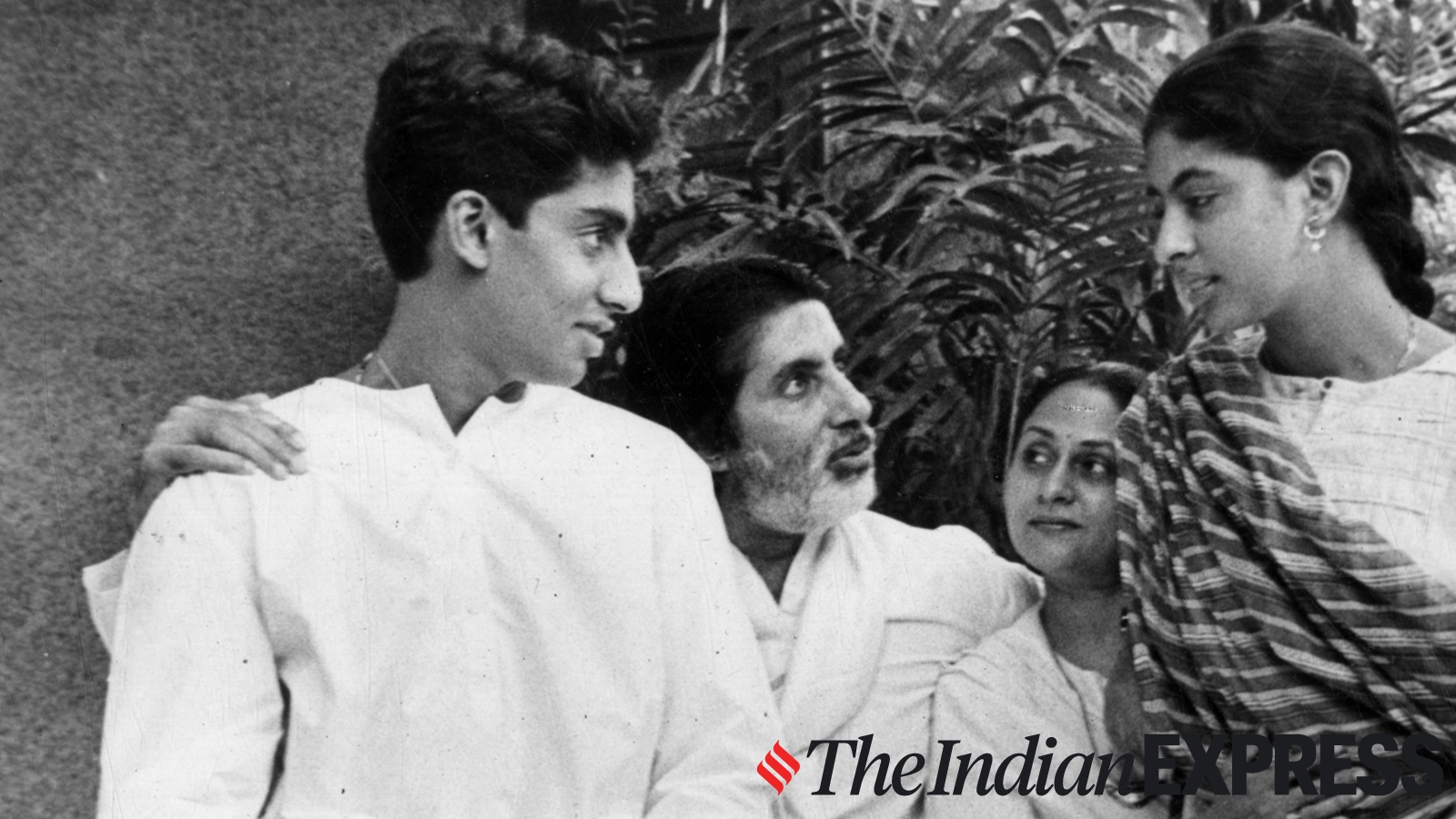 Amitabh Bachchan, Jaya Bachchan with son Abhishek and daughter Shweta.
A daughter watching her mother value her own dreams learns something about womanhood. A son watching his father cook, nurture and reorganise work around his children learns something about masculinity. Children learn relationships not primarily from our lectures, but from the lives they watch us live.
Why is it still so often the mother’s career that becomes negotiable?
We also need to move beyond framing childcare decisions automatically around women. The question should not always be, “Will the mother continue working?” A healthier family question is: “How are we going to organise work, caregiving, finances and family life between us?”
Sometimes the most sensible answer will indeed be that the mother takes a career break. In another family, the father may step back. Both may reduce working hours. Grandparents or professional childcare may form part of the support system. Some parents may continue pursuing demanding careers because that is what works for their family, described Delnna.
There is no single psychologically superior model.
A stay-at-home mother is not automatically less empowered. A working mother is not automatically less devoted. A father who becomes the primary caregiver is not less ambitious or masculine. A couple using childcare is not outsourcing love. “Families need solutions, not judgement,” Delnna reflected.
Story continues below this ad
Before either partner gives up something significant for the family, Delnna said that she would encourage couples to ask themselves: Am I choosing this freely, or am I afraid of disappointing someone? What am I gaining from this decision and what am I grieving? Is this sacrifice temporary, permanent or simply undefined? How will we protect the sacrificing partner’s identity, financial security, and future options? When will we review this arrangement?
“Love may ask us to sacrifice. Healthy love should never require us to cease existing,” shared Delnna.
‘Jaya Bachchan’ has been trending on Google for the past 24 hours.

Light on truth: on the Tamil Nadu G.O. and RTI
By Sohail Khan · 29 Sep
Tackling food loss and waste — India’s opportunity
By Sohail Khan · 28 Sep
Moon gardens are trending: 5 plants and easy tips to create one at home
By Sohail Khan · 28 Sep