Iraq rejects use of its territory for attacks
Benchmarks
Nifty24,252.0020.16
FEATURED FUNDS★★★★★
Motilal Oswal Midcap Fund Direct-Growth
5Y Return
24.08 %
Invest Now
Enter search text:
Business News›News›Defence›"We do not accept the use of Iraqi territory to attack any country": Iraqi President Nizar Amidi
Read Today's Paper
"We do not accept the use of Iraqi territory to attack any country": Iraqi President Nizar Amidi
Synopsis
"We are keen to prevent Iraq from becoming involved in the war. The country most affected by the war is Iraq. We do not accept the use of Iraqi territory to attack any country, and everyone wants weapons to be exclusively in the hands of the state. We speak frankly to all countries that Iraq comes first," he said.
 ANI
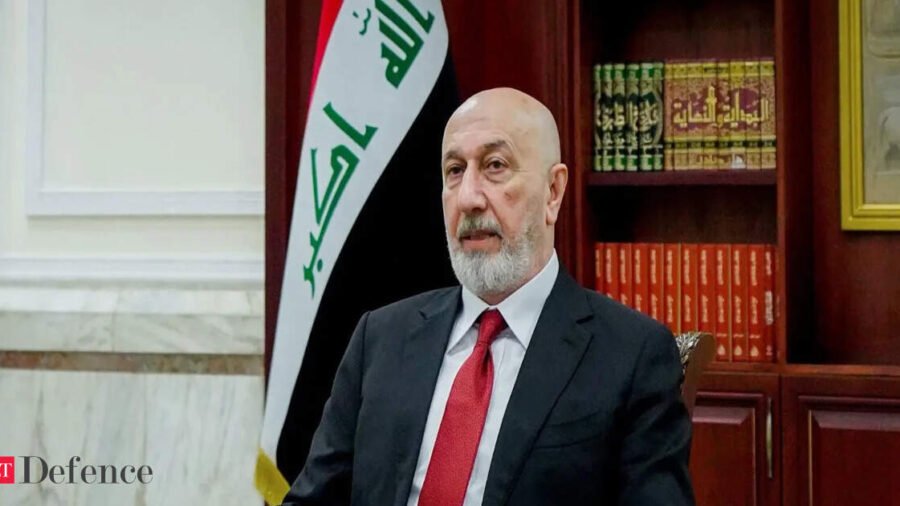
ANIBaghdad: Iraqi President Nizar Amidi said that Baghdad will not accept the use of its territory to launch attacks against any country, stressing that "Iraq comes first" and that all sovereign decisions are strictly guided by national interest.
According to state broadcaster Iraqi News Media (INM), speaking on the second day of the eighth Baghdad Dialogue Conference, the President emphasised the urgent need to prevent the nation from becoming further embroiled in broader conflict, noting that Iraq remains among the most affected by regional war.
Also Read: Iran says the world has accepted it has defeated the US
"We are keen to prevent Iraq from becoming involved in the war. The country most affected by the war is Iraq. We do not accept the use of Iraqi territory to attack any country, and everyone wants weapons to be exclusively in the hands of the state. We speak frankly to all countries that Iraq comes first," he said.
He also affirmed his belief that "the United States wants an agreement to end the war."
He further reaffirmed that the government is determined to confront security and economic challenges independently.
Also Read: Iran vows 'devastating' response as US threatens toughest ever economic hit
"Iraq is influenced by its regional environment according to its interests, and our decision is national. The government is determined to confront the security and economic challenges," INM cited him as saying.
Underlining Baghdad's diplomatic engagement with Tehran, Amidi highlighted key diplomatic engagements with Iranian Parliament Speaker Mohammad Bagher Ghalibaf, INM reported.
"We spoke with the Speaker of the Iranian Parliament and conveyed messages to Iran regarding reviewing the relationship between the two countries," he said.
He further emphasised that Tehran respects Iraq's sovereign autonomy, noting, "No Iranian official has requested a delay in the arms control file, and Iranian officials have confirmed that it is an Iraqi decision."
Noting that Iraq faces challenges in transporting oil, the President, according to INM, highlighted the significance of the critical waterway Strait of Hormuz in facilitating tankers.
"We have a problem transporting oil due to the lack of a national carrier. There is facilitation for some tankers carrying Iraqi oil in the Strait of Hormuz. The Strait of Hormuz has an impact on the entire world, not just Iraq," INM cited him as saying.
INM further reported that the President called for enforcing state control over weaponry.
"The constitution mandates that weapons be exclusively in the hands of the state, and the religious authority in Najaf also calls for this," the President remarked, urging armed groups to disarm. "Dialogue and understanding are necessary with armed factions to confine weapons to the state through a national Iraqi solution," he said, noting that former fighters who fought ISIS should "surrender their weapons and integrate with the security forces".
Regarding domestic governance, INM highlighted the President's focus on completing the cabinet and passing crucial laws, noting that "the government cabinet will be completed soon" and that "the most important law is the oil and gas law."
Earlier, Iranian Parliament Speaker Ghalibaf said that Iran does not interfere in Iraq's internal affairs and will continue to support any consensus reached by Iraqi groups and officials within the framework of the country's constitution and independence, IRNA reported.
Ghalibaf said that economic cooperation between Iran and Iraq will be operationalised during the upcoming visit of an Iraqi Chamber of Commerce delegation to Iran, where it will hold discussions with chamber experts and business leaders, according to IRNA.
Summarising his three-day visit to Iraq, Ghalibaf said discussions with Iraqi officials focused on strengthening bilateral ties and covered security, political, economic and cultural issues, adding that a comprehensive Memorandum of Understanding (MoU) on security and border security was signed between the two countries.
He also said the meetings indicated that Iraq was moving towards the final withdrawal of foreign and coalition forces that had remained in the country for years following the occupation of its territory and airspace.
Add 

(You can now subscribe to our WhatsApp channel)
(You can now subscribe to our WhatsApp channel)
Read More News on
Strait of HormuzIraq sovereigntyNizar Amidinational interest in IraqBaghdad Dialogue ConferenceIraqi territoryoil transportation issuesIraq President Nizar Amidi


Enter search text:
Stories you might be interested in
Rahul Gandhi rejects Manusmriti’s view on women
By Sohail Khan · 22 Aug
Assam cabs end blockade against Meghalaya vehicles
By Sohail Khan · 22 Aug
Ghalibaf: US put regional allies at risk for Israel
By Sohail Khan · 22 Aug
Leave a Reply