Exclusive | Tom King, Damon Lindelof on making Lanterns more than a superhero show
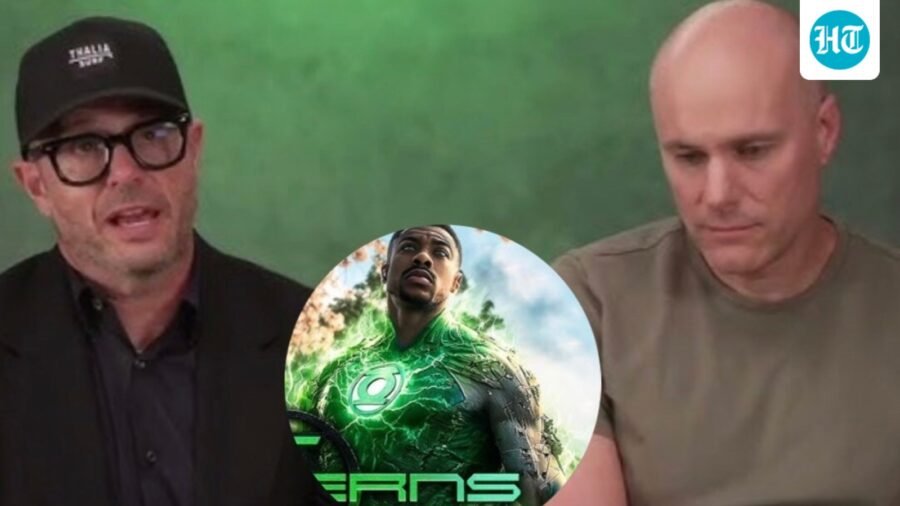
Lanterns co-writers Tom King and Damon Lindelof on making the DC series feel grounded while retaining the wonder of the superhero genre
Published on: Aug 22, 2026, 21:14:31 IST
Prefer HTon Google
Share via
Copy link
Writers Tom King and Damon Lindelof are aware that making a superhero series today requires more than spectacle. With Lanterns, the creators wanted to retain the awe and scale associated with Green Lantern while ensuring that the world, and the people inhabiting it, felt tangible enough for audiences to connect with. For King, that meant going back to something as basic as making viewers “feel the grass”.
“I think what I very much wanted to do was feel the grass,” King tells City, explaining his approach to adapting the comic-book mythology for the screen. “You see so much comic material and everything’s become, you know, can be done with computers and everything becomes green screen, everything becomes CGI, and you kind of stop believing in superpowers because they don’t seem real because there’s no scale,” he shares.
For the comic-book writer, creating that sense of scale was crucial to making the superhero elements feel powerful rather than artificial. “The first thing I wanted to do was to create scale, so that the powers felt powerful again, to bring this into the realm of the human,” he says. “Because if you’re not in the realm of the human, then the super isn’t super and you lose that sense of awe, wonder and just fantastic that I’ve always loved in superheroes.”
King wanted audiences to feel the physicality of the world before being confronted with the extraordinary. “I want to feel boot on the ground, I want to feel the crunch of the sand, I want to feel like these people are as real as people I know, so that when the super explodes on you, it explodes like the dragons in Game of Thrones and blows your mind,” he adds.
For Lindelof, however, grounding Lanterns was not simply about making its superhero elements more believable. It was also about ensuring the series could appeal to viewers who may not have grown up reading comic books. “For someone who was raised on a steady diet of comic books and has loved comic books all of his life, I also think that that phrase ‘it’s a comic book show’ can cut both ways,” he says. “For the people who love comic books, it’s very inviting, but for the people who don’t have that same childhood that I did or the same affinity, it can be very off-putting. It can feel like it’s childish or ridiculous.”
The answer, he believes, lies in the characters. “It doesn’t matter if they’re wizards at Hogwarts or they’re trying to get the throne in Westeros or they’re fighting over a magic ring that can manifest their imaginations. If you don’t care about the people, the show is not going to work,” Lindelof says.
That philosophy also informed how the makers approached the larger question of superhero fatigue. Lindelof believes audiences are no longer willing to embrace a project simply because it belongs to a popular genre. “I think people at times can use genre as a crutch,” he says. “If I make something in space, this much of an audience will come, so I don’t have to make it as good. I don’t have to try as hard because I get a guaranteed audience because it’s genre.”
According to Lindelof, audiences have become more discerning and now expect superhero stories to offer something beyond their mythology and spectacle. “You’ve got to give us something beautiful. You’ve got to give us something that connects. You’ve got to give us something great,” he says.
For him, that means starting with a much smaller question despite the scale of the world the characters inhabit. “You have to understand that you’ve got your arms around something very big, but you have to think very small and ask yourself this question: Why am I supposed to care about these people?” Lindelof says. “And how can their lives—which are super and fantastic, and they’re dealing with issues on a global scale—how can that be relatable to me?”
That, ultimately, is where King and Lindelof see the strength of Lanterns: not simply in the powers, mythology or cosmic world-building, but in making Hal Jordan and John Stewart feel like people audiences can invest in. As Lindelof puts it, the creators began by asking, “Who is Hal and what does Hal want? Who is John and what does John want?” Everything else, he says, follows from there.
See Less

‘Broke our knees’: Suriya draws parallels between his and Fahadh Faasil’s career struggles
By Sohail Khan · 28 Sep
Sunita Ahuja breaks silence on Govinda, Komal Rani: ‘I see that he is happy; God bless him’
By Sohail Khan · 28 Sep