India’s power system passed historic tipping point
Benchmarks
Nifty24,285.65-80.35
FEATURED FUNDS★★★★★
Motilal Oswal Midcap Fund Direct-Growth
5Y Return
23.43 %
Invest Now
Enter search text:
Business News›Industry›Energy›Power›India's power system just passed a historic tipping point
Read Today's Paper
India's power system just passed a historic tipping point
Synopsis
India’s clean energy capacity has crossed fossil-fuel capacity for the first time, with 331.7 GW of clean capacity versus 302 GW of fossil-fuel capacity, according to Ember and Global Energy Monitor data. However, coal still dominates electricity generation, supplying around 70% of India’s power, because coal plants can operate continuously while solar and wind depend on weather conditions.
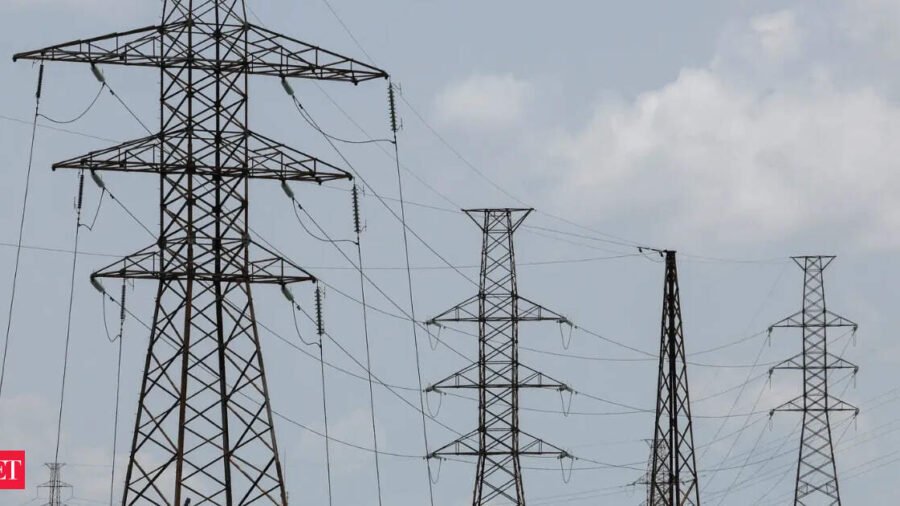
 Reuters
India's power system has crossed a threshold that tells a very different story from the one usually conveyed by electricity generation data.
India has long been portrayed as one of the world's great coal growth markets, and with good reason. Coal still accounts for roughly 70% of electricity generation and remains the backbone of the grid.
Yet a look at the country's installed capacity mix suggests something profound is underway beneath the surface.
According to the latest capacity data from Ember and Global Energy Monitor (GEM), clean energy sources now account for 331.7 gigawatts (GW) of installed capacity, compared with 302.0 GW for fossil fuels.
That capacity split gives clean power a majority share of India's utility power mix for the first time.
Clean Split
That milestone matters not because India has suddenly become a clean power system. It has not. Rather, it reveals a growing tension between what India is building and what India is burning.
The distinction is important because generation statistics describe today's electricity system, while capacity figures provide a window into tomorrow's.
Coal still dominates generation because coal plants can run around the clock, while solar panels and wind turbines produce only when weather conditions allow.
But the capacity mix reveals where capital is flowing, what infrastructure is being added and, ultimately, what type of power system India is trying to construct.
Viewed through that lens, India's transition appears considerably more advanced than many observers assume.
Solar Spotlight
The clearest evidence is solar power.
In 2010, India had just 0.07 GW of solar capacity. Today it has 211 GW, according to Ember. Solar alone now represents around 33% of total installed utility-scale capacity, making it by far the largest clean energy source in the country.
The extent of that expansion is difficult to overstate.
India's solar fleet today is almost as large as its coal fleet, which stands at 254.4 GW.
Solar capacity by itself is now larger than the entire Indian power system was as recently as 2011, when total installed capacity stood at 211.4 GW.
Even more striking is the pace of recent additions.
Between 2025 and mid-2026, India added 75.5 GW of solar capacity, compared with just 3.8 GW of coal capacity. Clean capacity expanded by nearly 80 GW overall during the period, while fossil capacity grew by only 5.4 GW.
That does not mean India has stopped building coal. In fact, coal capacity continues to rise and policymakers remain committed to expanding dispatchable power supplies to meet rapidly growing electricity demand.
The country's challenge is not replacing an existing electricity system but building enough generation to serve a fast-growing economy.
Growth Market
This is what makes India's transition different from many developed markets.
Europe's energy transition has largely involved substituting clean energy for fossil fuels. India's transition is occurring while overall electricity demand continues to surge.
As a result, coal can continue to grow in absolute terms even as it loses ground in relative terms.
The numbers illustrate that shift clearly.
Coal accounted for nearly 59% of installed capacity in 2014. By 2026, its share had fallen to 40%. Fossil fuels overall have declined from nearly three-quarters of installed capacity in 2000 to less than half today.
In other words, coal is still growing, but renewables are growing much faster.
That distinction is crucial because power systems change gradually and then suddenly.
For much of the 2010s, renewable additions chipped away at coal's dominance without fundamentally altering the structure of the grid. But several milestones now suggest the balance is beginning to shift.
The first was solar overtaking every other clean power source. Hydro was once the backbone of India's non-fossil fleet. Today, solar capacity is roughly four times larger than both hydro and wind power capacity.
The second is the emergence of a clean-capacity majority. Crossings of the 50% threshold are often symbolic, but they also tend to attract policymakers, investors and corporate planners.
Once a technology category becomes dominant, future investment decisions increasingly reinforce that preeminence.
The third milestone lies just ahead.
Solar capacity is now equivalent to around 80% of coal capacity. At current growth rates, solar could plausibly overtake coal as India's largest single source of installed capacity within a decade.
That would represent a powerful psychological shift, even if coal remained the largest generator of electricity.
And that points to the next stage of India's transition.
Next Steps
The question is no longer whether India can build renewable capacity at scale. It has already demonstrated that capability. The challenge now is converting capacity growth into generation growth.
That means investing in grid infrastructure, transmission links, storage systems and flexible power resources capable of balancing large volumes of solar output.
Success will be measured not by how many panels are installed but by how much coal generation they ultimately displace.
Generation data will therefore continue to paint India as a coal story for some time yet.
But capacity data increasingly tell a different tale.
They show a country whose future power system is taking shape far faster than headline generation figures suggest.
Coal may still dominate what India burns. But judging by what the country is building, the centre of gravity in the power sector has already begun to move.
The opinions expressed here are those of the author, a columnist for Reuters. Enjoying this column? Check out Reuters Open Interest (ROI), your essential new source for global financial commentary. Follow ROI on LinkedIn and X. And listen to the Morning Bid daily podcast on Apple, Spotify, or the Reuters app. Subscribe to hear Reuters journalists discuss the biggest news in markets and finance 7 days a week.
(The views and opinions expressed in this article are those of the author and do not necessarily reflect the views of the publication.)
Add 

(You can now subscribe to our WhatsApp channel)
(Catch all the Business News, Breaking News and Latest News Updates on The .)
…moreless
(You can now subscribe to our WhatsApp channel)
Read More News on
India power transitionsolar power growthclean energy capacityrenewable energy statisticscoal generation India
(Catch all the Business News, Breaking News and Latest News Updates on The .)
…moreless


Enter search text:
Continue reading with one of these options:
Limited Access
Free
Login to get access to some exclusive stories
& personalised newsletters
Login Now
Unlimited Access
Starting @ Rs120/month
Get access to exclusive stories, expert opinions &
in-depth stock reports
Subscribe Now
ET
Unlock Access to All Exclusives with ETPrime FREE TRIAL
15 Days Free: Unlock All ETPrime Exclusives, Market Tools & ePapers
Trial offer expiring in00 : 05 : 00
I'd rather pay ₹2599 now


Uh-oh! This is an exclusive story available for selected readers only.
Worry not. You’re just a step away.

Prime Account Detected!
It seems like you're already an ETPrime member with
Login using your ET Prime credentials to enjoy all member benefits
Log out of your current logged-in account and log in again using your ET Prime credentials to enjoy all member benefits.
Unlock ETPrime's Exclusive Stories Today!
Subscribe to gain powerful insights on business, stock market and industry trends.
Big Price Drop! Flat 40% Off
Student Only Offer
Already a Member? Sign In now
Already a Member? Sign In now
Already a Member? Sign In now
Offer Exclusively For You
Save up to Rs. 700/-
ON ET PRIME MEMBERSHIP
Avail Offer
Offer Exclusively For You
Get 1 Year Free
With 1 and 2-Year ET prime membership
Avail Offer
Offer Exclusively For You
Get 1 Year Free
With 1 and 2-Year ET prime membership
Avail Offer
Offer Exclusively For You
Get Flat 40% Off
Then ₹ 1749 for 1 year
Avail Offer
Offer Exclusively For You
ET Prime at ₹ 49 for 1 month
Then ₹ 1749 for 1 year
Avail Offer
Special Offer
Get flat 40% off on ETPrime
Avail Offer
Avail Offer
Claim NowAlready a Member? Sign In now
Need Assistance?
Connect with an ETPrime expert for personalized support and guidance
+91 9484700004
' + h3 + '
' + h4 + '
- ' + listing + '
What’s Included with

1Exclusive Insights That Matter
Uncover the truth with our investigative stories
Make strategic moves using the real-world case studies
Read industry-specific stories to identify emerging trends
Spot opportunities with in-depth insights that matter

Trump temper on H-1B visas is forcing Indians to do these things to stay put in US

What Adani’s US indictment means for India Inc’s overseas fundraising

Why veterans like Reliance, L&T are on acquisition spree? Aswath Damodaran has an answer.

Will China’s dollar bond sale in Saudi Arabia trump the US in financial world?

Huawei launches its own OS to compete with Google and Apple. But can it win beyond China?

The problem with lab grown diamonds

Why a falling rupee is a better option for the economy

A list of top 20 momentum stocks that have delivered massive returns in one year
2Invest Wisely With Smart Market Tools & Investment Ideas
Alpha Trade

Get daily trade ideas from SEBI-registered research analysts.
Investment Ideas

Grow your wealth with stock ideas & sectoral trends.
Stock Reports Plus

All-in-one stock research with Stock Score, peer comparison & key signals.
BigBull Portfolio

Get to know where the market bulls are investing to identify the right stocks.
Stock Analyzer
Check the score based on the company's fundamentals, solvency, growth, risk & ownership to decide the right stocks.
Market Mood

Analyze the market sentiments & identify the trend reversal for strategic decisions.
Stock Talk Live at 9 AM Daily

Ask your stock queries & get assured replies by ET appointed, SEBI registered experts.
3Stay informed anytime, anywhere with ET ePaper
ePaper – Print View

Read the PDF version of ET newspaper. Download & access it offline anytime.
ePaper – Digital View

Read your daily newspaper in Digital View & get it delivered to your inbox everyday.
Wealth Edition

Manage your money efficiently with this weekly money management guide.
4Times Of India Subscription (1 Year)
ePaper

Read the PDF version of newspaper. Download & access it offline anytime.
Deep Explainers

Explore the In-depth explanation of complex topics for everyday life decisions.
Health+ Stories

Get fitter with daily health insights committed to your well-being.
Personal Finance+ Stories

Manage your wealth better with in-depth insights & updates on finance.
New York Times Exclusives

Stay globally informed with exclusive story from New York Times.
5Enjoy Complimentary Subscriptions From Top Brands
Docubay Subscription

Stream new documentaries from all across the world every day.
Stories you might be interested in

Honda CB500 launched in India starting at ₹27.5 lakh, 3 variants unveiled
By Sohail Khan · 21 Sep
Why is Trump targeting International Criminal Court
By Sohail Khan · 21 Sep
NHAI introduces new rules for high-speed NHs
By Sohail Khan · 21 Sep