In an era of 10-minute deliveries, why weekly markets have become my ‘dopamine hit’
Long before 10-minute delivery bred a culture of dependency, weekly markets were a way of life. It’s been six years since I moved from Chennai to Delhi. And the weekly market has become my dopamine hit. I do not intend to cast aspersions on platforms like Blinkit or Swiggy Instamart, especially as a Gen Z who values convenience, because, trust me, they have saved my day on several occasions.
However, the ‘inconvenience’ of weekly markets in Delhi has become the only convenience in my life.
When one thinks of these markets, especially in the national capital, an image of a kind of place you went to because you had to, not because you wanted to, immediately fogs our brain. They are crowded, noisy, and unpredictable. There are no neat aisles, no air-conditioning, no shopping carts gliding effortlessly between shelves. Instead, vendors are calling out prices, people stopping abruptly in the middle of the road, e-rickshaws, famously known as tuk-tuks, squeezing past, plastic bags and shopping trolleys hanging from hooks, and vegetables piled into mounds that seemed to have a life of their own.
If I needed groceries, I thought, why would I voluntarily choose chaos? And then, somewhere along the way, the weekly market became one of my favourite parts of living in Delhi. It has become my small, oddly reliable dopamine hit.
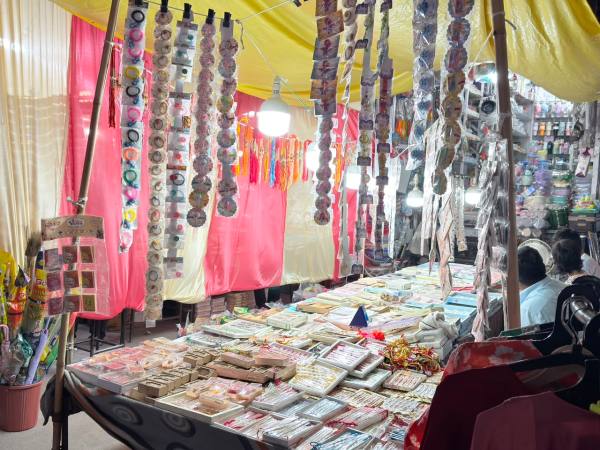 A rakhi stall ahead of Raksha Bandhan
Every week, I find myself making my way to the market with no great agenda beyond buying vegetables, fruits, perhaps some coriander, eggs, flowers or sometimes ceramic plates I didn’t know I needed until I saw them. And almost every time, I return home with more than groceries. I bring back conversations, observations, little stories, and the peculiar satisfaction of having negotiated three different prices for the same pair of earrings.
Perhaps that is the first thing I have learnt. What looks like inconvenience from the outside can actually be a convenience of another kind.
A supermarket or an e-commerce platform is convenient because everything is organised for you. The price is printed. You pick something up, put it in your cart, scan it, and leave. The same goes with delivery platforms. You order tea leaves and ginger for your kadak chai, and by the time you put the kettle on, you get a call saying, “Ma’am/Sir, main location pe hun.”
Story continues below this ad
What makes weekly markets different
However, when it comes to weekly markets, the produce changes with the season. The vendors change their arrangements. Prices fluctuate. A new seller appears. Someone has brought a particular variety of mangoes, tomatoes, or leafy greens. There is always something that wasn’t there the previous week.
That unpredictability is precisely what I enjoy. I think we have become accustomed to shopping being an almost entirely frictionless experience. We order groceries from our phones, choose a delivery slot and wait for someone to arrive at our doorstep. It is incredibly useful, particularly when you are busy.
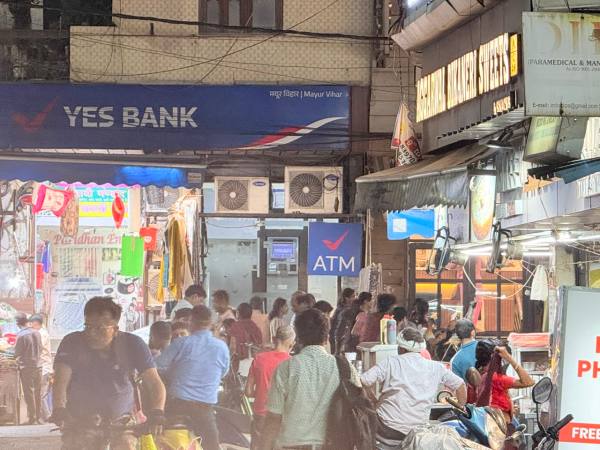 The weekly market operates differently
But there is something deeply satisfying about walking into a market and having to participate in the process.
You have to look at the produce. You have to ask where it came from. You have to decide whether the tomatoes are worth Rs 40 or whether you can get them for Rs 30 elsewhere. You have to remember what you bought last week. And, most importantly, you have to bargain.
Story continues below this ad
My bargaining skills were practically non-existent when I first started going to these markets. I would ask the price, hear the number and simply pay. Now, I have developed what I like to believe is a reasonably sophisticated bargaining strategy. The first price is never the final price, and the second price is also suspicious.
Now, I walk away, and this is the most important move. You don’t actually have to walk very far. You just have to create the impression that you are willing to. Occasionally, the vendor calls you back with a revised price. Sometimes he or she doesn’t, in which case you know you were asking for too much.
That strange little negotiation
There is a strange little negotiation taking place every few minutes, one that has nothing to do with formal economics but teaches you plenty about human behaviour. The vendor knows his produce. I know what I am willing to pay. We meet somewhere in the middle.
And then there are the vendors themselves. I have started recognising them.
Story continues below this ad
The woman who always has an enormous pile of exotic fruits such as avocado, globe grapes, dragon fruit arranged almost geometrically. The fruit seller who can tell you exactly which papaya will be ready to eat tonight and which one needs another two days. The man who somehow remembers what I–for him, Didi– bought the previous week. The person selling gajras who has an opinion on everything happening around us.
Their stalls are not just places of commerce. They are little stages. You see families working together. Someone is weighing the vegetables while another person handles the money. A child sits beside a parent doing homework. A husband and wife argue over the price they should quote. Someone is eating lunch between customers. Someone else is making a phone call to a supplier. And if they don’t have UPI, they ask the next vendor to accept an online payment for them.
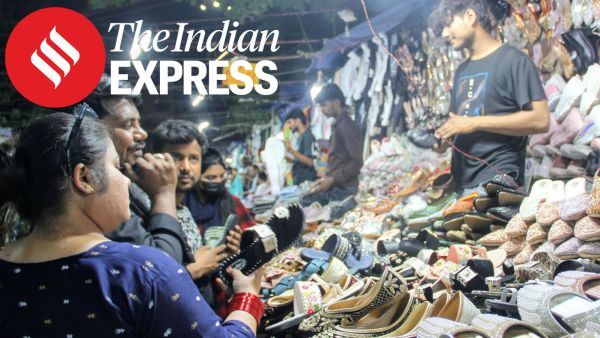 A shoe stall at a weekly market
And because the market is recurring, you begin to see fragments of people’s lives. Then some vendors are protective of you. “Didi, apna phone acche se rakho (Sister, keep your mobile phone safely”. One week, you hear that a vendor’s daughter has started college. Another week, you learn that someone has moved from another part of the city because the rent went up.
These are not dramatic stories. But perhaps that is what makes them so valuable. They are ordinary lives unfolding in front of you.
Story continues below this ad
I have also become fascinated by the people who come to these markets. There is something very particular about watching someone arrive with a tiny grocery trolley. You see them from a distance, slowly making their way through the crowd, trolley in tow, and you know exactly what kind of shopping expedition this is going to be.
There is an efficiency to these shoppers that I admire. They know exactly where to go, whom to buy from and what a reasonable price is. They don’t need to inspect every stall. They have their vendors, their routines and their shortcuts. You turn up to a random person and ask where to find the best kitchen tools, and you’ll find 10 people sharing recommendations.
I have started recognising the regulars too. The elderly couple who shop together. The person who arrives with a handwritten list, which is uncommon in the era of digital tools. The woman who buys vegetables for an entire household. The young man who looks completely out of place but is intensely focused on choosing the best, and often calls the woman of the house like a thousand times to reassure his choices.
And then there are people like me, who wander. Perhaps wandering is one of the pleasures of the weekly market. I don’t always know what I am going to buy. Sometimes I see something and decide that I should cook it. Sometimes I discover a fruit I haven’t eaten in months. Sometimes I buy something simply because it looks good.
Story continues below this ad
This is perhaps what I miss most in modern grocery shopping: the possibility of surprise. Online grocery shopping is designed around certainty. You search for what you want, find it and order it. And sometimes, these platforms make you spend on things you don’t need only to avoid the Rs 30 delivery charge.
The weekly market operates differently. You go looking for home decor and come back thinking about the sweet potatoes you saw. You go for groceries and end up having a ten-minute conversation with a vendor about the weather and the harvest. Some days you meet a vendor from Kashmir selling kurtis, and in between the bargaining and finalising your choice, you learn about the history of Aari work.
Tiny sense of achievement at the end
There is no algorithm deciding what you might like next. The market decides. And maybe this is why it feels like a dopamine hit. There is anticipation before I go, stimulation while I am there and a tiny sense of achievement when I return.
There is the pleasure of spotting particularly fresh produce. There is the amusement of overhearing conversations. There is the sensory overload of the colours, sounds, smells and constant movement.
Story continues below this ad
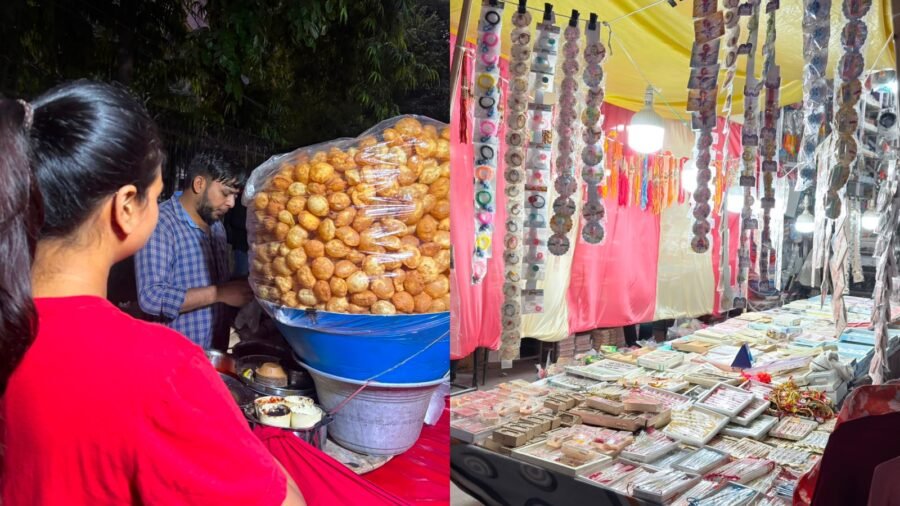
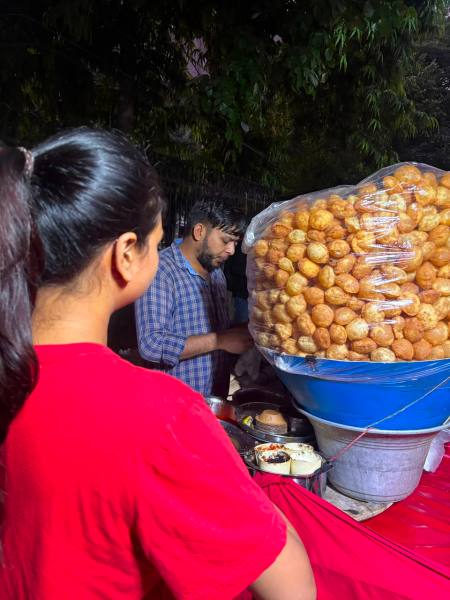 A pani puri stall at a Delhi weekly market
And there is the feeling of having briefly stepped outside the very controlled routines of urban life. Delhi, especially, can sometimes feel like a city where everything is happening at once and yet everyone is enclosed in their own bubble.
We move through the city without necessarily interacting with it. The weekly market disrupts that.
It forces you to be present. You cannot walk through it while completely absorbed in your phone. You have to look up. You have to move around people. You have to listen. You have to ask questions. You have to exist among strangers.
And there is something comforting about that. Perhaps I also like the market because it reminds me that food doesn’t simply appear in neatly packed containers at our doorstep. There are people behind it. Someone woke up early to bring them to the market. Someone is standing there for hours, waiting for customers. That awareness changes the way I shop.
Story continues below this ad
Convenience isn’t always speed
I find myself asking where something came from. I notice the seasons more closely. I understand that the Rs 10 I am bargaining over might matter considerably more to the person selling the produce than it does to me. It has also made me reconsider what we mean when we call something ‘convenient’. Convenience isn’t always speed. At times, it is proximity.
And convenience is knowing that every Monday, or every Wednesday, or whichever day your neighbourhood market sets, there will be a little world waiting for you.
An experience that is objectively more chaotic and time-consuming than online grocery shopping sometimes feels more pleasurable and rewarding. Dr Rimpa Sarkar, psychologist, PhD, Sentier Wellness, Mumbai, explained that such experiences engage far more of our senses and require active participation.
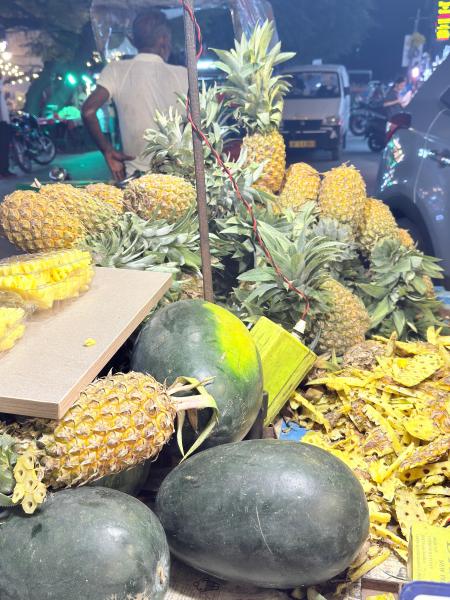 A pineapple ‘thela’ at a Delhi weekly market
“In a weekly market, we are seeing colours and people, smelling produce, touching things, listening to conversations, making choices and responding to unexpected situations. This sensory richness can make the experience more immersive than simply scrolling through an app. There is also a small sense of accomplishment in completing an everyday task ourselves, which can make something as ordinary as grocery shopping feel more engaging and satisfying,” Dr Sarkar said.
The expert also noted that bargaining and making purchasing decisions can create a sense of agency because we are actively influencing the outcome rather than simply accepting a price displayed on a screen. “That can contribute to the emotional satisfaction of shopping, although I would not necessarily classify it as retail therapy,” she said, adding that it can also be connected to adulting. “Managing money, making decisions, planning purchases and negotiating everyday situations can reinforce a sense of independence and competence,” Dr Sarkar said.
Further, she highlighted that novelty and discovery naturally capture our attention. Be it buying unusually good fruit or coming across something we did not intend to buy, such unexpected positive experiences can “activate the brain’s reward system.”
Markets create stronger dopamine response
“I would not necessarily say that markets produce a stronger dopamine response in every individual than online shopping, but the element of uncertainty and discovery can certainly make the experience more rewarding for some people,” Dr Sarkar added.
These small interactions also provide a form of social connection that is easy to overlook. The expert emphasised that these micro interactions can provide social stimulation without requiring deep relationships, especially for someone living in an increasingly isolated urban environment.
“Human beings are social creatures, and even brief positive interactions can contribute to a feeling of belonging and connectedness,” she said.
I don’t romanticise the weekly market completely. I go because, for an hour or so, the city feels less anonymous. Maybe that is my version of retail therapy. Just a weekly market, a list that I will inevitably ignore, and the small thrill of wondering what I will find this time. It is convenience for me and joy, too.

Fatty liver: 6 popular hacks rated from -10 to 8 by a gastroenterologist
By Sohail Khan · 23 Sep
350 hours for Rashmika Mandanna, 500 for Shakira: The making of two showstopping looks
By Sohail Khan · 23 Sep
I have voted for three decades. Why is my SIR incomplete?
By Sohail Khan · 23 Sep