IIT Kharagpur Director writes: What is an IIT for? At 75, it is time to ask again
By Suman Chakraborty
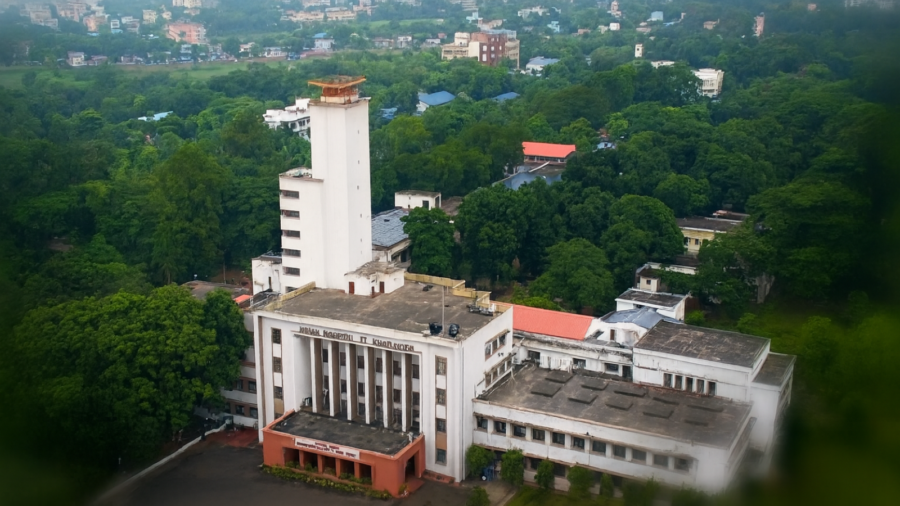
Seventy-five years ago, on August 18, 1951, India performed an extraordinary act of national imagination: It transformed a site of incarceration into a crucible of knowledge. Hijli — the hallowed ground that had borne witness to the freedom struggle — became home to IIT Kharagpur. A newly independent nation made a powerful declaration: Technology would not merely serve industry; it would serve nation-building. As we look towards the next quarter-century, the defining measure of excellence must change: Not simply how high an IIT rises, but how much of Bharat rises with it.
Advertisement
Top of the pyramid to strength of the pyramid
The IITs sit at the apex of India’s engineering-education pyramid, but an apex cannot claim excellence if the pyramid beneath it remains underserved. By 2047, every IIT should function simultaneously as a university and a national capability platform. IIT faculty must mentor networks of teachers, while IIT laboratories should offer structured access pathways to students and researchers across institutional tiers.
From teaching institutions to knowledge engines
Knowledge is increasingly created at the intersections — engineering and medicine, AI and agriculture, manufacturing and sustainability. Departments must remain pillars of deep domain expertise, but the walls between them must become porous. At IIT Kharagpur, the emerging ecosystem spanning medical technology and AI-enabled diagnostics, agriculture, advanced manufacturing, future energy, space technologies, entrepreneurship, research park-led industry engagement and grassroots living laboratories must converge into one institutional innovation pipeline.
JEE may be a door; it’s not a verdict
Alongside JEE, GATE, JAM and other established routes, channels recognising exceptional achievement through olympiads, innovation and grand-challenge competitions, sports excellence and other demonstrable capabilities deserve more exploration. Such pathways must be protected from capture by coaching and formulaic preparation. More fundamentally, a student who does not enter an IIT should not be denied access to IIT. IIT Kharagpur’s recently introduced Outreach Course Network can become a prototype of this new architecture.
Advertisement
The degree must change
In the 20th century, a degree certified what a graduate knew; by 2047, that proposition will be inadequate. AI will perform many routine tasks. Flexible architectures should allow students to traverse disciplinary boundaries without turning interdisciplinarity into an unstructured buffet. The IIT of 2047 must embrace an apparent paradox — that the more interdisciplinary the world becomes, the stronger the foundational disciplines must be.
Make students AI-powerful
Trying to make education “AI-proof” by shielding traditional assignments and examinations from AI would be much like trying to protect engineering drawing from CAD. The appropriate response is not avoidance but intellectual elevation. Every IIT student should acquire three fundamental capabilities: Understanding how AI works, knowing how to work intelligently with AI, and recognising when not to trust AI. Assessment must migrate from reproducing known solutions towards formulating unknown problems, critiquing machine-generated outputs and creating something that did not previously exist.
IIT must enter the school before the student enters IIT
India’s educational ecosystem cannot be repaired at age 18. The intervention must begin much earlier in schools — not by turning children prematurely into JEE aspirants, but by restoring curiosity, experimentation and the joy of asking questions. Every IIT must engage with a network of schools, as a permanent educational laboratory where faculty and students work alongside schoolteachers to develop inexpensive hands-on experiments, multilingual science resources, AI-enabled learning tools and contextual approaches. This is the philosophy of IIT Kharagpur’s new School-Connect programme.
Turn the campus into India’s technology testbed
A campus inhabited by tens of thousands is a miniature city in which almost every major technological challenge of contemporary India is present at a manageable yet meaningful scale. The IIT campus should become a living testbed for India@2047, where emerging technologies are subjected to the realities of everyday use. The same philosophy must extend beyond the campus, with surrounding rural communities, municipalities, hospitals, MSMEs, schools and grassroots enterprises.
Entrepreneurship, an academic outcome
For decades, an implicit hierarchy placed scholarship at the centre, industry engagement one step away, and entrepreneurship beyond the university’s boundaries. That is now obsolete. A student or faculty member who builds a responsible enterprise around a technological idea does not step away from scholarship but can extend its reach. Every significant IIT discovery should have a visible pathway towards translation, even though only a fraction will ultimately become commercially successful.
From brain drain to brain circulation
The old question was whether India could prevent its best students from leaving; the more consequential question for 2047 is whether Indian institutions can become sufficiently magnetic for the world’s best minds, ideas and opportunities. The vocabulary of “brain drain” itself needs to evolve, because in an interconnected knowledge economy, mobility need not signify loss if institutions are capable of converting movement into enduring intellectual connectivity.
IIT @2047: Change the definition of success
The IIT of 2047 must be a university without intellectual walls, a national research engine, an innovation foundry, an entrepreneurship platform, a teacher multiplier, a technological living laboratory, a global knowledge node and a public institution accountable to society. The deeper questions must be more demanding: How many teachers became better because an IIT existed? How many institutions became stronger because an IIT shared its capabilities? How many discoveries survived the test of the real world? How many communities gained better healthcare, energy, education and livelihoods? How many young people who never entered an IIT found knowledge, mentorship, infrastructure or opportunity because an IIT chose to reach them?
That must be the measure of our next 25 years: Not merely whether IIT Kharagpur becomes one of the world’s great universities, but whether Bharat becomes more innovative and more confident because IIT Kharagpur chose to think beyond itself.
The writer is director, IIT Kharagpur and Institute Chair Professor and J. C. Bose National Fellow

Don’t use this silver-cleaning hack on pearls, opals and these other stones
By Sohail Khan · 22 Sep

Samantha Ruth Prabhu’s pregnancy coffee raises a question: How much caffeine is safe?
By Sohail Khan · 22 Sep