Homeland for Sindhis now exists only in memories
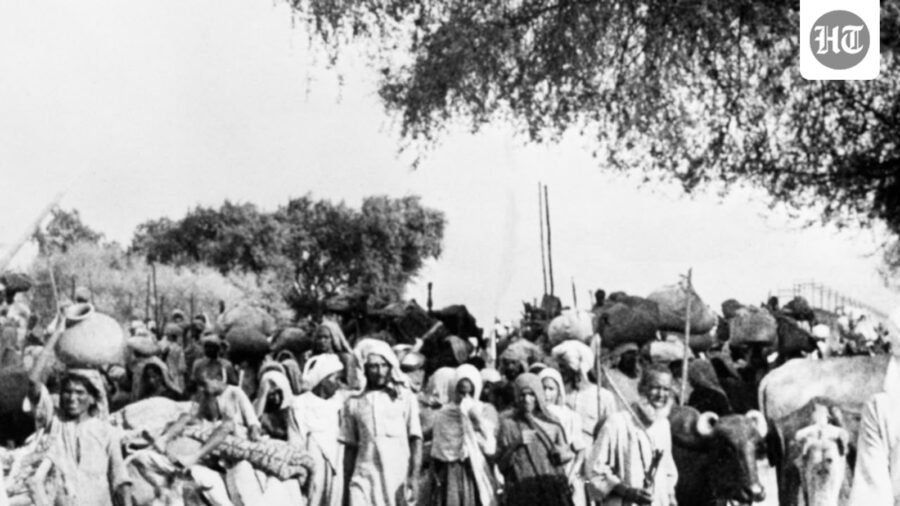
Sindh remained relatively calm during the initial months of the Partition. Large-scale violence did not erupt there until early 1948.
Updated on: Aug 26, 2026, 07:43:52 IST
Prefer HTon Google
Share via
Copy link
August is a cruel month for the children of Partition. The experience was remembered differently by those who witnessed it. In his childhood memoirs, prolific Sindhi writer and playwright Mumtaz Mirza recalls, “When we reached school in the morning, our Hindu teacher told us there would be no classes that day. By the next day, he would no longer be our teacher. Now, they will have to leave this country. We have a new country, Pakistan, and they will have to leave for India. After a while, the assembly bell rang, but there were no classes. Instead, sweets were distributed. We were happy to receive the sweets. At the end, we returned home very happily.”
Compared to Punjab, Bengal, Bihar, the North-West Frontier Province, the Central Provinces, and the United Provinces, Sindh initially remained relatively calm. Large-scale violence did not erupt there until early 1948. Their Sindh was eventually lost to many Hindus and Sikhs, despite surviving Partition.
For many Sindhi Hindus, however, Sindh was never the same after January 6, 1948. Violence was reported from Karachi, Hyderabad, Nawabshah and Sukkur, and other parts of the province, following the arrival of large numbers of refugees from Uttar Pradesh, Gujarat, and Rajasthan.
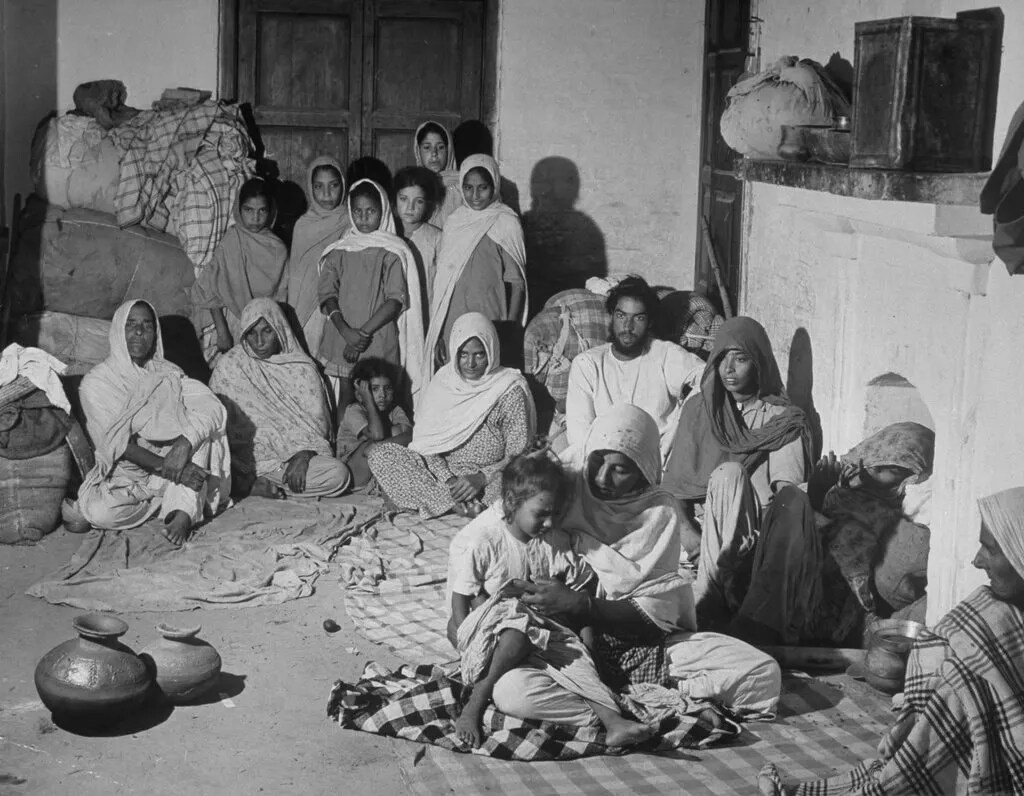
Not everyone wanted to leave. Among those who urged Sindhis not to abandon their homeland was Dada Thanwardas Lilaram Vaswani, a revered educationist, philanthropist, mystic, scholar, and spiritual leader. He had established the Miran Girls’ High School in Hyderabad. After Partition, Vaswani reportedly advised his disciples to remain in Sindh and serve the land in which they had been born. Many followed his advice.
On September 11, 1948, after learning of the death of Mohammed Ali Jinnah, founder of Pakistan, Vaswani observed a vrat (fast), and recited the Quran. At the vrat’s conclusion, he distributed sweets among fellow worshippers, as was customary in his religious practice. Some people, however, spread the rumour that he had distributed sweets to celebrate Jinnah’s death.
Home became dangerous overnight. Vaswani was reportedly told by authorities that he must either leave for India or risk detention under the inherited colonial laws. Similar pressure was faced by writers, artists, and political activists, including Gobind Malhi, Kirat Babani, AK Hangal, and Hashoo Kevalramani. Some, including Sobho Gianchandani and Pohomal Mal, refused to leave and accepted the possibility of imprisonment. Hangal was jailed and eventually fled.
There was also the case of Parcho Vidhyarthi, who had been involved in radical politics aimed at ending British rule. He was imprisoned on charges connected with violence against British officials and property, and later escaped and fled to India. There, he was recognised at the state level as a freedom fighter, although the Centre reportedly declined to recognise him because his identity could not be established.
Homes were lost but the pain is preserved in family memories of Sindhis. “On January 17, 1948, my father’s family was on a train to Ahmedabad. When my grandmother went into labour they had to change trains at Marwar Junction to Jodhpur to get to a hospital,” recalls my friend and London-based poet and author Rishika Williams. “My mother’s family left on a goods train at night. She was five. Her parents filled gold coins inside an empty Triple 5 cigarette tin and gave it to her, hoping officials would be less likely to search a small child. The family eventually reached The White Shop on Mount Road in Madras, which they owned.”
She also recalls that the daughter of an accountant, who tried to help her paternal grandfather, was reportedly gangraped. That is when her grandfather decided to send his family to India.
Williams was born in Nigeria and raised in London. Her father moved from Sindh to India to work for his uncles in Hong Kong and Japan before he opened business in Cameroon and Nigeria. Sindh remains central to her poetry — a homeland inherited that she carries with her.
A similar inherited memory lives in another friend — filmmaker and celebrity hairstylist Sapna Moti Bhavnani — who heard stories of Sindh from her maternal grandmother. She sports tattoos connected to Sindh and made the film, Sindhistan, portraying the province and the trauma of losing a homeland. She has expressed a desire to visit Sindh, but says she was denied a visa. Through her tattoos, she says, she has, in a sense, become Sindh herself. Her poem When a Sindhi Woman Dies, So Does a Book captures the idea of a homeland preserved not on a map but within the body:
They often ask me where I’m from.
I gather my dress,
and underneath —
a lost homeland
in place of bone.
The poem transforms memory into an archive — a homeland carried through generations, even after borders have made return difficult or impossible.
Hasan Mujtaba is a poet, journalist, and human rights defender. The views expressed are personal
Get Current Updates on India News, Elections 2024, Lok sabha election 2024 voting live , Karnataka election 2024 live in Bengaluru , Election 2024 Date along with Latest News and Top Headlines from India and around the world.
See Less

Light on truth: on the Tamil Nadu G.O. and RTI
By Sohail Khan · 29 Sep
Tackling food loss and waste — India’s opportunity
By Sohail Khan · 28 Sep
Moon gardens are trending: 5 plants and easy tips to create one at home
By Sohail Khan · 28 Sep