Can protest be dialogue?
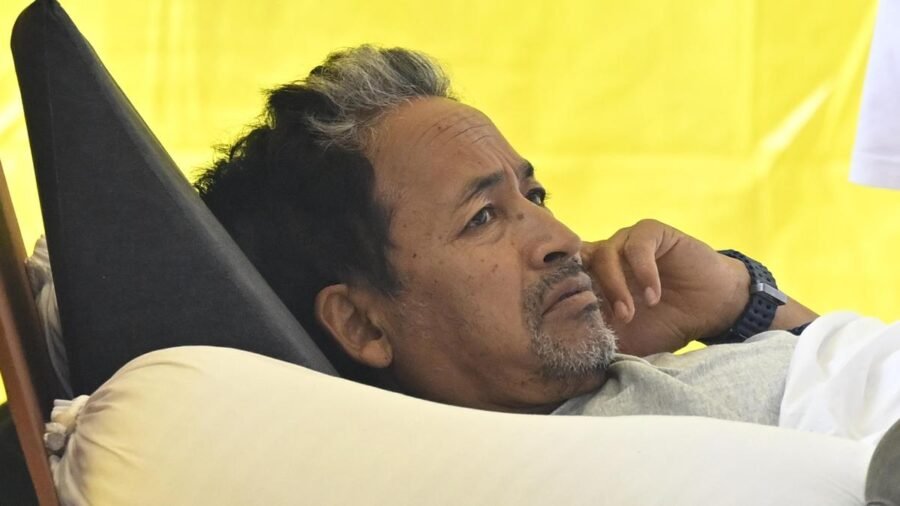
During his interaction at an event organised by the Indian International Movement to United Nations, RSS chief Mohan Bhagwat said protests can also be a form of dialogue. He claimed that Indian tradition fostered a culture of debate which allowed for multiple views to interact to arrive at the truth.
The question of how to address differences of opinion in a modern democracy has for long been a matter of controversy. The standard liberal response is to build a system of institutional checks and balances that will ensure the minority is not overpowered and rights are not violated. At the foundation of these checks and balances is supposed to be democracy or the right to choose representatives who make decisions. This democratic process lends legitimacy to the state on the assumption that peoples’ consent is accounted for.
Democracy and protests
Protests, especially the kind which involve violation of the law, have always had a tenuous relationship with such a conception of democracy. So much so that in his “Grammar of Anarchy” speech in the Constituent Assembly, Dr. Babasaheb Ambedkar thought that since the people now had constitutional methods, “we must abandon the method of civil disobedience, non-cooperation and satyagraha”. The idea is that the Constitution provides for enough safeguards in the form an independent judiciary, a free press, and free civil society to take care of any grievances citizens may have against the state. Writing on the “Rationale of Satyagraha” in 1955, U.N. Dhebar says “in the context of democracy…, there is, generally speaking, very little occasion for Satyagraha”. Though political developments of later decades may have led the Indian judiciary to recognise the right to protest as integral to citizens’ fundamental rights, the right comes with various reasonable restrictions whose scope is decided primarily by the executive.
In this view of constitutional democracies, protests that violate the law are considered valid only when the state loses its legitimacy such as when elections are rigged or when access to justice is denied. Short of such serious problems, space for the right to protest when permission is denied is limited. When Mahatma Gandhi pioneered satyagraha and civil disobedience in South Africa and then in India, it was assumed that these means were justified because the government was colonial. Once the British were replaced by our own people, their position became problematic. Addressing this situation in 1953, Acharya Kripalani criticised “Congress bosses” who “developed the view…that satyagraha can have no place in a democracy”. Pointing to inherent issues in any democracy, he said “all questions cannot await the next elections, nor can a government be overthrown on the basis of local grievances”. Satyagraha or protest, even in Independent India, was, therefore, seen by Gandhians like Kripalani as the inevitable means by which people could communicate their grievances to the state or their fellow citizens when changing political outcomes was improbable.
The Indian tradition
Scholars have differed about the source of Gandhiji’s inspiration in adopting satyagraha or civil disobedience. Some believe Gandhiji owed the idea to western pacifists like Thoureau and Tolstoy, whereas some believed that it was his own invention. One Gandhian scholar, however, set out to prove, in line with Gandhiji’s own views, that protests in the nature of satyagraha and civil disobedience were part of pre-modern Indian society. Responding to concerns about such protests in democratic India, Dharampal, historian and Gandhian thinker, says such concerns are “contrary to the psyche of the Indian people which primarily gives rise to and sustains the practice of non-cooperation and civil disobedience”.
Dharampal gives the example of the anti-home tax protests in the towns of North Indian towns between 1810 and 1812. Thousands of people across towns protested against a British tax on house rents. Dharampal refers to the report of the Collector of Benares about the protests which says, “Open violence does not seem their aim, they seem rather to vaunt their security…that a military force would not use deadly weapons against such inoffensive foes. And in this confidence they collect and increase.” Dharampal concludes that this represents the traditional “concept of ruler-ruled relationship which till then had perhaps been widely accepted…” He calls it a “dialogue” that was “resorted to whenever required”.
Democratically integral way
This form of protest, even when not permitted under law, is not necessarily an exception to constitutional methods. It is a democratically integral way of communicating one’s views to an authority that may be unwilling to listen. No matter how unjust the situation is for the protester, the purpose of the protest is not to bring down the state or convert differences within society into permanent fissures. It is to make the other side see the truth of one’s position. A highly sophisticated constitutional set-up in the world’s first democracy could not prevent the civil rights movement. When confronted with the question as to why this was necessary, the Gandhian in Matrin Luther King (Jr) answered in his famous “Letter from a Birmingham Jail”: “You may well ask: ‘Why direct action?…Isn’t negotiation a better path?’ You are quite right in calling for negotiation. Indeed, this is the very purpose of direct action. Non-violent direct action seeks to create such a crisis… that a community which has constantly refused to negotiate is forced to confront the issue.”
The Gandhian insight that one can resort to satyagraha wherever there is injustice, be it within the family, community or state, makes sense only when protest is viewed as a dialogue or at least a step towards it. When a group of citizens want to express their disagreement with the state by protests, such protests should only be aimed at engaging with fellow citizens to create public opinion in support of its views. This is not because the legitimacy of the state should be beyond question. It is because living together as a society requires mutual respect and dialogue.
Adithya Reddy is an advocate practising in the High Court of Madras
I wanted a minimalist wedding until I walked into Delhi’s Chandni Chowk
By Sohail Khan · 28 Sep
Woman wears same T-shirt after 7 years, shows 65-kg weight-loss transformation: ‘Baby Nonu…’
By Sohail Khan · 28 Sep
In great powers’ AI race, New Delhi’s place will depend on capabilities built at home
By Sohail Khan · 28 Sep