BRICS is working for a future that puts people and planet first
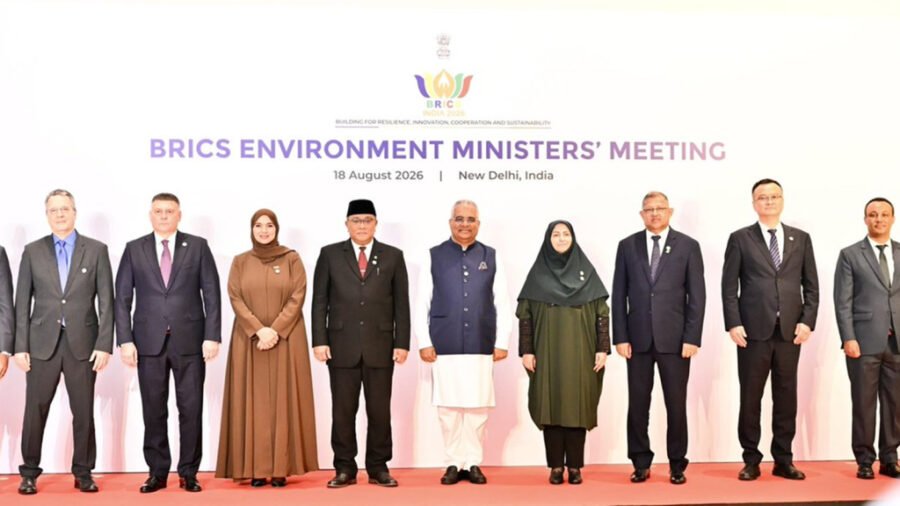
As India hosted the 12th BRICS Environment Ministers’ Meeting on August 18 in New Delhi under its chairship, it did so with a deep sense of responsibility and optimism. BRICS countries collectively account for 49.5 per cent of the world’s population, approximately 40 per cent of global GDP and 26 per cent of international trade, underscoring their growing influence on the global economy, development agenda and the future direction of international cooperation. As the world faces complex and interconnected environmental challenges, BRICS demonstrates that sustainable development, climate action and inclusive growth can advance together through dialogue, partnership and shared responsibility.
Under the leadership of PM Narendra Modi, initiatives such as ‘Mission LiFE’ (Lifestyle for Environment) and ‘Ek Ped Maa Ke Naam’ (A Tree in the Name of Mother) have demonstrated the value of combining ecological restoration, public participation and community ownership. These initiatives illustrate how climate action, biodiversity conservation, resilience-building and livelihood enhancement can reinforce one another when pursued through integrated approaches.
Advertisement
It was in this context that India’s BRICS chairship was guided by the vision articulated by PM Modi: “Just as we brought inclusivity to our G-20 presidency and placed the concerns of the Global South at the forefront of the agenda, similarly, during our presidency of BRICS, we will advance this forum with a people-centric approach and the spirit of ‘Humanity First’.”
Under India’s chairship, the BRICS Environment Working Group focused on four interconnected priorities. The priority on Promoting Sustainable Lifestyles builds on the principles of Mission LiFE and encourages responsible and sustainable consumption and production, behavioural change, awareness among citizens and communities and knowledge-sharing. This was complemented by the priority on Afforestation, Forest Fire Management and Disaster Resilience, which addresses the growing pressures on forests, land and natural ecosystems through integrated landscape restoration, combating land degradation, wildfire preparedness and response, early-warning systems and ecosystem resilience. By strengthening cooperation, sharing best practices and leveraging scientific advances such as remote sensing and artificial intelligence, BRICS aims to build more resilient landscapes and communities. The Circular Economy priority reflects a growing recognition that the traditional “take-make-dispose” model is no longer sustainable. BRICS member countries view the circular economy as a key enabler of sustainable development and inclusive economic growth, and seek to reduce environmental pressures while creating economic opportunities and green employment through stronger international cooperation in research, innovation, technology transfer and capacity building. As climate impacts intensify, adaptation has become an urgent necessity, particularly for developing countries facing disproportionate vulnerabilities. A defining feature of the BRICS approach is the recognition that traditional knowledge, indigenous knowledge and local knowledge systems offer valuable insights for building resilience. The BRICS Principles for Advancing Climate Resilience through People-Centric and Community-Based Adaptation emphasise integrating such knowledge with modern science and technology to create context-specific, evidence-based and culturally appropriate solutions.
Together, these priorities reflected a simple yet powerful conviction that environmental action must remain people-centric, implementation-oriented and responsive to the realities of developing countries. The principles of equity and Common but Differentiated Responsibilities and Respective Capabilities (CBDR-RC) resonated across and remain fundamental to an effective and balanced global environmental response to climate change.
Advertisement
The outcomes achieved under India’s BRICS chairship extend beyond declarations. They include the development of practical principles on sustainable lifestyles, integrated landscape management, forest fire preparedness and community-based adaptation, as well as technical reports, platforms, dialogues and knowledge-sharing networks. These outcomes reflect months of collaboration, negotiation and consensus-building among member countries and demonstrate the value of multilateral cooperation in addressing common environmental challenges.
India’s efforts to reduce emissions intensity while expanding non-fossil energy capacity reinforce the belief that development and environmental responsibility can advance together. India has reduced the emissions intensity of its economy by 37.38 per cent between 2005 and 2022, while non-fossil sources accounted for 54.18 per cent of installed electricity capacity (as of 30 June 2026). India’s new Nationally Determined Contribution for 2031-2035 further reflects the commitment to advancing climate action while supporting inclusive development and energy security.
BRICS is seeking to contribute meaningfully to global environmental governance while delivering tangible benefits for communities on the ground. The success of these efforts will ultimately be measured not by the adoption of principles alone, but by their ability to strengthen ecosystems, support livelihoods and build a more sustainable and resilient future for all.
The writer is Union Minister for Environment, Forest and Climate Change

The science of Gaganyaan parachutes | Explained
By Sohail Khan · 22 Sep
40 years ago September 22, 1986: Barnala hits out at Badal group
By Sohail Khan · 22 Sep
Universities as labs of entrepreneurship
By Sohail Khan · 22 Sep