Book Box: Honey, Mustard and the Art of getting back to life
After a health scare, the author finds solace in honey and homemade mustard while reminiscing about food’s cultural significance and her recovery.
Updated on: Aug 23, 2026, 15:18:21 IST
Prefer HTon Google
Share via
Copy link
Dear Reader,
Two days after returning from the hospital, I fall violently ill with a cough and fever.
“It’s your immune system finally collapsing now that the adrenaline and cortisol of dealing with a crisis is gone,” my doctor friend says.
Lying at home, in my fevered state with a sandpapery throat, I crave my favourite concoction.
I used to make this mixture for the girls, to soothe their sore throats – one part ginger juice, one part lemon juice, one part basil leaf juice, and one part honey. I’d tempt the girls to have this bitter-sweet potion by upping the honey, and often I’d give them just honey, lemon juice, and hot water.
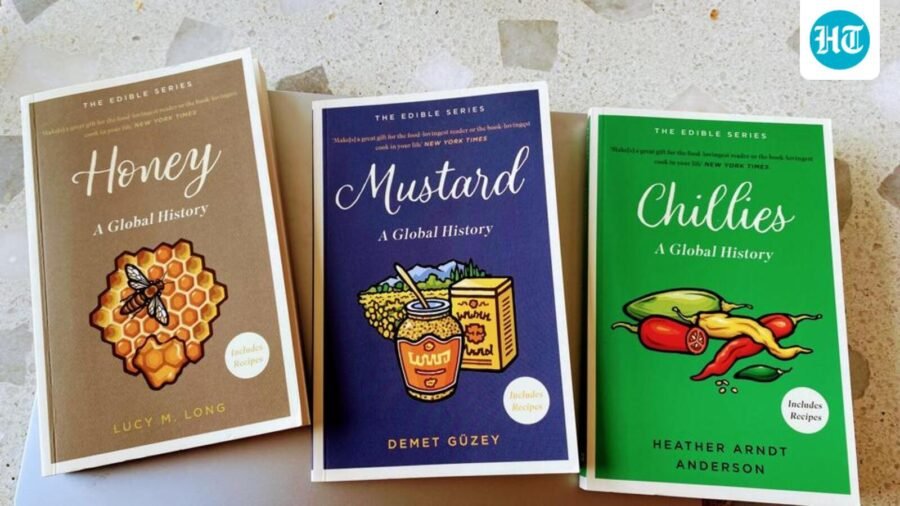
“Honey has played a major role in the nourishment and health of humankind from ancient civilization up to the present,” says Honey by Lucy M. Long, the little book on my bedside table.
It is a delightful little volume, combining Lucy’s own story of Appalachian honey with its cultural history and associations with love and romance: you call your sweetheart “honey”, you go on a honeymoon.
There are illustrations of a painting in a monastery in Laos, where Buddha is being offered a jar of honey by a monkey, and a sculpture in Sanchi, India, with the same scene. And then there is Winnie the Pooh chasing honey in A. A. Milne’s classic volume.
The honey helps my throat, the fever goes, and I am back in action, moving from soothing to invigorating.
“Egg sandwiches, Mama,” say the girls on a weekday morning, and I set out the ingredients – lettuce, tomatoes, cheese, and sesame-sprinkled brown bread.
I crack open three eggs on a cast-iron skillet, sprinkle salt, freshly ground pepper, and then the pièce de résistance – dollops of grainy homemade mustard. It’s taken me years of trying different mustards to get to this. In my childhood, mustard was a delicacy that people brought back from their foreign trips to be slathered on bread – pungent English Colman’s or the sweeter, creamier French Dijon moutarde.
Years later, as a student in Kolkata, I was pleasantly shocked to discover Bengali kasundi, the store-bought kind that poured out like ketchup and provided the perfect pungent counterpoint to vegetable chops and other fried treats. Only recently have I discovered the easy magic of homemade mustard.
“Take a hundred grams of yellow and brown mustard and 50 grams of black mustard and immerse the mix of mustard grains in balsamic vinegar. Add rock salt and brown sugar. Or better still, substitute the brown sugar with honey. Keep it overnight and then grind it coarsely,” my chef friend Minty tells me as we walk to the bakery to pick up bread and cheese.
It sounds way too simple to me and so I try it out right away and voila – it gives me a delicious paste that uplifts my sandwiches and salad dressings, and is the perfect dip for roast chicken.
“Mustard is stimulating and potent, but also simple and down-to-earth,” says my pocketbook on Mustard: A Global Historyby Demet Guzey.
The book has pictures of a still life with a mustard pot, illustrations of classic mustard brands and their advertising campaigns, and anecdotes about how the mustard seed is used in religion and in philosophy.
I have been bingeing on these little pocketbooks, all part of the ‘Edible’ series on my bedside.
The last one I have is Chillies: A Global History by Heather Arndt Anderson, covering everything from Mexican and Colombian chillies to its use in Thai and Korean food, with recipes for Kung Pao chicken and Hungarian goulash.
But there are others in the series, like Saffron, Rice, Cocktails, Tea, Coffee, and Cannabis. I tell myself I am recovering. Really, I am shopping.
(Sonya Dutta Choudhury is a Mumbai-based journalist and Founder, Sonya’s Book Box, a bespoke book service. For all questions about life and literature email sonyasbookbox@gmail.com.)
See Less

‘Abnormal’ that Lok Sabha has not been prorogued 10 days after sine die, Congress says
By Sohail Khan · 23 Aug
Chhattisgarh police bust inter-State currency-doubling racket; seven held from Maharashtra
By Sohail Khan · 23 Aug

Leave a Reply