After Naxalism, what replaces the Red Corridor?
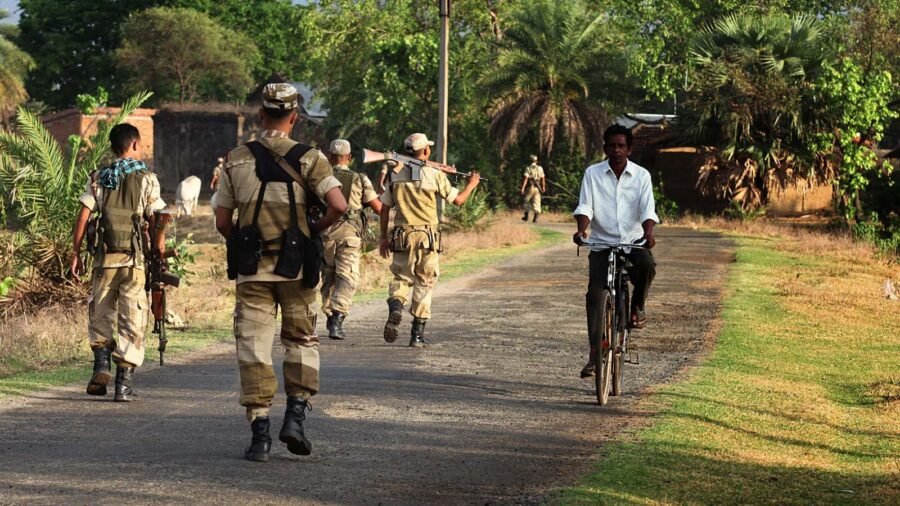
As the Central Reserve Police Force (CRPF) marked its Raising Day on July 27, the celebrations carried an added significance this year. The CRPF, which has been at the forefront of India’s internal security operations for decades, has also been central to one of the most consequential security campaigns of the Modi government: The dismantling of Left Wing Extremism (LWE). PM Narendra Modi, in his message on the occasion, highlighted the CRPF’s courage and commitment, while the force’s role in the campaign against Naxalism has been particularly visible in the forests of Chhattisgarh, Jharkhand and other parts of the former Red Corridor. The Centre declared the country free from Naxalism on March 31, 2026.
For a region that for decades was associated with ambushes, armed cadres and Maoist control, this marks a turning point. It also raises a question larger than the military defeat of an insurgency: What replaces the Red Corridor? The answer will determine how durable the government’s achievement is.
Advertisement
Home Minister Amit Shah’s approach to LWE brought together intelligence-led operations, greater coordination between central and state forces, disruption of Maoist financing, rehabilitation and a sustained expansion of the security grid. The CRPF’s specialised CoBRA units, alongside state police forces, were deployed in operations including Black Forest, Octopus, Double Bull and Chakrabandha, helping dismantle strongholds that had remained difficult to penetrate for years. Once security forces could establish a more permanent presence in areas where the state had struggled to maintain one, roads and communications could be extended, institutions could be opened and development programmes could reach communities that had remained isolated.
The numbers offer a sense of that change. Since 2014, the government says 408 new security camps and 597 fortified police stations have been established in LWE-affected areas. More than 12,000 km of roads have been constructed, while 1,804 bank branches, 1,321 ATMs and 6,025 post offices have been added. Mobile connectivity has expanded across most villages in the affected regions, alongside Eklavya Model Residential Schools, ITIs and skill development centres. For people living in these areas, these are not merely development statistics. A road changes access to a market or a hospital. A bank branch connects households to formal finance. A telecom tower brings a remote village closer to the rest of the country. A school or skill centre expands the choices available to young people.
The objective now is to ensure that the state’s presence in these regions is defined by institutions and opportunity rather than by the security challenge that once dominated the landscape. This also explains the emphasis on rehabilitation. The government’s surrender policy has sought to bring former cadres back into civilian life through financial assistance, training and support for reintegration, while agencies have targeted the financial networks that sustained the insurgency. The strategy has been to reduce the movement’s ability to operate, finance itself and replenish its ranks.
Advertisement
Amit Shah’s repeated engagement with the LWE-affected regions has been another feature of the campaign. His visits to Bastar and security review meetings on the ground have kept the Centre closely involved with an operational challenge that demands coordination between Delhi, state governments and personnel deployed deep inside difficult terrain. The government’s ability to combine political direction with an expanded security and development architecture has been central to the shift. The next phase will be less dramatic than the operations that made the headlines, but it could be more important in determining the legacy of the campaign. The former Red Corridor will truly become a development corridor when the infrastructure now reaching these regions begins to generate sustained economic activity, better education and greater integration with the rest of India.
The guns going silent is an important milestone. The harder task is ensuring that the space they leave behind is filled with roads, schools, businesses, livelihoods and functioning institutions. That is the opportunity the end of Naxalism has created, and that is where the government’s larger test begins.
The writer is former DGP, Uttar Pradesh, and chancellor of Noida International University

The science of Gaganyaan parachutes | Explained
By Sohail Khan · 22 Sep
40 years ago September 22, 1986: Barnala hits out at Badal group
By Sohail Khan · 22 Sep
Universities as labs of entrepreneurship
By Sohail Khan · 22 Sep