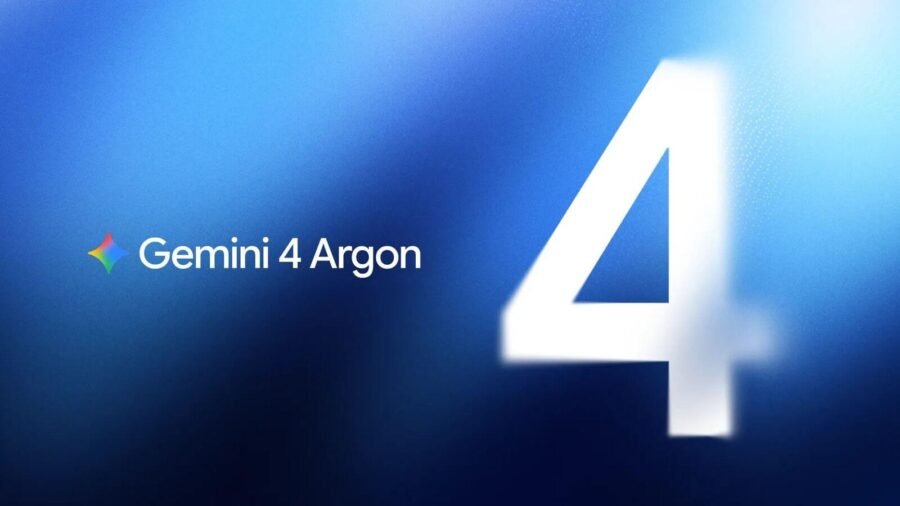
What is Gemini 4 Argon, Google’s new AI model to hunt security bugs?
Story continues below.
Subscribe to see fewer ads.
However, Google is also wary of Gemini 4 Argon falling into the wrong hands, and has therefore limited access to trusted cybersecurity partners because of the model’s advanced cybersecurity capabilities. Anthropic faced a similar dilemma with its Mythos models, whose rollout became a point of contention with the US government amid growing concerns that it could be misused by military and intelligence agencies in China, Russia, and other countries.
The dispute culminated in the Pentagon designating Anthropic a national security supply chain risk and blacklisting it from military contracts.
Google is keen to avoid a similar standoff. “We are actively engaged in the U.S. government’s voluntary process for pre-release model access while we gradually expand access. We’ll continue to gather feedback from early testers as we iterate on guardrails before making Argon available to developers, enterprises, and consumers as soon as possible,” the company said in a blog post.
As a result, Gemini 4 Argon is currently rolling out to a set of trusted cyber defenders that are part of the Fairwind Programme. It will soon be made available to paid API customers and Google AI Ultra subscribers before a wider rollout.
Lots of discussion out there about our next model(!), so I wanted to give an early look as soon as possible. Introducing Gemini 4 Argon!
It shows frontier performance in complex workflows, cyber defense and software engineering. Teams are using it extensively at Google, from… pic.twitter.com/sv4VNmQ0YT
— Sundar Pichai (@sundarpichai) September 30, 2026
Gemini 4 Argon’s token-wise pricing at launch is $2 per million input tokens and $10 per million output tokens, with cached input tokens priced at 95 per cent off input token price.
Story continues below this ad
Since the new model is trained for longer, more complex use cases, Google said that it has significantly expanded the model’s output token limit to one million tokens, up from the previous 64,000 token-limit. This adds a new level of depth in reasoning for Argon so that it can generate hundreds of thousands of tokens in a single trajectory and solve tough problems in one go, according to the company.
What are the capabilities of Gemini 4 Argon?
Google said that its own engineers have been using Argon for daily tasks, including debugging, large-scale codebase migrations, and designing algorithms.
Besides specialised coding tasks, Gemini 4 Argon is also capable of conducting deeper research. For instance, Google quantum researchers are using the model to optimise spacetime resources (qubits × gates) of subroutines that bottleneck important quantum applications.
An early demonstration also showed how a team of Argon agents were able to analyse and apply memory optimisations across Google’s data centres, freeing up over 300 TiB of memory once rolled out, with an estimated 500 TiB to 1 PiB in total savings.
Story continues below this ad
How does Gemini 4 Argon perform on benchmarks?
On DeepSWE v1.1, which measures a model’s performance in real-world long-horizon software engineering tasks, Google said Argon set a new record score of 77.9 per cent. Argon also topped the Vals Index, which measures performance on finance, coding, legal, and tax work.
It further recorded leading performance on domain-specific evaluations like Vals Finance Agent v2 (multi-step financial research) and Harvey’s Legal Agent Benchmark (legal research and drafting), as per the company.
On AutomationBench, a benchmark for measuring end-to-end execution across core business functions, Argon took the top spot in the leaderboard with a score of 51.3 per cent.
Highlighting visual understanding as one of its strengths, Argon scored 91.7 per cent on LVBench, a benchmark measuring long video understanding. On CWE-bench v1, which evaluates the model’s ability to remediate security vulnerabilities, Argon tied for first place with a top score of 68 per cent. Internal benchmarks showed Argon outperforming Gemini 3.8 Flash Cyber in finding vulnerabilities across complex codebases spanning 20 programming languages.
Story continues below this ad
What are the safeguards built into Gemini 4 Argon?
Gemini 4 Argon comes with built-in safeguards against misuse, prompt injection attacks, misalignment, and attempts to break out of sandboxes or controlled environments.
To prevent bad actors from using Argon for cyber or chemical, biological, radiological, and nuclear (CBRN) attacks, the model is designed to refuse harmful requests while preserving legitimate, dual-use scientific research, as per the company.
Argon is also trained to be highly resilient to indirect prompt injection attacks, where hackers attempt to hijack the model by inserting malicious instructions or context. Google also said it has developed new ways to monitor Argon’s chain-of-thought and actions, and can put a stop to such actions when necessary.
In order to safely test the model, Google said it hardened sandbox environments” by isolating and sealing them before high-risk training or evaluations begin.”
Story continues below this ad
What happened to pacing the frontier?
The debut of Gemini 4 Argon comes in the aftermath of a spate of hacking incidents, where AI agents from Google as well as OpenAI, Anthropic, and Meta were found to have misbehaved and breached or tried to breach companies, universities, and government organisations.
While some of these AI agent-driven attacks were successful and others failed, all of them have added to mounting concerns about the capabilities of increasingly autonomous systems.
In this context, Anthropic CEO Dario Amodei last month called for a deliberate slowdown in frontier AI development to give safety measures time to catch up. His public appeal was backed by many, including Google DeepMind’s Demis Hassabis and OpenAI CEO Sam Altman.
There were others who disagreed with Amodei’s proposal. Nvidia CEO Jensen Huang said that fears about uncontrollable AI systems are unrealistic, while US President Donald Trump has said he does not believe a slowdown in the AI industry is necessary.
Story continues below this ad
As per the latest development, Google CEO Sundar Pichai on Wednesday joined several American tech executives in a luncheon with Trump at the White House. Following the meeting, the companies agreed a voluntary AI safety pact, which includes working with independent auditors to assess whether AI systems are working as their developers intended.

Apple’s biggest battleground for foldable phones is China
By Sohail Khan · 1 Oct
When home is your safe space, these 5 CCTV cameras can help you keep it that way
By Sohail Khan · 1 Oct
Leave a Reply