The numbers behind US midterms
Benchmarks
Nifty22,421.95-198.5
FEATURED FUNDS★★★★★
Motilal Oswal Midcap Fund Direct-Growth
5Y Return
19.6 %
Invest Now
Enter search text:
Business News›News›International›World News›US midterms: 435 House seats, 35 Senate races and $12 billion in spending
Read Today's Paper
US midterms: 435 House seats, 35 Senate races and $12 billion in spending
Synopsis
Elections on November 3 will determine control of Congress, affecting Trump's agenda as he finishes his term. Voters will decide on all 435 House seats and 35 Senate seats in this midterm election. Democratic candidates currently have an advantage according to recent polls among registered voters. Major spending on campaign advertisements is expected to surpass previous records for midterm elections.
 Reuters
Washington: Americans go to the polls on November 3 for elections that will shape the final two years of Donald Trump's presidency — although the president himself will not be on any ballot.
The "midterms," held halfway through a president's four-year term, decide control of Congress as well as governorships and thousands of state-level offices.
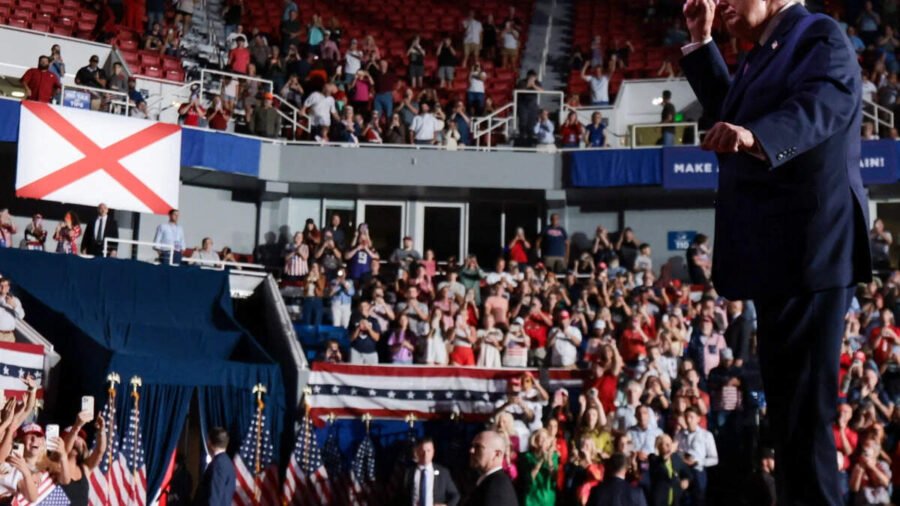
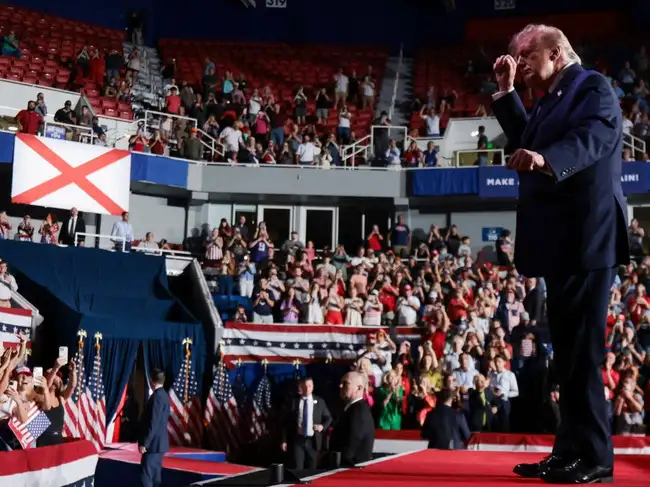
Also Read: US midterm elections: Trump stumps for candidates in deep red Alabama and says he'll be back again next week
A Democratic takeover of either chamber would constrain Trump's agenda and bring greater congressional scrutiny of his administration; Republican victories would preserve the party's control in Washington.
Here is a look at the 2026 showdown by the numbers:
– House of Representatives –
435: Every seat in the House, the lower chamber of Congress, is contested every two years.
218: The magic number for a majority in the 435-seat chamber.
3: The net number of seats Democrats need to gain from the 2024 election result to take control. Republicans won a 220-215 majority then, although deaths, resignations and a party switch mean the current House stands at 218 Republicans, 214 Democrats, one independent and two vacancies.
For Republicans, that means a net loss of two seats is survivable. Three is not.
– Senate and the states –
35: Senate seats being contested — 33 in the normal six-year rotation plus special elections in Florida and Ohio.
Republicans hold a 53-47 advantage in the 100-seat chamber, counting two independents who vote with the Democrats. Democrats therefore need a net gain of four seats to reach the 51 required for control; a 50-50 tie would be broken by Republican Vice President JD Vance.
36: States electing governors, nearly three-quarters of the total.
6,139: State legislative seats being regularly contested, across 88 of the country's 99 state legislative chambers.
– What the polls say –
53-41 percent: The Democratic advantage over Republicans among registered voters asked which party's congressional candidate they would support, in a PBS News/NPR/Marist poll conducted September 14-15.
The same survey found Democrats ahead among independent voters by 57 percent to 32 percent.
32-41 percent: The range of Trump's approval rating in several major September surveys.
Also Read: US midterm elections: 9 key issues that could shape the November polls
Reuters/Ipsos put him at 32 percent among US adults, the lowest of his political career, while Marist recorded 39 percent and NBC News 41 percent among registered voters. The surveys use different methodologies and populations, so the figures are not directly comparable — but none suggests an abundance of presidential coattails.
55 percent: Registered voters who told NBC News that Trump's policies had hurt the economy, against 26 percent who said they had helped it.
– Money, money, money –
About $12 billion: The amount expected to be spent advertising on the 2025-26 election cycle.
Ad-tracking company AdImpact forecasts $11.6 billion, exceeding both the previous midterm record of $8.9 billion in 2022 and even the 2024 presidential cycle.
Kinetiq Political Insights' latest estimate is slightly higher at $11.96 billion, with a projected range of $11.5 billion to $12.5 billion.
$330 million: Advertising spending in the California governor's primary alone, according to AdImpact — making the preliminary contest to choose November's candidates the most expensive gubernatorial race on record.
And that was merely the warm-up.
– For the trivia file –
2,497: Candidates who ran in US congressional primaries this year, the most in any election cycle since at least 2014. An extraordinary 2,232 of them were chasing House seats.
44: House races on November 3 that are rematches between the same major-party candidates who fought for the seat in 2024.
Broaden the search to state and local contests and there are 474 electoral rematches nationwide — proving that in American politics, as in Hollywood, there is rarely any objection to a sequel.
Add 

(You can now subscribe to our WhatsApp channel)
(You can now subscribe to our WhatsApp channel)
Read More News on
US midterm electionsCongress controlHouse of RepresentativesSenate races 2026Trump presidencyelection spending 2026advertising spending electionDemocratic Party


Enter search text:
Stories you might be interested in

Sensex and Nifty open higher after longest weekly decline in 25 years
By Sohail Khan · 5 Oct
Flydubai attack: Al Qaeda-linked mag calls for more
By Sohail Khan · 5 Oct
Marico bets on premium demand as it sees strong Q2
By Sohail Khan · 5 Oct
Leave a Reply