The carmaker vying with Tesla to conquer the robot future
Hyundai is planning scores of new human-driven cars while Tesla is turning away from the steering wheel.
Updated on: Oct 3, 2026, 16:06:27 IST
Prefer HTon Google
Share via
Copy link
Thursday was supposed to be the long-promised debut of what might well be the last new, human-driven car offered by Tesla. Yet, the Roadster, first shown almost a decade ago, was delayed. Again. This time due to bad weather in Texas.
More than 1,600 miles to the northeast in New York City, the sun was shining that same day on another automaker. There, Hyundai Motor celebrated the reveal of its newest Tucson sport-utility vehicle, one of more than 100 new or refreshed vehicles it has planned globally by 2030.
For Hyundai Motor Chief Executive José Muñoz, it was another stop on a roadshow of sorts. His mission is to sell the South Korean automaker as something more akin to what Elon Musk fans see in Tesla than what its struggling peers have become.
With the auto industry reeling, Muñoz and Musk find themselves in a similar camp: both are betting big on robotics. It’s their timing and approach that reveal a strategic difference.
Musk is turning Tesla’s back on human-driven cars, effectively burning the boats on the shores of a new world full of robots. Muñoz is using the legacy car business to build a bridge to a more-distant robot future.
In 2025, Muñoz rose to CEO as Hyundai’s electric-vehicle offerings, combined with its affiliate Kia, increasingly provided some of the most serious competition in the U.S. to Tesla in the all-EV categories.
The next front between the two companies is shaping up to be over physical AI—humanoid robots and robotaxis.
In the coming weeks, Hyundai begins production of robotaxis for Alphabet’s Waymo, a fierce competitor of Tesla. It’s also working on its own autonomous-vehicle tech with joint venture Motional.
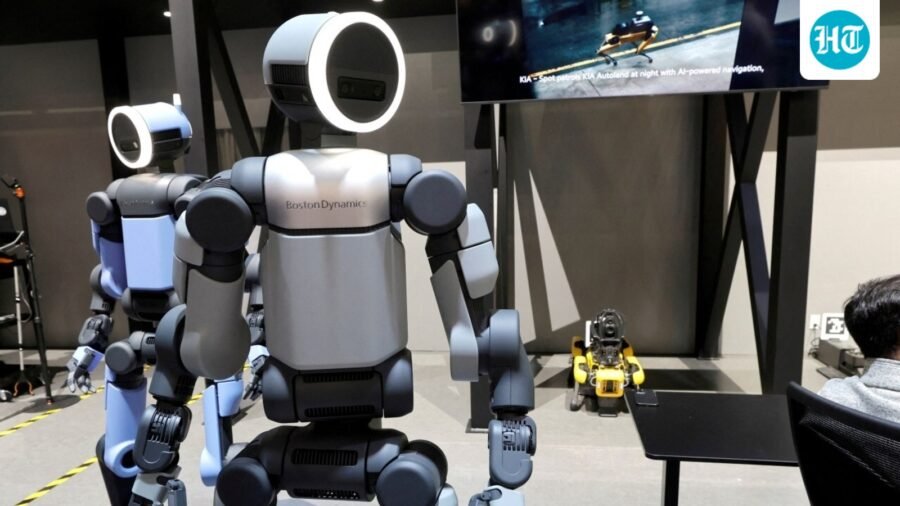
And Muñoz has been touting plans to be able to build 30,000 Boston Dynamics robots annually, including the Atlas humanoid robot, in 2028 at what he has called the “world’s first large-scale commercial robotics manufacturing facility.”
“We are becoming a technology company,” Muñoz told an audience of journalists and influencers Thursday.
That is a familiar line. It has been used not just by Muñoz, but by other automakers over the years trying to portray themselves as tech companies at a time when their ambitions have captured investor enthusiasm.
What’s different, now, is that other automakers in the U.S. are largely frozen in place after taking a battering. They made huge investments into electric vehicles, trying to catch up to Musk’s lead with their supposed Tesla-killers. Then demand fell when U.S. politics soured on the technology and government incentives evaporated. And they’re watching Chinese rivals, which aren’t in the U.S. yet, become a scarier threat.
Huge losses have resulted as plans for EVs are shelved or delayed. That has led to the industry’s slowest release of new vehicles since at least the 1970s, or a “product drought,” according to research by John Murphy, an independent analyst.
Not Hyundai. Under Muñoz, the company has been bucking that trend with a redesign rate above the industry average. In turn, the company has been picking up market share in the U.S.
Even Musk seems disenchanted with the traditional carmaking business. In Musk’s version of the future, new cars will be mostly driven by computers and humanoid robots will outnumber people.
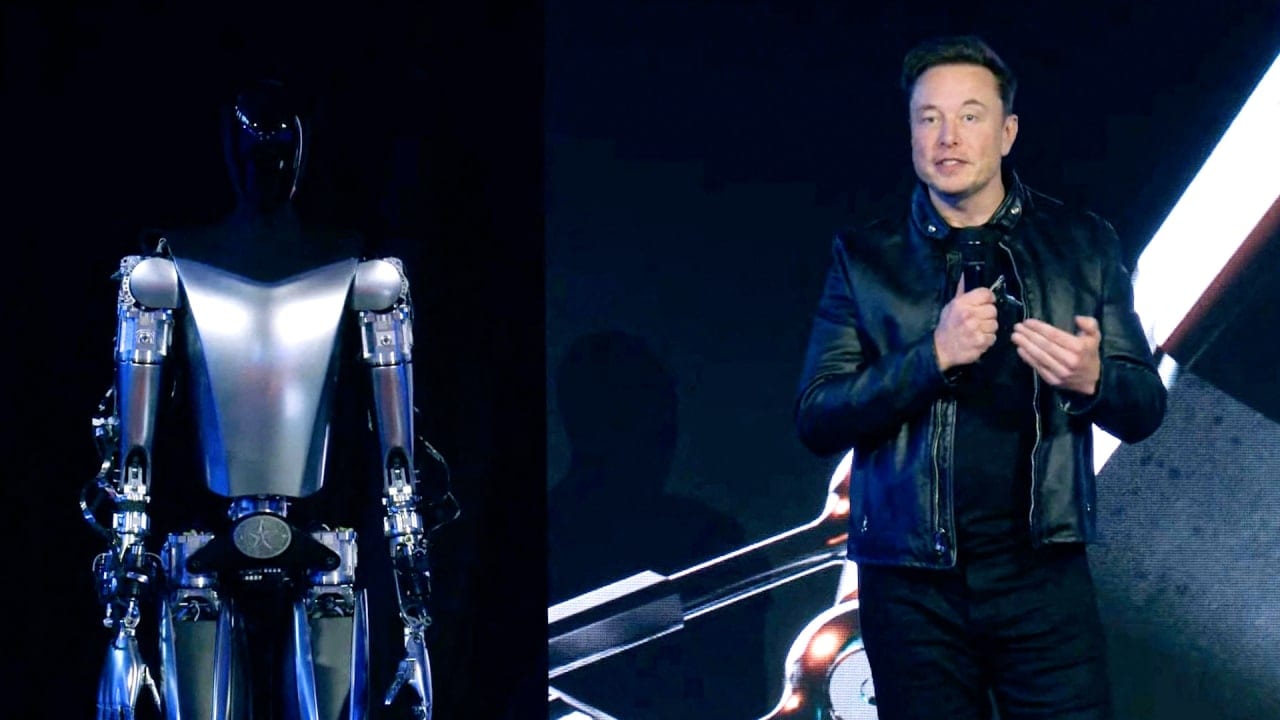
Earlier this year, he stopped production of Tesla’s full-size sedan and SUV to make room for a humanoid-robot assembly line. The most recent new car to debut from Tesla, the Cybercab, doesn’t have a steering wheel and is part of the company’s nascent robotaxi fleet. It is unclear when the Cybercab might go on sale (Musk has suggested by year’s end) or when it will increase production in a big way.
The Tesla CEO often says human-driven cars will become like horses today—largely ridden for fun. That would make the new Roadster something of a mustang for the new era.
The risk for Tesla is one of timing. Musk is often wrong on such things—the new Roadster was originally expected in 2020. Tesla will be left with little in the pipeline if the robot dream doesn’t play out as expected.
In Muñoz’s future, the profitable car business of today pays for the robot business. “The strategy is simple to say and hard to do: maximize the profit of the car business today through product efficiency and localization, then fund the future,” he told investors at an event in August.
The risk for Hyundai is that the needs of the moneymaking end of the business derail dreams of tomorrow. Several automakers in recent years ditched their robot-car plans when things got tough.
In an interview Thursday, Muñoz told me Hyundai’s plans weren’t marketing hype. “It is very real,” he said. Muñoz emphasized the strength the automaker has from its vertical integration with its umbrella company, Hyundai Motor Group, which includes affiliates in steel, logistics, finance, and robot-maker Boston Dynamics.
The overall strategy is very Musk-esque. The original Roadster, which began production in 2008, was sold to help fund a bigger idea of what Tesla could become. Similarly, Musk aimed to use the satellite-internet service Starlink to provide funds to build larger rockets at SpaceX, where he was CEO before taking over Tesla, too.
That’s another thing Musk and Muñoz share. Both men worked on building space rockets before getting into the car business.
Muñoz, a nuclear engineer by education, was working on European space rockets when a chance encounter with the woman who would later become his wife sent him in a new career direction. She was a car dealer. And the car business suddenly interested him.
While he would go on to work for Toyota, Nissan and eventually Hyundai, the lessons of the space program stayed with him, he told me Thursday. One of the most important revolved around the importance of meeting deadlines tied to the distance of orbit.
“Everything is perfectly calculated, so you cannot just say, ‘You need more time, you’re going to launch it later,’ so you need to finish on time,” Muñoz said.
Or, as he put it, “The timing is the timing.”
An adherence to deadlines is one thing the two men don’t share.
Write to Tim Higgins at tim.higgins@wsj.com
See Less
Indian startup Eloelo unveils AI tool that turns scripts into videos
By Sohail Khan · 3 Oct
AI’s trillion-dollar bet: Will productivity gains arrive in time?
By Sohail Khan · 3 Oct
Leave a Reply