The aloo posto burger is not as innocent as it looks
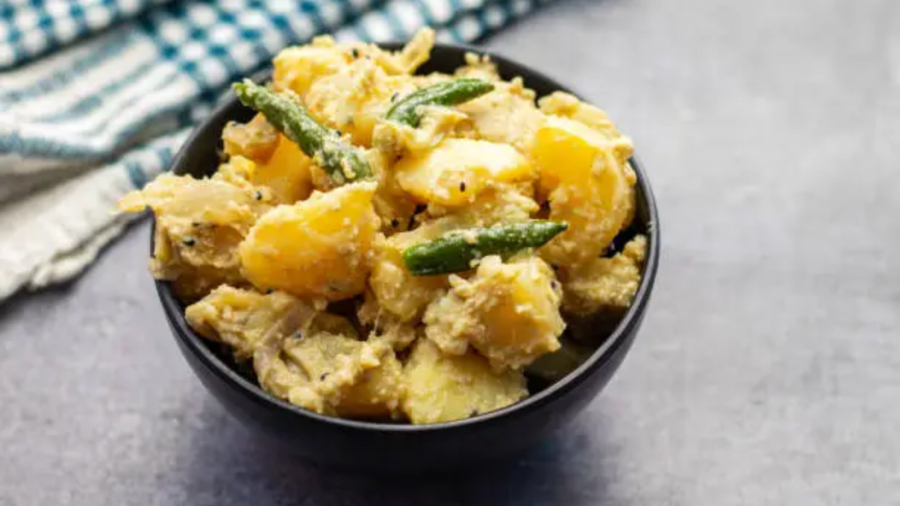
A cafe chain has put an aloo posto burger on its Durga Puja menu. And a section of Bengalis is incensed — perhaps understandably. The potato mashed, its edges crisped and browned, will presumably be folded into the nutty texture of poppy seed paste, pressed into a patty and tucked into a toasted bun. The umbrage, very likely, is not about the burger itself, but about seeing something intimate, pocket-friendly and comforting being recast in the language of fast food. When a dish has lived in one’s home for generations, giving it a new form does risk making innovation feel like intrusion.
One of the oft-repeated accounts of eastern India’s culinary history is about how posto became a part of the everyday meal. It is the story of a food born, in part, of the human instinct to make do with what is available. Cultivated in enormous quantities to supply the East India Company’s extractive colonial trade, the opium poppy left its tiny white seeds behind for use in local kitchens. Soaked and ground on the shil-nora, the grainy texture of the seeds gives way to a thick, pale paste, almost creamy. The residue of an imperial cash crop was absorbed into the frugal economy of homes.
Advertisement
It found a companion in the aloo, a traveller so completely naturalised that its foreignness now seems an affront to the spud. The potato becomes tender and absorbs the posto paste, while mustard oil gives everything a sharp nasal fragrance that softens as it meets the heat of the pan.
But now the potato patty sits inside a bun where the rice ought to be. There may be lettuce, perhaps cheese, some sauce or mayonnaise or commercial mustard paste, a toasted surface where there was once steam rising from rice. The ensemble appears to belong to another vocabulary: Fast, portable, assembled, engineered for eating with one hand — not licking the fingers.
A caveat, however: Culinary cultures can become a small place when authenticity becomes a regular test.
Posto itself has never been particularly monogamous.
Advertisement
There is jhinge posto, with ridge gourd turning soft and almost silky beneath the poppy paste; dhyarosh posto, with okra imparting a slippery texture; posto with broad beans and other vegetables. There are posto boras, little fritters in which the poppy seed paste crisps around the edges and stays soft within. There are preparations in which posto thickens, coats and binds.
Khosha bhaja — salted strips of potato skin embedded with posto and fried until they crackle between the teeth — belongs to a culinary instinct that sees possibility in what might otherwise be thrown away. It is difficult to build a very convincing case for culinary purity in a cuisine that has spent generations finding new things to do with the same small bowl of poppy paste.
Is it fair, then, to call the aloo posto in a bun a great culinary transgression? The irritation could have less to do with the burger than with what it seems to say about the food. The faint bitterness of posto rubbing against the starch of the potato, the sharp green chilli, the mustard oil opening up in the heat, the first morsel mixed into rice until everything becomes soft, pale and fragrant — they are memories of meals shared with loved ones.
Comfort food has a strange relationship with innovation. We like innovation when it happens to somebody else’s food — a paneer makhani or butter chicken pizza, is acceptable to us Indians, Italians balk at the pineapple pizza. We become more cautious when it reaches the foods we recognise by smell before we recognise them by sight.
Perhaps that is the paradox that makes the aloo posto burger less innocent than it looks. Home food has never been a museum of fixed objects; it has always been about the twists taken by every cook — described with great felicity in the Hindi phrase, haat ka khana — the liberties taken by every generation. But a restaurant changes the transaction. What is unsettling is that the posto whose flavours unfurled bite by bite on the palette is now being announced as an innovation on a festive menu.
Dishes are known to wander, and yet they are never quite the prodigal child. Fast food will keep borrowing from home kitchens, and home kitchens will keep changing without much ado. For now, the burger can have its moment under the festive lights and the aloo posto is not going to be displaced from its place with the rice, mustard oil and chillies. I confess I am not averse to tasting the burger. But when the posto meets the aloo, I know I will still reach for the rice.
In the years to come, though, the question may well be: Will the aloo posto burger be an homage to the East Indian home? Or will it become a marker of that grandiloquent and frequent, but rarely convincing, claim that innovation arrived only yesterday at the chef’s kitchen?
The writer is senior associate editor, . kaushik.dasgupta@expressindia.com



After losing 28 kilos, woman says she can ‘now wear the dresses I love’
By Sohail Khan · 6 Oct
Leave a Reply