The 13-minute trick for easy-to-peel hard-boiled eggs
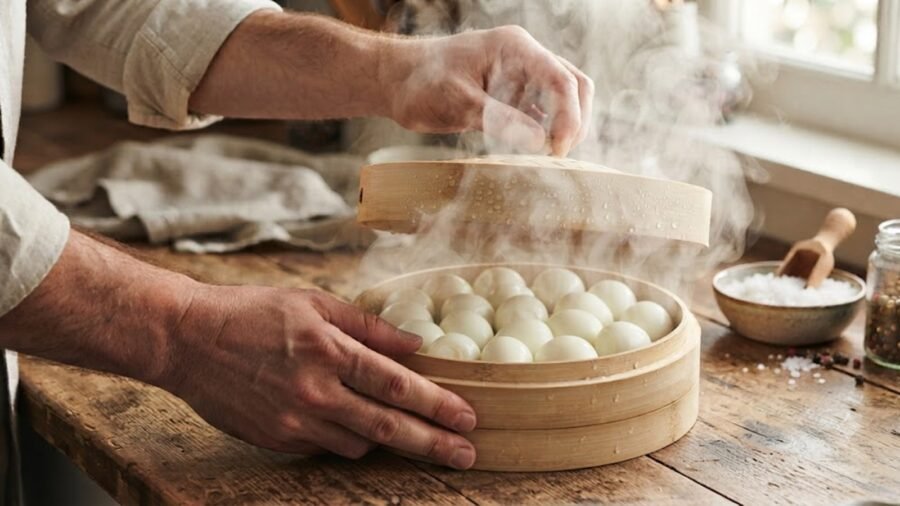
If you’ve ever struggled with bits of egg white sticking stubbornly to the shell, a 13-minute steaming method promises to help. The technique uses cold eggs straight from the refrigerator, placed in a steamer basket over boiling water, covered and steamed for around 13 minutes, followed by an ice-water bath for about 15 minutes.
But can the 13-minute steaming trick really make hard-boiled eggs easier to peel?
Story continues below.
Subscribe to see fewer ads.
It can, said Dt Amreen Sheikh, chief dietitian, KIMS Hospitals Thane. “Steaming is a useful alternative to boiling, and the more consistent heat can help the egg white set evenly. Tests of steaming methods have found that steamed eggs can be particularly easy to peel, especially when they are cooled promptly after cooking,” Sheikh told indianexpress.com.
Consultant dietitian Garima Goyal said that the science behind it is quite interesting. “When eggs are exposed quickly to hot steam, the outer proteins in the egg white set rapidly. This helps the cooked egg white pull away more easily from the membrane lining the shell, reducing the frustrating problem of chunks of egg white coming off during peeling. This is one reason a hot start, whether through steaming or placing eggs directly into hot water, can work better for peeling than gradually heating eggs from cold water,” Goyal explained.
When eggs are steamed, they are surrounded by hot vapour rather than sitting directly in simmering water. Sheikh described that this allows them to cook in a fairly consistent environment. “It may also reduce some of the problems associated with the egg white sticking tightly to the shell membrane. The difference is subtle, though, and technique matters as much as the cooking method,” said Sheikh.
How to try the method
Bring about an inch of water to a boil in a pot and place a steamer basket over it. Add the refrigerated-cold eggs, cover the pot, and steam for approximately 12–13 minutes for firm, hard-cooked eggs. “Once done, immediately transfer them to an ice-water bath for around 15 minutes. The cold water stops the cooking process and cools the eggs quickly, making them easier to handle and helping prevent further cooking,” said Goyal.
Story continues below this ad
 How to make the perfect eggs?
However, experts urge that 13 minutes is not a magical number for every egg. “Egg size, the number of eggs being cooked, and the intensity of the steam can affect the final result. Extra-large eggs may need slightly longer, while smaller eggs may cook faster. If you prefer a softer or jammy yolk, the cooking time should be reduced,” noted Goyal.
Notably, older eggs can sometimes be easier to peel than very fresh eggs. “As eggs age, changes in the egg white’s pH reduce its attraction to the shell membrane, which can make peeling easier. That means steaming can improve your chances of easy peeling, but the age and characteristics of the egg can still influence the result,” said Goyal.
For large eggs, steaming for around 12–13 minutes is a reasonable starting point for a firm yolk, followed by immediate cooling in cold or ice water. “Once cooled, gently crack the shell all over and peel from the wider end, where there is usually an air pocket. If the membrane is stubborn, peeling under running water can help. Most importantly, don’t expect one trick to work identically with every batch; the freshness and size of the eggs can make a noticeable difference,” said Sheikh.
From a food-safety perspective, make sure the eggs are cooked appropriately and then refrigerated promptly if they are not being eaten immediately. “Eggs should not be left sitting at room temperature for long periods, and cooked eggs should be stored safely in the refrigerator,” said Goyal.
Story continues below this ad



Legislative privileges vs free speech: The question before Supreme Court
By Sohail Khan · 5 Oct
Leave a Reply