S&P 500 volatility stays near lows despite rising Treasury yields: Why Wall Street is cautious
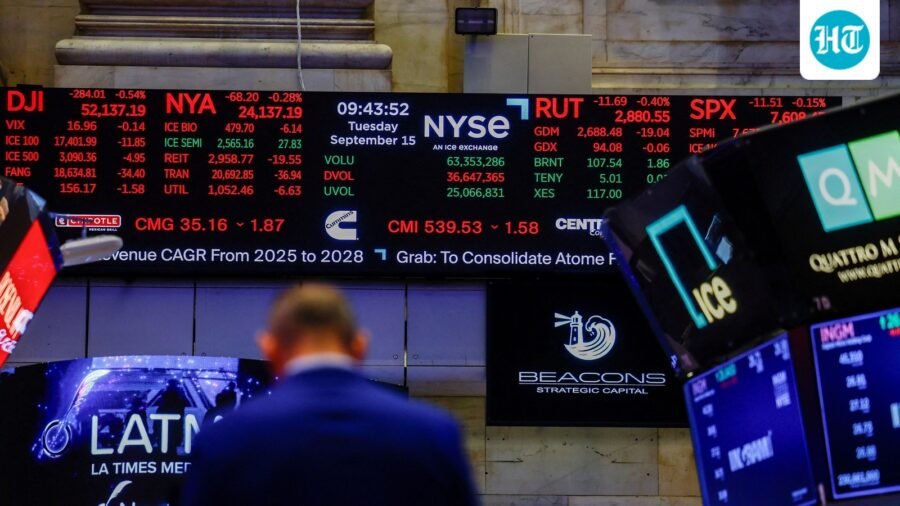
S&P 500 volatility stays near lows despite rising Treasury yields: Why Wall Street is cautious
S&P 500 volatility stays near five-year lows despite rising Treasury yields, as Wall Street weighs election risks, stock options and market uncertainty.
Updated on: Oct 5, 2026, 21:53:18 IST
Prefer HTon Google
Share via
Copy link
Wall Street is looking for trades between different asset classes as stocks, gold and oil struggle to reach new highs while US Treasury yields continue to rise. Instead of simply betting on one market going up or down, strategists are looking at trades that combine moves across different markets.
Market volatility remains surprisingly low despite several major risks. The US and other countries are dealing with two wars, rising Treasury yields and upcoming elections in France, Brazil and the US, but major financial markets have not seen a big jump in volatility.
S&P 500 volatility stays low
S&P 500 volatility is still close to its lowest levels in five years. The volatility implied by S&P 500 options remains low because individual stocks are moving in different directions. These different moves are keeping overall S&P 500 index swings relatively small.
US midterm elections add risk
The US midterm elections are one major concern. With the US midterm elections approaching, traders are aware that political developments could cause sudden market moves. This makes it harder to confidently bet that volatility will remain low.
Treasury yields and stocks
Cross-market relationships are also becoming more important. After long periods when different markets moved more independently, correlations between asset classes have increased. This is making trades that combine stocks, currencies, interest rates and other markets more attractive.
S&P 500 and Treasury yields
One popular combination is higher stocks and lower Treasury yields. Investors are looking at trades that would pay if the S&P 500 rises while interest rates or Treasury yields fall, according to Chaudhary.
VIX stays below bond volatility
The calm in US stocks looks unusual compared with the bond market. The S&P 500 has stayed in a relatively tight trading range even as the Treasury market has experienced much bigger swings.
The gap between stock and bond volatility has become unusually large. The ratio between the Cboe Volatility Index (VIX) and the ICE BofA MOVE Index, which tracks volatility in the US bond market, has fallen to its lowest level in almost two years.
This creates a problem for investors trying to hedge stocks. Because the VIX is not reacting strongly to the bigger moves in interest rates, investors may find that traditional equity hedges are becoming less useful.
Bond volatility not hitting stocks
Maven Securities says higher bond volatility has not spread to stocks. Stuart Pyott, who handles institutional trading at Maven Securities, said the increase in rates volatility has not yet carried over into the equity market.
Different stock performances are keeping S&P 500 volatility low. Pyott said low realized correlation between individual stocks means companies are moving in different directions. This reduces the size of moves in the overall S&P 500 index.
Demand for S&P 500 protection is also weak. Pyott said demand for index puts has been subdued, meaning investors are not buying large amounts of options designed to protect against a stock-market fall.
S&P 500 reacts to lower yields
The S&P 500 has recently reacted more strongly to falling yields than rising yields. Pyott said stocks have shown a stronger response when Treasury yields decline than when yields rise.
JPMorgan sees the same unusual relationship between stocks and Treasury yields. JPMorgan Chase derivatives strategists said the S&P 500's relationship with Treasury yields has recently become asymmetric.
Falling yields are helping stocks more than rising yields are hurting them. In simple terms, a similar-sized fall in Treasury yields has recently produced a bigger positive reaction in stocks than the negative reaction caused by an equivalent rise in yields.
This could provide some support for the stock market. If stocks continue to respond strongly whenever yields fall, the unusual relationship could help the S&P 500 remain supported even while Treasury yields are high, according to JPMorgan strategists.
VIX may rise in October
October could bring more volatility because of the election cycle. The VIX has historically tended to rise in October during election years as investors move closer to the November vote.
A calm stock market could make short-volatility trades attractive. If the broader equity market continues moving within a narrow range, investors could sell equity volatility and try to earn the difference between implied volatility and the actual volatility seen in the market.
Trump and election risks
But betting against volatility could be risky right now. The US midterm elections are only about a month away, creating a major event risk for investors who are betting that markets will remain calm.
That is why shorting equity volatility is not an obvious trade at the moment. Even though low volatility makes short-volatility strategies attractive, a sudden political or economic shock could cause volatility to jump and hurt investors holding those positions.
S&P 500 faces gamma shock risk
The bigger message for Wall Street is caution, not panic. The S&P 500 remains unusually calm despite rising Treasury yields and major geopolitical and political risks. Investors are therefore looking for carefully structured trades rather than making large one-way bets.
For now, the key question is whether the calm in stocks can last. If yields continue rising, elections create uncertainty or Trump makes a market-moving announcement, the unusually low S&P 500 volatility could quickly change.
See Less

ICC unseals arrest warrants for 4 Taliban leaders wanted on gender persecution charges
By Sohail Khan · 6 Oct


Leave a Reply