Sonos Play review: A premium portable speaker that sounds superb

Story continues below.
Subscribe to see fewer ads.
But of course, Sonos Play is a very different beast: designed to be mobile, but at the same time it can be part of your home entertainment system if you live within Sonos’ ecosystem. With a brand-new Sonos 27 operating system, a redone app and the Play portable speaker, they complement each other, and I tested them over several weeks.
Here’s my review of the Sonos Play.
What: Sonos Play | Price: Rs 35,999
Differentiated design
I’ve been a Sonos fan since the brand’s inception. The way it designs its speakers and audio products reminds me of Apple in the 2000s. Sonos avoids cheaply designed products and instead uses a design language that is part Japanese and part American, with fine detailing that also has a touch of European finesse.
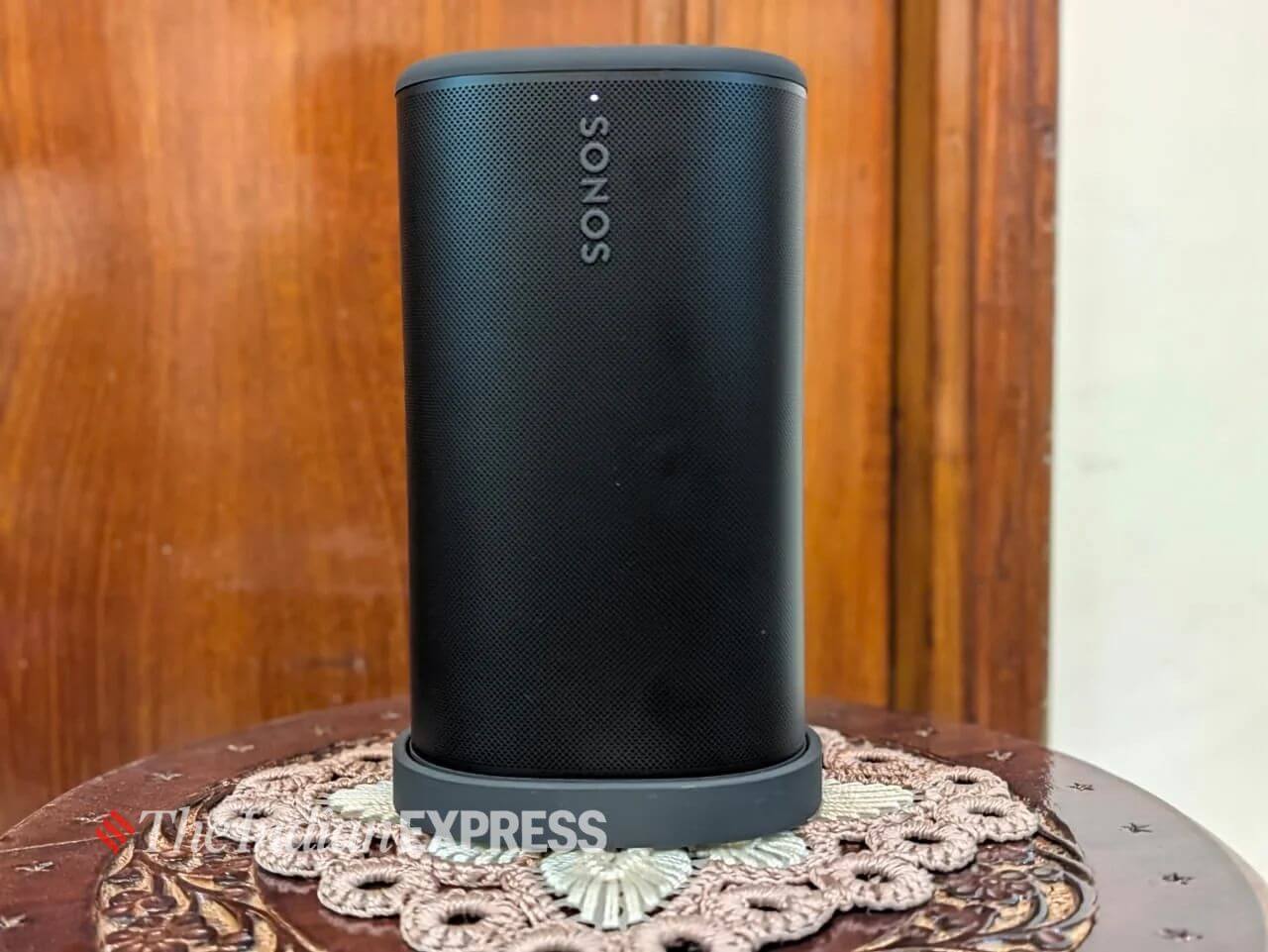 The portable speaker sits on its wireless charging base, but can be easily lifted and carried outdoors.
The Play follows the design of a compact bookshelf speaker. I could see how Sonos has taken bits and pieces from the Move 2 and the Era 100 and incorporated them into the Play. What I liked about the Sonos Play is that it has a rugged feel, but you wouldn’t immediately notice it. The speaker has heft; it’s dense, and you get the sense it’s built with premium internals.
At 1.3 kg, the Play isn’t featherlight, but I had no trouble travelling with it. However, after using the Play for weeks, I feel the speaker is designed for home use, an apartment balcony, or a friend’s place. The speaker has a minimalist design and clean looks, and it blends effortlessly wherever you put it, whether that’s a hotel room, bedroom, kitchen or living space. It’s like a luxury T-shirt with no visible logos: understated and a premium bespoke experience.
Story continues below this ad
The oval-shaped speaker, which came in black for my review unit, is also available in white. It has a rubberised top with playback buttons, volume controls, and a button to activate a voice assistant. You can choose between Sonos’ own voice assistant and Amazon Alexa. It also has a dedicated Bluetooth button and a hardware microphone switch to turn the microphone on or off. A small LED cluster on top indicates the connection, battery, microphone, and mute status.
The Play is primarily a Wi-Fi-based speaker, but it also supports Bluetooth 5.3 for use away from home, allowing you to stream music from your phone or another device. The speaker has a large 35Wh battery that you can easily replace at home. It offers up to 24 hours of Bluetooth playback and easily lasts a full day of Wi-Fi listening at 65 per cent volume.
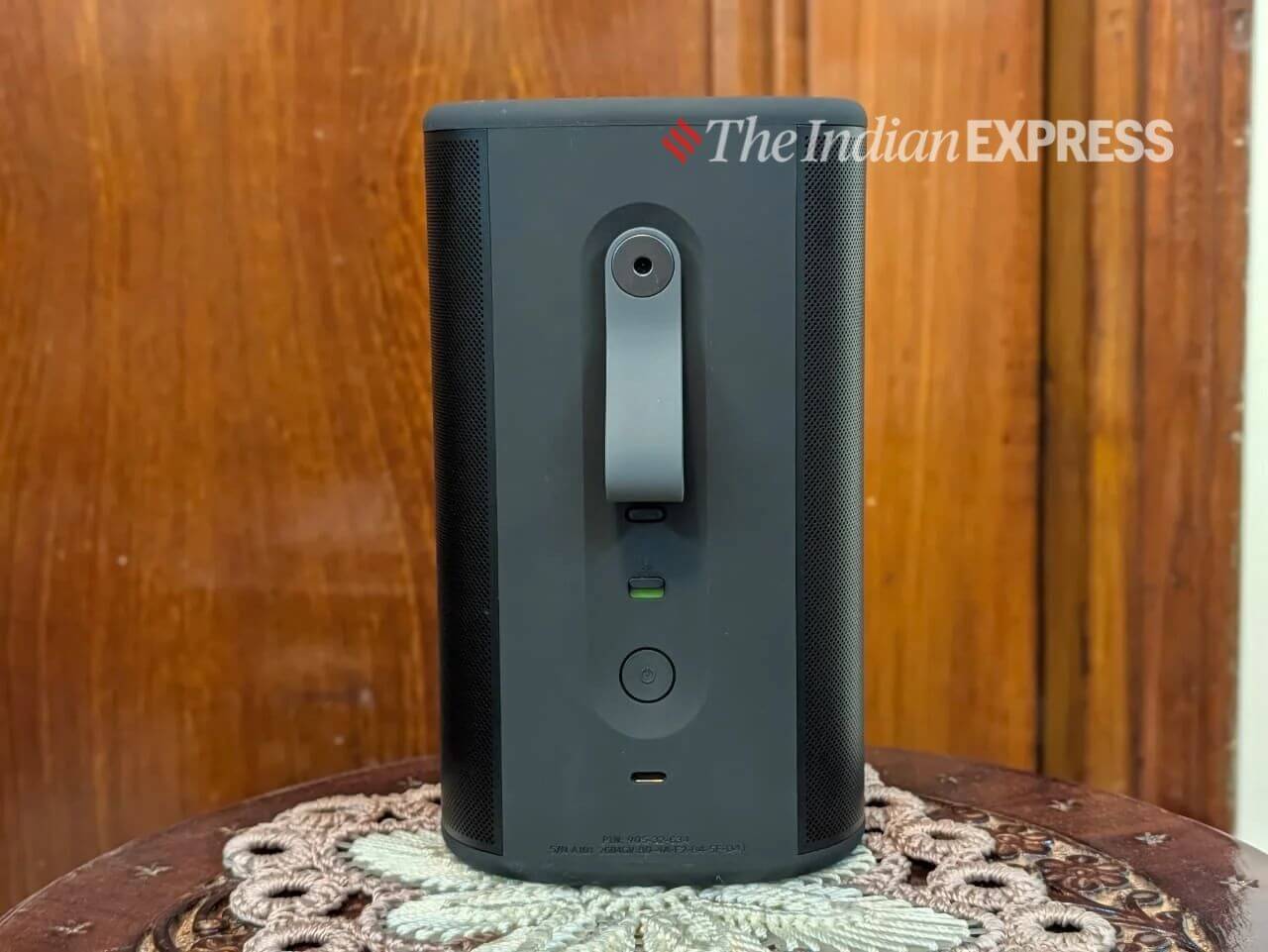 The speaker has a large 35Wh battery that you can easily replace at home.
The portable speaker sits on its wireless charging base, but can be easily lifted and carried outdoors. No cables or setup hassles needed. Sadly, the USB-C power adapter isn’t, so you need to buy an 18W charger separately or greater USB-C power adaptor, which needs to be 45W to support fast charging. I used my iPhone charger, and it works, but you still need a dedicated charger just for the Play.
Ecosystem advantage and the brand new Sonos 27 OS
Perhaps the biggest advantage of getting the Play is its integration with the Sonos ecosystem. If you buy the Play, you can easily integrate it with the rest of your Sonos speakers and products. In my case, Sonos provided two Play units, which I grouped together just like other Sonos speakers for multi-room audio.
Story continues below this ad
With support for virtually any music streaming service, you can stream music over the internet and control playback through the Sonos app, Spotify Connect, or Apple AirPlay 2. You can also link two Play speakers together to create a stereo pair. And that’s exactly what I did. Everything changed the moment the second Play was up and running. It took me less than 10 minutes to set up the second Play and pair the speakers. More on the audio experience later.
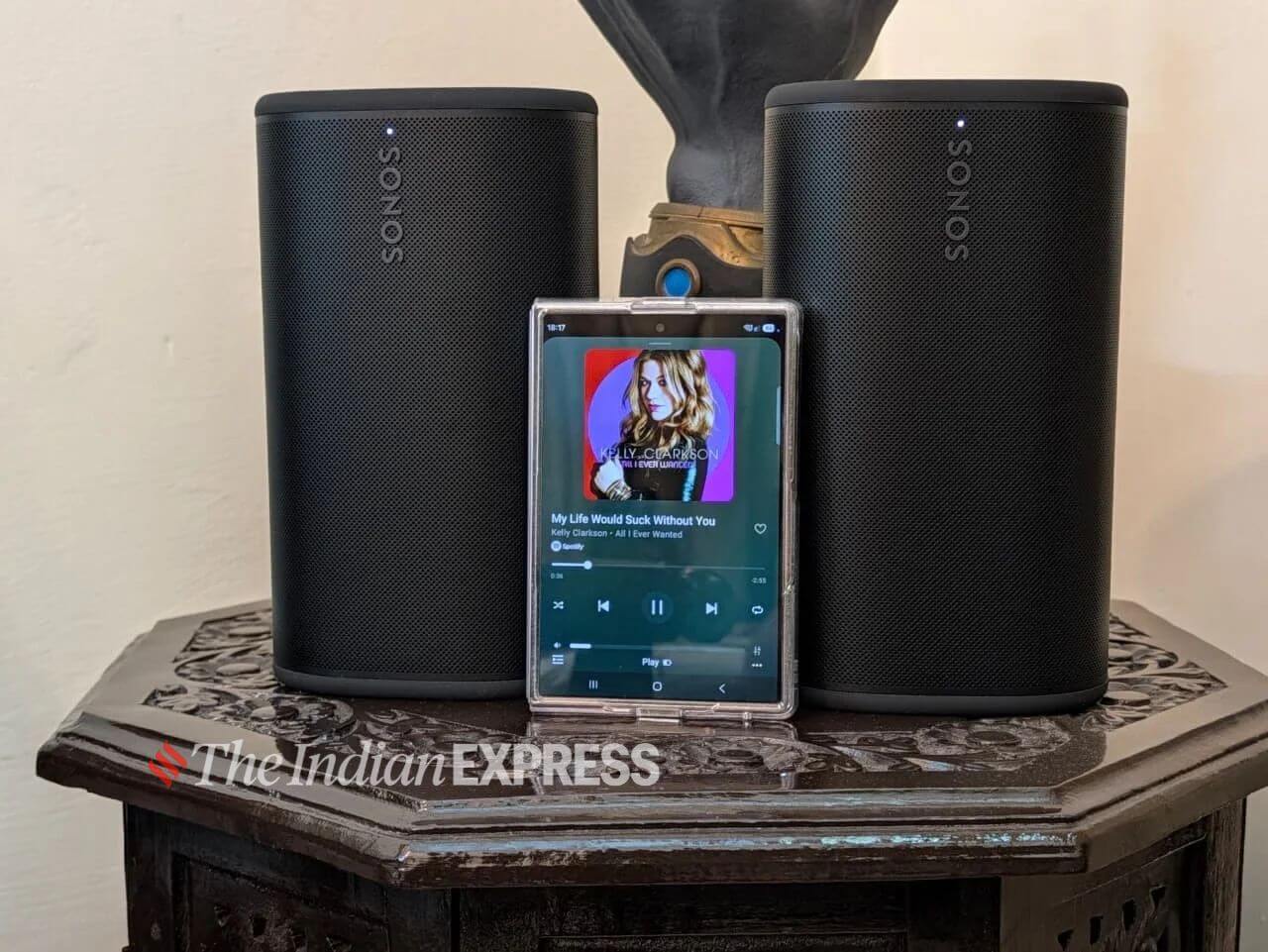 When I set up two Plays as a stereo pair, I was immediately impressed.
Beyond reviewing the Play, I was keen to test the new Sonos 27 operating system and the redesigned app. The app recently received a major redesign alongside the launch of the Sonos 27 audio operating system. Adding a speaker from the get-go is easy, with the app automatically detecting it. You can also add surround speakers and subwoofers through the app with just a few taps.
The app shows your entire Sonos system and, separately, your rooms. You can go into each room to add or remove speakers, and you can easily switch audio from one room to another, as long as the speakers support Sonos 27. What’s great about Sonos 27 is that it brings together your music services and controls, including Spotify, Apple Music, Bluetooth, AirPlay, voice commands, and AI assistance, under one operating system.
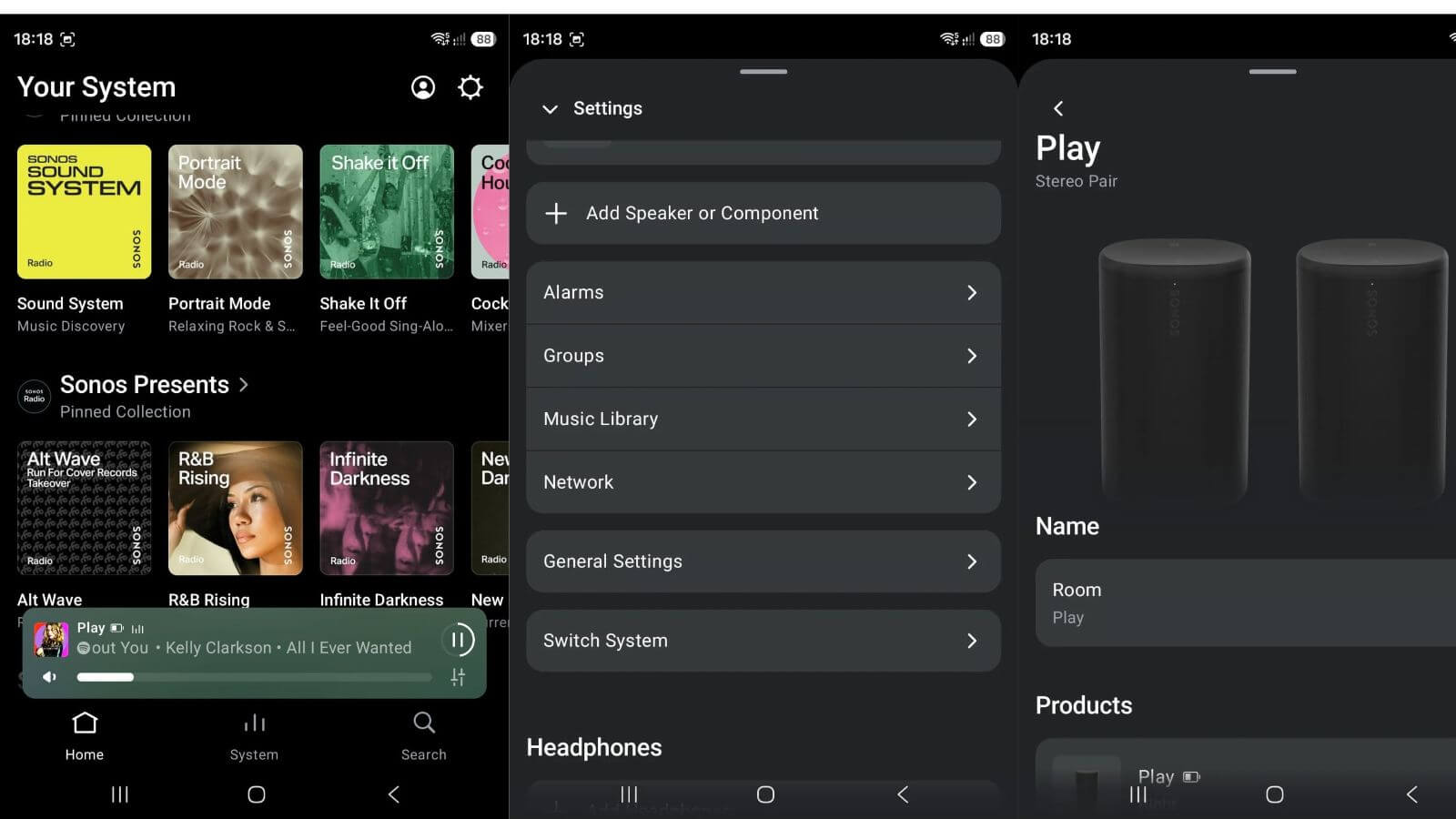 In the future, the new operating system will allow users to create their own AI agents. (Screenshots: Sonos app)
It features Sonos Voice, which lets you ask Sonos for what you want using natural voice conversations. It also supports AI assistants such as Claude and Gemini to help you play music around your home and interact with your Sonos system. In the future, the new operating system will allow users to create their own AI agents.
Story continues below this ad
Sonos 27 is an interesting proposition if you already live within the Sonos ecosystem, much like many of us do within Apple’s ecosystem. It all comes down to how much you are willing to invest in Sonos products, because the more you add, the more you’ll see the advantages of Sonos 27.
Exceptional audio quality
The Sonos Play features three Class-H digital amplifiers, two angled tweeters, and a single mid-woofer for a balanced sound. It also supports automatic Trueplay tuning, which adjusts the EQ based on the room, while the Sonos app lets you manually tweak the bass, treble, and loudness.
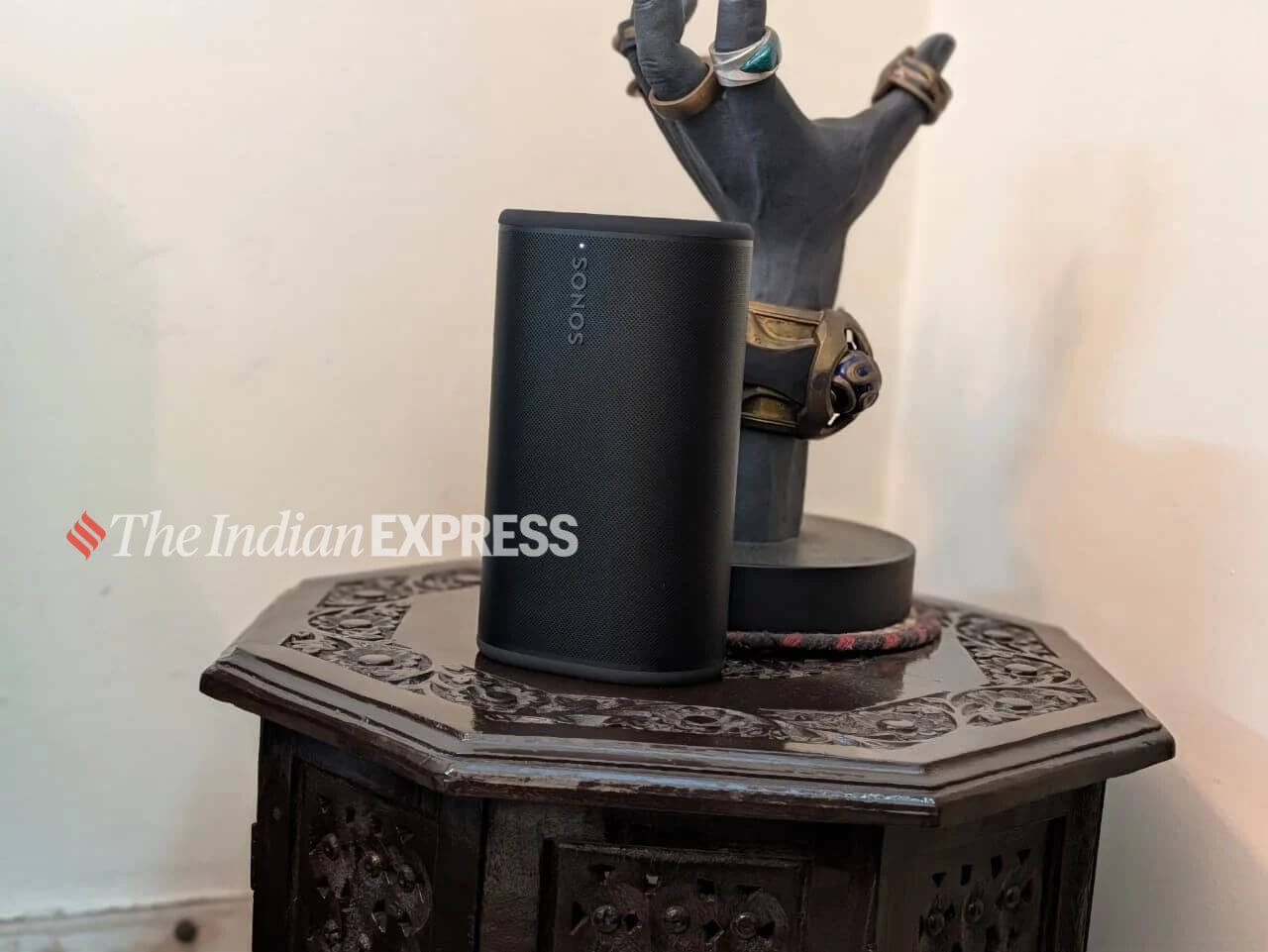 A small LED cluster on top indicates the connection, battery, microphone, and mute status.
I spent most of my time testing the single unit of the Play, listening to music. It has that signature Sonos sound that I am familiar with, having reviewed almost every Sonos product over the past few years. But, frankly, there is no real sweet spot when it comes to the Play. What I think Sonos has nailed is that, no matter where you put the speaker in a room, you get the same sound everywhere.
I can’t explain how good music sounds on the Play, since it’s also very subjective. That said, the Play offers excellent tonal separation, well-defined mids, detailed highs, and punchy bass. Vocals sound impressive too, although I felt the speaker lacks deep bass.
Story continues below this ad
When I set up two Plays as a stereo pair (bringing the total cost to Rs 71,998), I was immediately impressed. Using two speakers in stereo is wonderful, and the improvement in sound quality was immediately noticeable. The Play already does a great job delivering clear sound from anywhere in the room, but two speakers in stereo added a ton of detail and depth that was missing from the mono output of a single Play.
Final verdict
The Sonos Play sounds remarkably good for its compact size, and it looks great on a shelf or countertop. But it certainly isn’t cheap. Sure, it may be one of the best-sounding portable speakers on the market, but it’s also smart and easy to use.
With Sonos 27, the new app, long software support and a replaceable battery, Sonos is certainly moving in the right direction. The Play comes close to being the perfect portable speaker, but it still lacks spatial audio support and Dolby Atmos.


Nvidia-backed Reflection unveils first AI model to take on Chinese open models
By Sohail Khan · 6 Oct
Meta, TikTok, X challenge UK watchdog over online safety data demands
By Sohail Khan · 6 Oct
Leave a Reply