Shahi vs kadhai paneer: Why one has more calories and fat
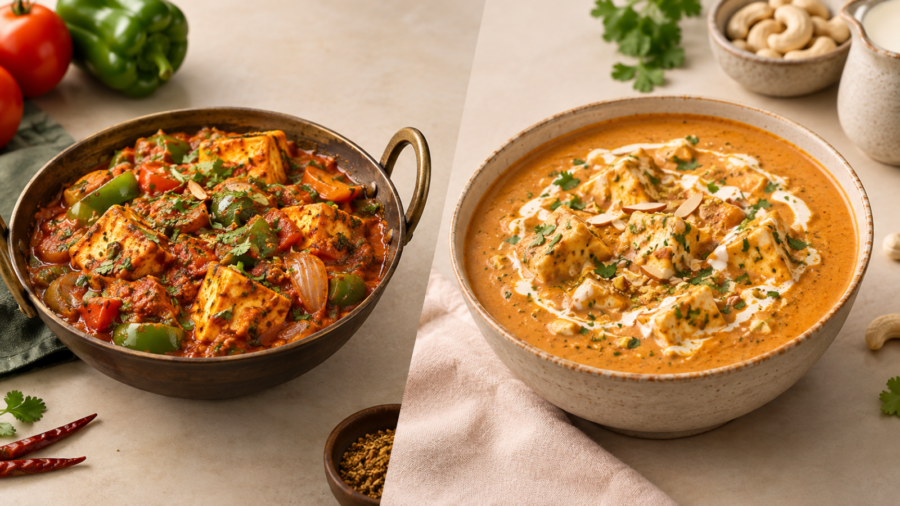
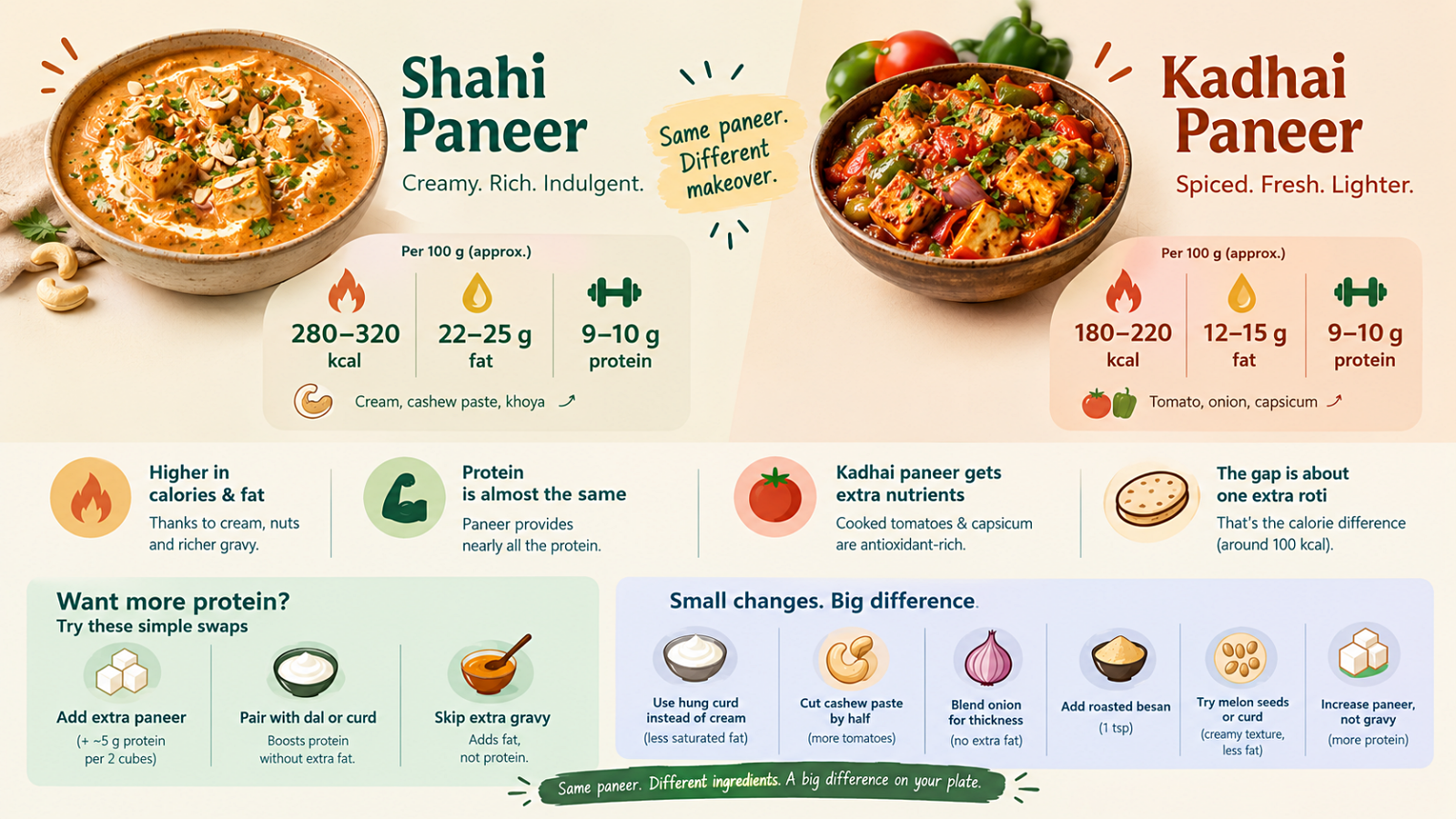
She adds that a 100-gram serving of shahi paneer contains around 280 to 320 kcal, 22 to 25 grams of fat, and 9 to 10 grams of protein, while the same serving of kadhai paneer has around 180 to 220 kcal, 12 to 15 grams of fat, and 9 to 10 grams of protein.
Thus, the protein difference between the two is small because most of the protein comes from the paneer itself, rather than the gravy.
Story continues below this ad
“Paneer supplies nearly all the protein either way, so ordering shahi over kadhai buys you extra fat, not extra nutrition,” the expert further adds.
So if you’re specifically looking to increase protein, choosing shahi paneer does not give you a meaningful advantage over kadhai paneer.
Why is shahi paneer higher in calories and fat?
The answer lies mainly in the gravy. Shahi paneer typically gets its richness from cream, cashew paste and khoya, while kadhai paneer uses a more tomato- and onion-based preparation.
“The extra fat in a shahi paneer serving is roughly what you would get from pouring two teaspoons of ghee straight into a bowl of kadhai paneer,” Malhotra tells indianexpress.com.
Story continues below this ad
She explains that cream, cashew paste and khoya are “low water, high fat ingredients”, which means they can pack more calories into the gravy.
By comparison, the tomato-onion base of kadhai paneer contains more water and contributes less concentrated fat.
 Information verified by Kanikka Malhotra, certified dietitian, nutritionist, and diabetes educator
Do cream and cashews make shahi paneer more nutritious?
Cashews themselves are nutrient-dense and provide nutrients such as magnesium and healthy fats. But their nutritional contribution needs to be considered in the context of the entire dish.
“A handful of whole cashews is genuinely nutrient-dense, offering magnesium and healthy fats,” Malhotra says.
Story continues below this ad
However, when cashews are blended into a rich gravy and eaten alongside rice or naan, the dish can become substantially more calorie-dense.
“Richness also quietly increases how much gravy people scoop per bite.”
Does kadhai paneer have a nutritional advantage?
Its vegetables can contribute additional nutrients. Kadhai paneer commonly contains tomatoes, onions and capsicum, and cooking does not necessarily strip these ingredients of their nutritional value.
“Cooking tomatoes does not destroy their value; it increases the body’s ability to absorb lycopene,” Malhotra explains.
Story continues below this ad
She also points out that capsicum “holds onto much of its vitamin C even after cooking.”
So kadhai paneer’s nutritional difference isn’t only about having less cream or cashew paste. Its vegetable-based gravy can also contribute antioxidants and other nutrients.
How can you make either dish more protein-friendly?
If protein is the priority, Malhotra suggests a simple swap: ask for more paneer rather than more gravy.
“The simplest lever nobody asks for is extra paneer instead of extra gravy.”
Story continues below this ad
According to her, “Two additional paneer cubes add close to 5 grams of protein for barely any extra fat, while a ladle of extra gravy adds fat with almost no protein.”
Another option is to pair either dish with a small bowl of dal or curd. This can raise the meal’s overall protein content without major changes to the paneer dish itself.
Can you make shahi paneer lighter?
You don’t necessarily need to completely change the dish. Small substitutions can reduce fat while retaining its creamy texture.
“Apply an 80:20 swap rather than a rewrite,” Malhotra notes.
She suggests replacing half the cream with hung curd or fresh milk and reducing the cashew paste while letting tomatoes contribute more of the thickness.
“Increase paneer slightly instead of gravy.”
Story continues below this ad
There are also other ways to create a thick, creamy texture. Malhotra suggests blended boiled onion, a small amount of roasted besan, soaked and blended melon seeds or curd.
“The larger point worth remembering: thickness is a texture problem, not a fat requirement, and once you separate the two, richness becomes optional rather than essential to how the dish feels in the mouth.”
So, if protein is the deciding factor, the two dishes differ little. The bigger nutritional distinction comes from what goes into the gravy, with the richer ingredients in shahi paneer pushing up its calorie and fat content.

‘You are licking an ice cube’: Vijay Deverakonda recalls cutting water intake for Liger
By Sohail Khan · 6 Oct
Punjab is among India’s top grain producers. So why is it unable to store it?
By Sohail Khan · 6 Oct
Leave a Reply