Riding Elon Musk’s Falcon 9 to space, how a Made-in-Gujarat satellite will help India
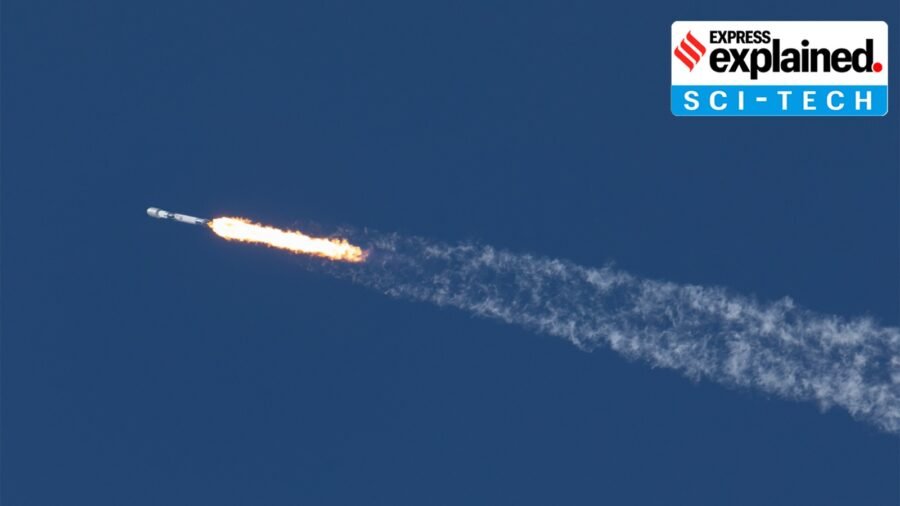
Liftoff of Transporter-18! pic.twitter.com/VAEHM1NG9K
— SpaceX (@SpaceX) October 1, 2026
The first of Thursday’s flights transported two American, a Canadian, and a Russian astronaut to the International Space Station on NASA’s Crew-13 rotational mission. The second mission, Transporter-18, was a smallsat rideshare mission that put a bit of India and Gujarat into Lower Earth Orbit (LEO).
Among the 130 payloads on the flight was TAPAS-1, India’s first commercial private thermal-imaging payload, developed by Ahmedabad-based space technology startup Satleo Labs.
LEOs can be at altitudes between 160 km and 2,000 km above the surface of the Earth, and TAPAS-1 has been injected into an orbit 500 km high, from where the satellite will capture high-resolution images of heat and temperature variations at locations across the planet.
Here’s why that matters.
Story continues below.
Subscribe to see fewer ads.
What are TAPAS-1 and Satleo?
The Thermal Access Platform for Analytics & Solutions (TAPAS) is a thermal infrared camera developed over a period of about 12 months by Satleo, a company founded in Ahmedabad in 2023 by spacetech entrepreneur Shravan Singh Bhati, retired ISRO scientist Dr Ranendu Ghosh, and sales and business development strategist Urmil Bakhai.
TAPAS-1 is a CubeSat-category payload, which are a class of cubical nanosatellites that typically measure 10 cm x 10 cm x 10 cm – roughly the size of a Rubik’s Cube – and are built using modular units and commercial components that are acquired off the shelf.
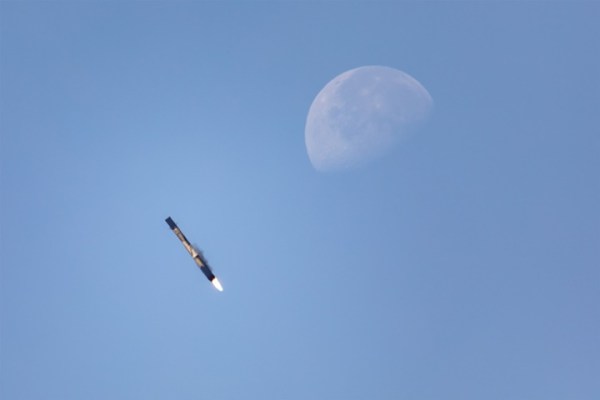 A photo of the Falcon launch. (X/@SpaceX)
CubeSats typically weigh between 1.3 kg and 2 kg per unit; TAPAS-1 weighs 1.5 kg. According to SpaceX, the 130 payloads on the Transporter-18 rideshare mission included CubeSats, microsats (which are small satellites typically weighing between 10 kg and 100 kg) and hosted payloads.
TAPAS-1 has been designed to capture changes in the heat emitted from the Earth’s surface in the form of images. This data can be analysed using artificial intelligence (AI), Bhati, the CEO of Satleo, told .
Story continues below this ad
Of what use is the thermal intelligence captured by TAPAS-1?
The use cases span a range of sectors.
Thermal imaging data from TAPAS-1 can be used by companies and institutions to gain critical insights into the management of complex issues relating to agriculture and defence, as well as for urban heat management, the monitoring of agricultural and water stress, and detection and monitoring of disasters such as forest fires.
“Temperature variations across different areas of a city can be tracked in real time. Different areas of a city have different temperatures. This can help municipal corporations undertake the necessary planning to address heat stress,” Bhati said.
Satleo Labs has already worked with the Ahmedabad Municipal Corporation on a pilot project to map temperatures across various areas of the city. Bakhai, the company’s Chief Strategy Officer, said the thermal imaging technology can function as a “thermometer for the Earth”.
Story continues below this ad
“It can provide highly important data for the agricultural sector. Through this, planning required for crops can be undertaken in a more modern and accurate manner. It can also be useful in urban planning,” he said.
Besides agriculture, disaster management, and urban planning, Satleo also lists on its website use cases for its thermal imaging solutions in archaeology and geology, which can help detect underground ruins and mineral deposits; climate modelling by monitoring of land and ocean surface temperatures and their fluctuations; and weather forecasting, storm predictions, extreme weather warnings, and analyses of climate patterns.
Does Satleo have any takers for its technology at the moment?
TAPAS-1 will remain in orbit for three years, and according to Bhati, the company has thus far received Letters of Intent worth approximately $52 million, of which around 60% have come from companies based outside India.
Bakhai pointed out that “Most importantly, there is no need to create any large-scale additional infrastructure (to use the satellite data for practical use cases). This data will be available directly from the satellite.”
Story continues below this ad
The company comprises a team of more than 40 professionals, and plans to launch eight more satellites of this type by 2029. Funding of Rs 60 crore has been secured for this planned expansion of operations, the founders said. “We plan to launch TAPAS-2 by April-May next year, which will be followed by a more advanced payload PYRO (Satleo’s proposed constellation of 10-15 microsats),” Bakhai said.
What is the official vision for private companies in India’s space sector?
In 2020, the Government of India opened the doors for increased participation by non-government entities in end-to-end activities in the space domain, and followed up these reforms with efforts to provide private stakeholders with regulatory certainty and a level playing field. The Indian Space Policy-2023 was formulated as an overarching framework to implement this reform vision.
To develop the spacetech sector and establish the state as a global manufacturing and innovation hub for space technology, the Gujarat government last year notified the Gujarat Spacetech Policy (2025-30), becoming the first state to announce a dedicated policy for the sector.
The state government has announced various incentives to startups and private investors in the spacetech sector, including provisions such as assistance for launch costs, support for intellectual property rights, and subsidies for testing facilities.

For constituting poll body, a lesson from the UN
By Sohail Khan · 2 Oct
Needed: A Super El Niño Abhiyan
By Sohail Khan · 2 Oct

Leave a Reply