Remuneration dispute: About 100 Maharani Cluster University guest lecturers protest for a week
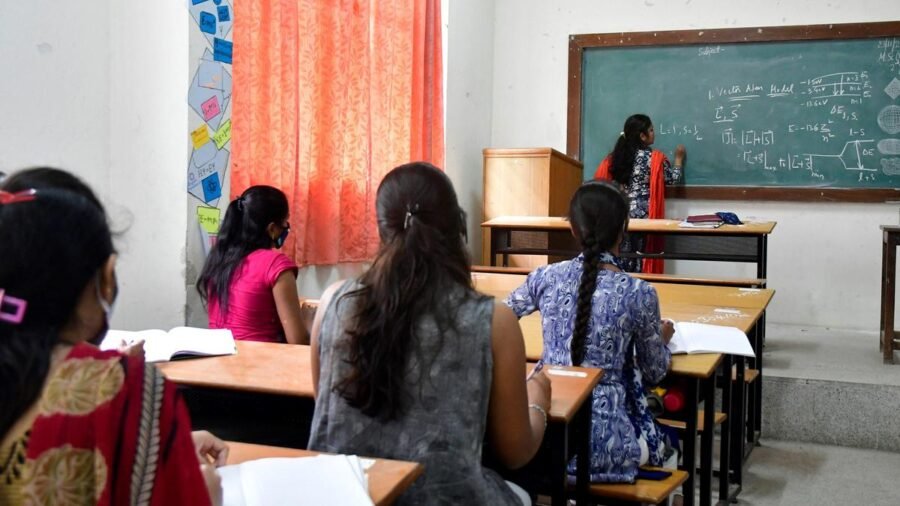
Due to certain confusing decisions of Maharani Cluster University and the Department of Collegiate Education (DCE), over 100 guest lecturers working at the university have gone without remuneration for the past two months.
They have been boycotting classes and staging a protest for the past week, and have warned of a hunger strike if the government does not resolve their salary-related issues.
The State government had instructed the university to recruit guest lecturers for 2026–27 on its own, but the university submitted a representation stating that it could not bear the remuneration cost.
Recruited by DCE
Subsequently, the government directed the DCE to make the recruitments, while the remuneration was to be disbursed at the university level. The DCE then appointed 106 guest lecturers to the university in August 2026 to teach arts, Science, and Commerce subjects. Meanwhile, the university directly recruited 30 guest lecturers to teach BCA, Data Science, and Artificial Intelligence.
For the guest lecturers it appoints, the DCE provides remuneration ranging from ₹35,000 to ₹40,000, which is paid after deducting about ₹200 for professional tax, with no Tax Deducted at Source (TDS). In contrast, guest lecturers appointed directly by universities receive remuneration of up to ₹50,000, with 10% to 20% TDS.
However, the university has taken steps to deduct TDS from the remuneration paid to the guest lecturers selected by the DCE as well, resulting in a confrontation.
What rules apply
The lecturers argue that being selected by the DCE and deputed, only the department’s rules should apply to them. “Guest lecturers appointed by the DCE to Nrupathunga Cluster University and Mandya Cluster University receive their remuneration without any TDS. If TDS is to be deducted, the university should recruit us directly and pay a remuneration of ₹50,000,” urged a guest lecturer.
“Teaching hours are determined based on the available workload for guest lecturers, and the remuneration is paid accordingly. As a result, most guest lecturers get only three to four teaching hours per week. In this situation, if TDS is deducted from the already meager remuneration, how are we supposed to make ends meet?” lamented another guest lecturer.
A guest lecturer said that during the university’s governing council meeting, an oral assurance was given that guest lecturers would receive a 10-month remuneration in accordance with the DCE’s regulations, with payments made by the 10th of each month, along with the issuance of service certificates. “However, the university is now refusing to issue service certificates. Worse, it has even failed to pay the remuneration for the past two months,” he said, adding that their appeals to the university and the Principal Secretary of the Higher Education Department have not resulted in action.
Speaking to , Mamatha B., acting Vice-Chancellor of the university, said, “TDS is being deducted in compliance with the order of the Income Tax Appellate Tribunal. Measures will be taken to ensure remunerations are made in accordance with university regulations.”
Chief Minister directs officials to make Mysuru flex-free during Dasara
By Sohail Khan · 4 Oct


Leave a Reply