Pakistan, Turkey say ‘military forces’ will help Saudi Arabia. Why this may not mean troops in active combat
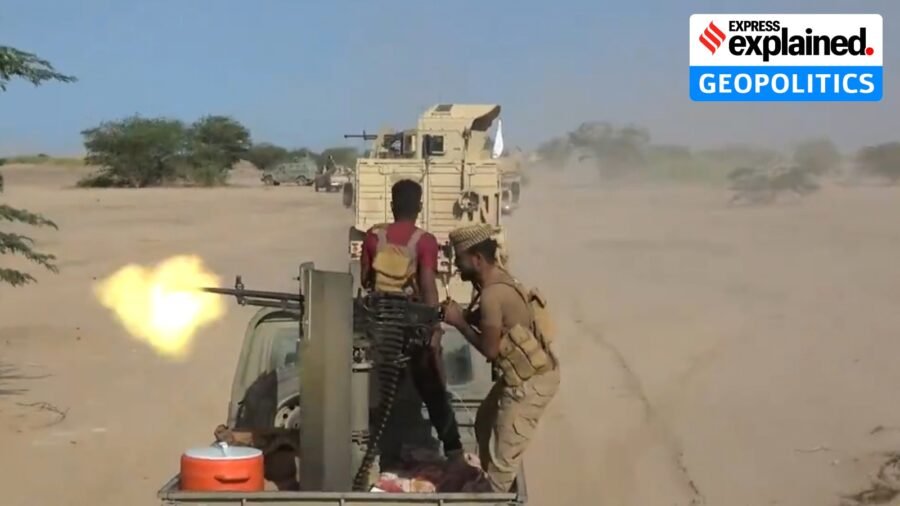
Turkey and Pakistan on Monday (October 5) agreed to provide military forces to Saudi Arabia as it battles Yemen’s Houthis, invoking their collective defence pact, the Mecca Alliance for Defence (also spelt as Makkah).
The announcement came as Yemen’s internationally recognised government, with heavy Saudi support, claimed to have pushed back the Houthi rebels from some key areas they had captured last month, including the strategic Red Sea port of Mocha.
The Houthis said they had hit airports, a refinery, and a military base in Saudi Arabia, though both sides dismissed each other’s claims.
Story continues below.
Subscribe to see fewer ads.
The Mecca Alliance parties met on Monday, after which they released a statement saying they “affirmed that the security of each Party is an integral part of the collective security of the three countries, and that translating the Makkah Agreement for Joint Defense into practical measures demonstrates the credibility of the commitment to collective defense…”
Do does this mean Pakistani and Turkish soldiers will be in active combat alongside Saudi Arabai’s defence forces? Not exactly, and at least, not immediately. Here’s why.
What the Mecca Pact statement says
Saudi Arabia, Pakistan and Türkiye signed the Makkah Joint Defence Agreement on August 7, 2026. The Makkah agreement says an armed attack on any one of the three countries will be regarded as an attack on all three. Earlier, Saudi Arabia and Pakistan had signed the Strategic Mutual Defense Agreement (SMDA) on September 17, 2025.
The fact that Saudi Arabia had been fighting the Houthis’ escalating attacks alone over the past month had raised questions about these defence pacts, specially the much-feted Mecca pact.
Story continues below this ad
The statement issued on Monday does speak of practical implementation, but a careful reading throws up questions.
“The Committee decided to move immediately to the practical implementation of the collective defense commitments and to take the necessary measures to provide the agreed military forces and capabilities and ensure their rapid deployment in the Kingdom, in accordance with the approved arrangements and the national legislation of the Parties, thereby enhancing readiness, military integration, and the collective capacity to confront and counter threats,” the statement says.
Thus, any proposed action is subject to the country’s internal laws. Turkey’s Parliament is yet to ratify the pact, something its officials had last month cited to explain why they hadn’t acted.
This seems to suggest that for now, Turkey’s support will be more about intelligence sharing and training than active deployment.
Story continues below this ad
Pakistan has sent similar signals. After Monday’s meeting, Pakistan’s defence minister Khawaja Asif, who had taken part in it, was asked by local TV channel Geo News about a possible operational role by Pakistan and Turkey. According to the newspaper Dawn, he replied that both nations had a “presence in theatre”, but only Saudi troops were involved in combat operations. “Whatever assistance they require is being provided. But right now, the Turkish and Pakistani armies are playing a supportive role,” he said, as quoted by Dawn.
Why Pakistan and Turkey won’t be keen to actively fight the Houthis
While the Makkah agreement is supposed to be a defence treaty, few details about its actual operational structure are available publicly. It does not delineate the escalation ladder, or what sort of response is expected from a member at which stage when another is facing attacks.
Both Pakistan and Turkey have earlier said that Saudi Arabia has not requested them to send combat forces to Yemen.
Pakistan, of course, also has another mutual defence pact with Saudi Arabia. However, barring a few fighter jets it sent in April when Iran was attacking US military assets in the kingdom, Pakistan hasn’t intervened militarily. Nor has Saudi Arabia come to Pakistan’s aid against Afghanistan, with both countries prioritising their own immediate concerns.
Story continues below this ad
Pakistan has a big reason to not antagonise Tehran too much — it shares a 900-km border with the Shia country, passing through the restive Balochistan region, and has the world’s second largest Shia population in the world, after Iran itself.
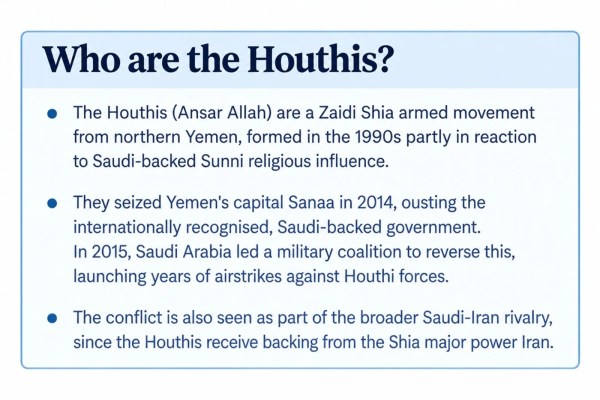
Then is the Iran factor. The Houthis have largely been trained and armed by Iran. If other countries were to enter active fighting on Saudi Arabia’s behalf, Iran and its allied militias might get behind the Houthis openly, adding another dimension to the US-Israel-Iran war and risking a much wider conflagration in the region.
Neither Turkey nor Pakistan wants to give up its role of mediating in the Iran conflict. Both countries have a lot more to lose if the Iran war drags on — due to oil prices and Israel’s stronger profile in the region — and would not wish to scuttle peace efforts there by deploying guns and boots against the Houthis.

How to test whether a compostable bag breaks down at home
By Sohail Khan · 6 Oct
Inside Ananya Panday’s Greece vacation: ‘Most beautiful five days’
By Sohail Khan · 6 Oct
The bone–blood sugar connection: What osteocalcin has to do with glucose control
By Sohail Khan · 6 Oct