Keeping up with UP: Bureaucrats entering politics – the hits and many misses
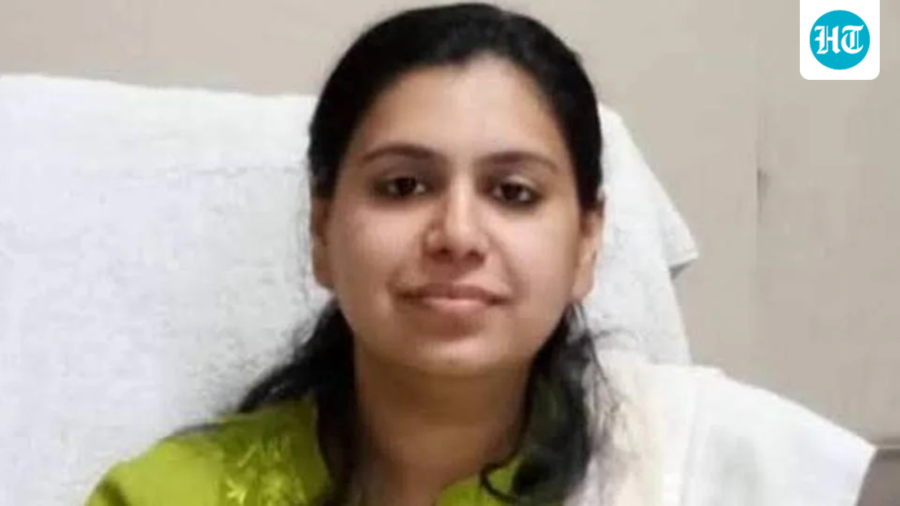
Bureaucrats may feel frustrated or constrained but the question is which domain gives them greater opportunity to deliver change
Published on: Oct 5, 2026, 13:12:15 IST
Prefer HTon Google
Share via
Copy link
Om Prakash Rajbhar, Uttar Pradesh cabinet minister and Suheldev Bharatiya Samaj Party (SBSP) president, was perhaps not far off the mark when he recently remarked that becoming an IAS officer maybe easier than contesting an election and becoming an MLA. Rajbhar’s observation came in the wake of the resignation by 2013-batch IAS officer Divya Mittal, who left the service to become, as she put it, the “unheard voice of the people”.
Mittal, whose career path included IIT Delhi and IIM Bangalore and a stint in the corporate sector in London, has said she will enter politics in UP even though her home state is Haryana. She said she plans to work with ordinary citizens and build a new platform around issues including education, corruption, employment and delays in delivering justice. Mittal so far hasn’t made public any plan to join parties like the BJP, SP, BSP and Congress. The state is also crowded with innumerable tiny caste-based parties though their influence limited to a region or a district.
Will she be successful? Or will her dreams of serving the people from a political pedestal fall flat?
The power dilemma: Who actually delivers?
Mittal’s transition has once again thrown open a broader debate on who actually wields power to take decisions and deliver results. And how far is it feasible for a bureaucrat to win elections without jonining a mainstream party?
Mittal is not the first bureaucrat to quit bureaucracy and join politics. She’s unlikely to be the last. A survey, however, may reveal that many who took this route for public service, often after retirement, were disappointed. While a few survived, many eventually were lost in the rough and tumble of Indian politics.
Even as I was writing this column, on Saturday, another high-profile bureaucrat, retired CBI director Nageshar Rao, entered politics with the objective to use his administrative experience for national welfare. He now heads the newly founded Sarvajan Sanatan Party (SSP) in Varanasi and proposes to contest all the 403 seats in the upcoming assembly polls in UP.
Opinions vary. Retired bureaucrat Anil Swarup, author of several books, said, “The ministers and civil servants, not MLAs or MPs, are true decision makers. They can best influence a decision. But eventually the decision will be taken by the civil servant.”
Bureaucrats may feel frustrated or constrained but the question is which domain gives them greater opportunity to deliver change. Moreover, while ministers have limited tenure, bureaucrats enjoy longer careers with potentially larger impact. Moreover, not every file goes to the minister and the implementation is done by civil servants, Swarup noted.
On the other hand, ministers and MLAs can often raise their unheard petitions in the corridors of power. Recently, for example, a cabinet minister staged a protest over a party worker’s killing and demanded action against cops. Several meetings were held to assuage the angry MLAs.
Conversely, another IAS officer Rakesh Verma, who quit service in 2020 and recently joined the Congress, believes, “It is better to join politics and boss over them.” He laments officers displaying their political and religious affiliations instead of adhering to strict impartiality or neutrality. “We were even careful in putting up annual calendars in our offices.”
Popularity vs polls
Contesting elections is a different ballgame and usually it is difficult to sail through the choppy waters independently. The candidates need to be aware of caste dynamics and also the financial heft to fight polls. Popularity does not necessarily convert into votes though there are notable success stories in recent years such as Aseem Arun, IPS officer, who won his maiden election from Kannauj and became a minister in the BJP government. Or PL Punia who was elected as an MP on a Congress ticket.
Yet many, including high profile figures like former CEC TN SEshan and Rajmohan Gandhi, failed to make it to the state assembly or parliament.
The case of former UP bureaucrat Vijay Shanker Pandey is an example. Pandey floated the India Rejuvenation Initiative to cleanse the political system of corruption after retiring in 2017.
This was years after the UP IAS Association had identified three most corrupt officers in the state.
The governments led by Kalyan Singh, Rajnath Singh, Ram Prakash Gupta, Mayawati, and Mulayam Singh Yadav did not take any action against them. Instead, one of the officers was elevated to the chief secretary's position. He contested an election from a newly founded party but failed.
Shailendra Singh, known as an upright police officer, had preferred to quit the service rather than bend to please political bosses and revoke POTA against Mukhtar Ansari. He twice contested the Lok Sabha elections: once from Varanasi as an independent in 2004 and from Chandauli as a Congress nominee in 2009. He said that social media can actually be of great help to candidates like him, given they are short on time and finances.
The mandatory cooling off period
Over the years, many have advocated a mandatory cooling off period to preserve the sanctity and neutrality of bureaucracy. However, the thin line insulating bureaucracy from politicians is getting blurred, raising questions about moral integrity. Even senior BJP leaders were in favour of a minimum five-year hiatus between a bureaucrat's retirement and his joining politics.
There have been instances in the past when a retired chief engineer, given an extension as a reward for overseeing Mayawati’s pet projects, was also given a ticket for assembly elections.
While many join parties as members of think tanks, others push their family members. The fact is there is no service rule that bars bureaucrats from joining politics immediately after retirement.
Once, school teachers used to actively participate in the elections. Now it is the turn of bureaucrats, who work in close proximity with politicians.
Get Current Updates on India News, Elections 2024, Lok sabha election 2024 voting live , Karnataka election 2024 live in Bengaluru , Election 2024 Date along with Latest News and Top Headlines from India and around the world.
See Less

A Dean’s dilemma in India’s AI Economy
By Sohail Khan · 5 Oct
How military dogs are trained to brave Ladakh’s 14,000-ft heights
By Sohail Khan · 5 Oct
Trisha Krishnan soaks in some morning Vitamin D: know why it is essential in your 40s
By Sohail Khan · 5 Oct
Leave a Reply