Kabul water crisis deepens as wells dry
Benchmarks
Nifty22,776.10220.35
FEATURED FUNDS★★★★★
Motilal Oswal Midcap Fund Direct-Growth
5Y Return
19.73 %
Invest Now
Enter search text:
Business News›News›International›World News›Kabul water crisis: Afghan capital edges towards 'day zero' as boreholes dry, drought bites and aid stays frozen
Read Today's Paper
Kabul water crisis: Afghan capital edges towards 'day zero' as boreholes dry, drought bites and aid stays frozen
Synopsis
Kabul faces a severe water crisis as aquifers deplete faster than they can be replenished. The population growth has resulted in excessive groundwater extraction from unregulated borewells. Many residents now rely on expensive water from private tankers due to limited piped water access. Contaminated groundwater exacerbates the situation, leaving residents with a lack of safe water.
 Agencies
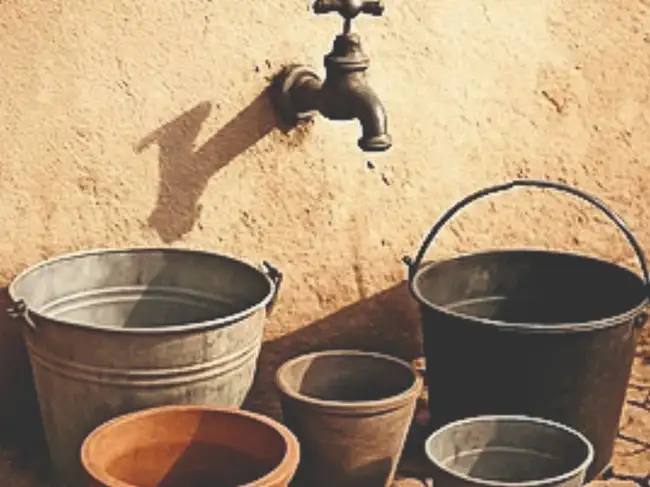
Kabul water crisis deepens as wells dry
Kabul is sliding towards becoming the first modern capital to run out of water, with its aquifers draining at nearly double the rate they refill and almost half of its boreholes already dry.
Groundwater levels in the Afghan capital have fallen by 25 to 30 metres over the past decade, according to a report by Prosper Global, the aid group formerly known as Mercy Corps. Extraction exceeds natural recharge by about 44 million cubic metres a year.
If current trends continue, the aquifers that supply most of the city could run dry by 2030, the report says. It cites UNICEF projections that such a collapse could displace about 3 million of Kabul's roughly 6 million residents.
Aquifers draining faster than they refill
Kabul sits in a wide valley on the flank of the Hindu Kush. Its three main aquifers hold more than 5 billion cubic metres of water, many times what the city needs, the report says. But only a fraction of that capacity is being maintained.
Over 120,000 unregulated borewells, along with hundreds of factories and greenhouses, are pulling water out faster than the rivers can replace it. The report says the city's population has grown from fewer than one million in 2001 to about six million today.
Borewells are also getting deeper. Until the mid-2010s, wells deeper than 100 metres were rare. Some residents now report drilling up to 300 metres to reach usable water. More than half of well-owning households surveyed had re-drilled at least once in five years, and some had done so up to five times. Many said the extra depth bought them only a year or two of use.
The spread of solar-powered pumps has added to the problem. They run round the clock and let households draw far more water than they need, the report says. Patchy enforcement of drilling licences has made it worse.
A city short of pipes
Only about 20% of Kabul households are connected to piped water from a central source, the report says. Even they get supply for just two or three days a week, for limited hours.
About 90% of residents depend on borewells. The rest buy from private tankers. An average resident gets about 20 litres a day, against a recommended minimum of 80 litres.
Rising cost, falling quality
Many families now spend 15% to 30% of their monthly income on water, up from about 5% before 2021. The UN benchmark for affordable water is 3% of household income. Private tankers charge upwards of $5 per cubic metre, about 12 times the historic rate, the report says.
About 68% of households have water-related debt, and informal lenders charge 15% to 20% a month in interest. In western Kabul's Khair Khana district, a household's weekly water bill can exceed its food spending, the report found.
Quality is a second problem. Up to 80% of the city's groundwater is contaminated with sewage, arsenic, nitrates and salinity, according to the report. Roughly 80% of residents use simple pit toilets, which let waste seep into the soil. The national environmental agency can test only three of ten water quality indicators because it lacks reagents and equipment, the report says.
Drought and shrinking snowmelt
Kabul's aquifers are recharged mainly by the Kabul, Paghman and Logar rivers, all fed by snow and glacier melt from the Hindu Kush. Between 2014 and 2020, snowfall across Afghanistan fell by nearly 20%, the report says. Paved surfaces in the city also mean that rain runs off instead of soaking in.
The wider picture is worsening. A UNDP report released in May this year found that drought prevalence in Afghanistan rose to 64% in 2025 from 34% in 2024. In the worst-hit regions, 92% of households reported drought impacts.
Rainfall has improved this year, Afghanistan's disaster management authority said in April. The UN Office for the Coordination of Humanitarian Affairs (OCHA) says a single wet season cannot make up for five consecutive years of drought.
Schools, clinics and farms hit
The shortage is already affecting services. Lack of clean water has forced some schools and health facilities in Kabul's suburbs to shut, the report says.
Groundwater supports about 80% of the farms around the city. The Qargha reservoir, which serves western Kabul, is operating at roughly half capacity because of silt build-up, the report says. It adds that rising salinity threatens more than 400 greenhouses.
Funding freeze
OCHA says about 16 million people in Afghanistan, roughly one in three, need water and sanitation help in 2026. It describes the 2026 Humanitarian Needs and Response Plan as significantly underfunded.
The report says about $3 billion in international water, sanitation and hygiene funding has been frozen since the Taliban returned to power in August 2021. In early 2025, OCHA partners had received only $8.4 million of the $264 million needed for planned projects. The report says the dismantling of USAID worsened the gap.
The report also points to loss of technical capacity at water agencies. A water engineer at the national environmental agency estimated that it has lost about 40% of its technical staff since 2021. The report notes that the Taliban government has repeatedly called water a priority, and that a ministry spokesperson in March 2025 rejected a Red Cross estimate that 33 million Afghans lack access to water.
Dams and pipeline on hold
The newest addition to supply is the Shah-wa-Arous dam, inaugurated in December 2024. It is designed to serve about 20,000 households, roughly 2% to 3% of the city's population, the report says.
Bigger projects remain stuck. India and Afghanistan announced the Shahtoot dam in February 2021. It is planned for Char Asiab district, about 30 km south-west of Kabul, and would supply drinking water to more than two million residents and boost groundwater recharge.
A 2012 feasibility study put the cost at $236 million. The report says the change of government, land rights issues and funding gaps have pushed the completion date to 2027, and construction had not started as of March 2025.
Pakistan opposes the dam, saying it would cut the Kabul River's flow into Khyber Pakhtunkhwa by 16% to 17%. The report says India's pledge to fund the project drew Pakistani accusations that New Delhi and Kabul were working to limit Pakistan's access to surface water.
A second project, a roughly 200 km pipeline from the Panjshir river meant to supply two million residents, has completed survey and design. It still awaits final approval from the Taliban leadership and additional investors, the report says.
What the report recommends
The report calls for stronger water regulation, wider piped networks that allow central monitoring, better data sharing among aid agencies, and more private sector involvement. It also says a managed aquifer recharge model, like one backed by the Asian Development Bank, could be expanded.
It describes the crisis as a failure of governance, humanitarian coordination, water regulation and infrastructure planning. Without large-scale changes in water management, it warns, Kabul faces an unprecedented humanitarian disaster within a decade, and likely much sooner.
Add 

(You can now subscribe to our WhatsApp channel)
(You can now subscribe to our WhatsApp channel)
Read More News on
Kabul water crisisdrought in AfghanistanKabul boreholes dryingKabul aquifers depletionUNICEF projections Kabulgroundwater contamination Kabulhumanitarian disaster in Kabulinternational funding freeze AfghanistanShahtoot dam project Afghanistan


Enter search text:
Continue reading with one of these options:
Limited Access
Free
Login to get access to some exclusive stories
& personalised newsletters
Login Now
Unlimited Access
Starting @ Rs120/month
Get access to exclusive stories, expert opinions &
in-depth stock reports
Subscribe Now
ET
Unlock Access to All Exclusives with ETPrime FREE TRIAL
15 Days Free: Unlock All ETPrime Exclusives, Market Tools & ePapers
Trial offer expiring in00 : 05 : 00
I'd rather pay ₹2599 now


Uh-oh! This is an exclusive story available for selected readers only.
Worry not. You’re just a step away.

Prime Account Detected!
It seems like you're already an ETPrime member with
Login using your ET Prime credentials to enjoy all member benefits
Log out of your current logged-in account and log in again using your ET Prime credentials to enjoy all member benefits.
Unlock ETPrime's Exclusive Stories Today!
Subscribe to gain powerful insights on business, stock market and industry trends.
Big Price Drop! Flat 40% Off
Student Only Offer
Already a Member? Sign In now
Already a Member? Sign In now
Already a Member? Sign In now
Offer Exclusively For You
Save up to Rs. 700/-
ON ET PRIME MEMBERSHIP
Avail Offer
Offer Exclusively For You
Get 1 Year Free
With 1 and 2-Year ET prime membership
Avail Offer
Offer Exclusively For You
Get 1 Year Free
With 1 and 2-Year ET prime membership
Avail Offer
Offer Exclusively For You
Get Flat 40% Off
Then ₹ 1749 for 1 year
Avail Offer
Offer Exclusively For You
ET Prime at ₹ 49 for 1 month
Then ₹ 1749 for 1 year
Avail Offer
Special Offer
Get flat 40% off on ETPrime
Avail Offer
Avail Offer
Claim NowAlready a Member? Sign In now
Need Assistance?
Connect with an ETPrime expert for personalized support and guidance
+91 9484700004
' + h3 + '
' + h4 + '
- ' + listing + '
What’s Included with

1Exclusive Insights That Matter
Uncover the truth with our investigative stories
Make strategic moves using the real-world case studies
Read industry-specific stories to identify emerging trends
Spot opportunities with in-depth insights that matter

Trump temper on H-1B visas is forcing Indians to do these things to stay put in US

What Adani’s US indictment means for India Inc’s overseas fundraising

Why veterans like Reliance, L&T are on acquisition spree? Aswath Damodaran has an answer.

Will China’s dollar bond sale in Saudi Arabia trump the US in financial world?

Huawei launches its own OS to compete with Google and Apple. But can it win beyond China?

The problem with lab grown diamonds

Why a falling rupee is a better option for the economy

A list of top 20 momentum stocks that have delivered massive returns in one year
2Invest Wisely With Smart Market Tools & Investment Ideas
Alpha Trade

Get daily trade ideas from SEBI-registered research analysts.
Investment Ideas

Grow your wealth with stock ideas & sectoral trends.
Stock Reports Plus

All-in-one stock research with Stock Score, peer comparison & key signals.
BigBull Portfolio

Get to know where the market bulls are investing to identify the right stocks.
Stock Analyzer
Check the score based on the company's fundamentals, solvency, growth, risk & ownership to decide the right stocks.
Market Mood

Analyze the market sentiments & identify the trend reversal for strategic decisions.
Stock Talk Live at 9 AM Daily

Ask your stock queries & get assured replies by ET appointed, SEBI registered experts.
3Stay informed anytime, anywhere with ET ePaper
ePaper – Print View

Read the PDF version of ET newspaper. Download & access it offline anytime.
ePaper – Digital View
Read your daily newspaper in Digital View & get it delivered to your inbox everyday.
Wealth Edition

Manage your money efficiently with this weekly money management guide.
4Times Of India Subscription (1 Year)
ePaper

Read the PDF version of newspaper. Download & access it offline anytime.
Deep Explainers

Explore the In-depth explanation of complex topics for everyday life decisions.
Health+ Stories

Get fitter with daily health insights committed to your well-being.
Personal Finance+ Stories

Manage your wealth better with in-depth insights & updates on finance.
5Enjoy Complimentary Subscriptions From Top Brands
Docubay Subscription

Stream new documentaries from all across the world every day.
Stories you might be interested in

DRDO tests indigenous high-altitude airship
By Sohail Khan · 6 Oct
India name New Zealand T20I, India A squads
By Sohail Khan · 6 Oct
Why India-US trade talks stalled again?
By Sohail Khan · 6 Oct
Leave a Reply