J&K’s poverty puzzle: Why EWS data says 92% of poor are in Jammu, 8% in Kashmir
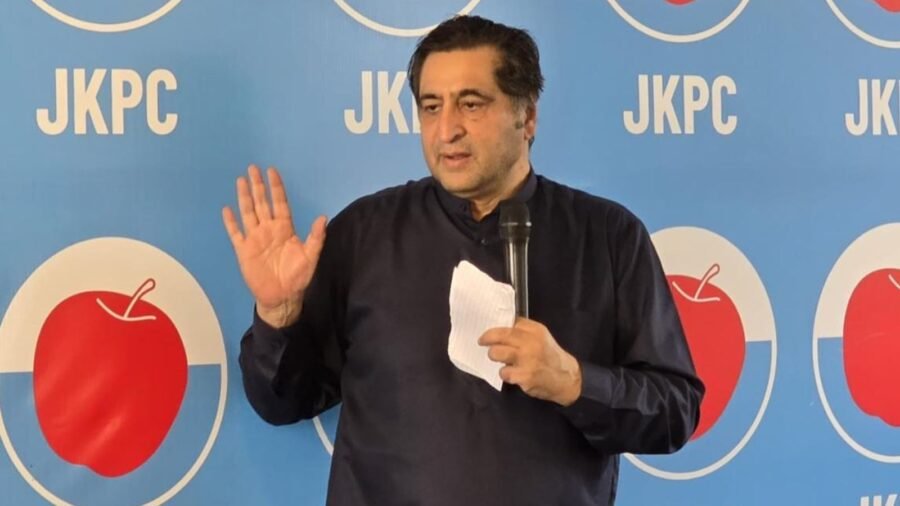
When he stood in the Assembly during a calling attention motion this week, Handwara MLA Sajad Lone had one important question: how does Jammu and Kashmir count its poor? “What is the definition of a poor person? We need a uniform definition of poor and poverty,” he said.
“As per the current definition of poverty, 92% of certificates issued for EWS [Economically Weaker Sections] are from the Jammu region and 8% from the Kashmir region. This almost means that 92% of poor people in J&K reside in the Jammu region and only 8% reside in the Kashmir region,” he said.
Lone’s remarks bring to the fore a raging debate in J&K ever since the Omar Abdullah government took office in October 2024 – rationalisation of reservation in education and jobs. The debate intensified after amendments to the J&K Reservation Rules in March 2024 increased the share of government jobs reserved for various categories, including raising the Scheduled Tribe (ST) quota from 10% to 20% after the inclusion of more communities in the ST list. The changes increased the overall reservation share from 43% to around 70% in government jobs, leaving 30% for open-merit candidates.
Story continues below.
Subscribe to see fewer ads.
The move triggered protests by open-merit students, who argued that the quota structure needed to be rationalised. It subsequently led the Omar Abdullah government to form a Cabinet sub-committee to examine the policy, which recommended restoring a 50:50 split between reserved and open-merit categories, primarily by reducing allocations under the Residents of Backward Areas (RBA) and Economically Weaker Sections (EWS) categories, while leaving the SC and ST quotas unchanged.
Chief Minister Omar Abdullah has said that the government has submitted its Cabinet sub-committee report on reservation to the Lok Bhawan, but is yet to hear back.
As per an answer to Lone’s question in the Assembly, the government has filled 7,580 job vacancies in the last two years. With EWS reservation fixed at 10%, 758 of these jobs would be reserved for EWS candidates. Based on the government’s EWS criteria, Lone said, 697 of these jobs would have gone to candidates from the Jammu region and 61 to those from Kashmir.
But as the debate rages on, Lone is now questioning whether the EWS criteria accurately reflect the distribution of poverty in J&K. In his remarks during the autumn session of the J&K Assembly, which concluded on September 30, the Handwara MLA alleged “discrimination with Kashmir Division in issuance of certificates under the Economically Weaker Sections (EWS) category”.
Story continues below this ad
Lone also pointed to another measure used by governments to identify economically vulnerable households – Priority Household (PHH) and Antyodaya Anna Yojana (AAY) ration cards.
There are 37.71 lakh PHH/AAY ration cards in the Kashmir region, compared with 29.81 lakh in Jammu. If that measure were used to determine the distribution of EWS jobs, Lone said, 417 of the 758 jobs would have gone to Kashmir and 341 to Jammu, he said.
According to Lone, the two measures produce sharply different pictures of poverty in J&K. “According to this definition, 55% of the poor live in Kashmir and 45% in Jammu. But according to the definition of the EWS criteria, 92% of the poor reside in the Jammu region, and 8% in Kashmir,” he said, adding: “How can the government spend crores in subsidies for the poor and then deny their poverty when they apply for a job?” Lone said.
The same disparity, Lone said, would be repeated in the 49,672 vacancies yet to be filled.
Story continues below this ad
“That quota for EWS reservation at 10% means 4,967 jobs will be reserved for EWS,” Lone said. He pointed to the regional disparity in distribution of government jobs too. “Out of 4,967 [EWS] jobs, 4,569 jobs are set to go to the Jammu region and about 398 jobs will go to the Kashmir region. By the PHH/AAY ration card criteria, 2,235 jobs would go to the Jammu region, and 2,732 jobs would go to the Kashmir region.”
As ‘Mohammad’ Deepak gets bail, two versions of events
By Sohail Khan · 3 Oct
At Jammu hospital, row over burqa ‘restrictions’, and an inquiry
By Sohail Khan · 3 Oct
Leave a Reply