Intel Wildcat Lake chips find an elusive formula and Acer Swift Air 14 proves it
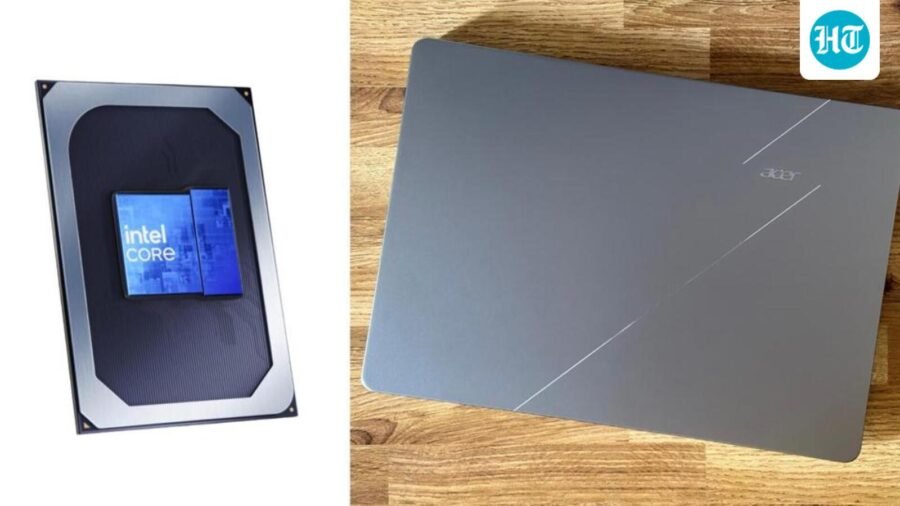
Intel has given Windows PC makers the key tool to build a strong answer to the Apple MacBook Neo, and they must make full use of it
Published on: Oct 5, 2026, 10:28:18 IST
Prefer HTon Google
Share via
Copy link
Much like how the Intel Arc G3 chips marked a milestone for portable gaming silicon for the Windows computing device ecosystem, the chipmaker is delivering another similarly pivotal milestone for the next generation of affordable laptops. The Intel Wildcat Lake processors are meant for affordable portable computing devices as well as smart edge devices in the age of artificial intelligence (AI). The Core Series 3 mobile chips are built on the advanced 18A manufacturing process, which represents a massive technological pivot for the chipmaker, which is clearly rediscovering the Midas touch of a few years prior.
Just in case you are wondering where the Wildcat Lake naming comes from, it is basically following Intel’s long-standing tradition of using geographic place names—specifically bodies of water, rivers, or lakes—as codenames for its consumer and client processor architecture. In the geographical context, there is a Wildcat Lake in Oregon and a Wildcat Lake in Washington. Intel’s engineering and design teams also often pick real locations near their major design hubs such as in Oregon or California. Panther Lake for instance, or Lunar Lake before that.
Intel shared the new Acer Swift Air 14 laptop (model number Swift SFA14-l31) to showcase the capabilities of their new Core 5 320 chip. Note the naming convention—it is Core Series 3 and that’s separate from the Core Ultra 3 which is part of the Panther Lake family, and those laptops will generally cost a bit more. The latter is meant for higher performance (up to 16-cores, as against 6-cores), graphics performance differences and a neural processing unit (NPU) that can do 40 Platform TOPS or trillion operations per second as against up to 180 Platform TOPS.
This underlines proposition differences, as Intel tries to give the crucial troika of performance, ultimate portability and battery longevity, its biggest boost in years.
Generational importance of 18A
I’ll get to this specific machine and the overall experience, but its important to understand the leap 18A effectively provides as Intel tries to find a response to Apple’s own silicon efforts, the MacBook Neo’s performance and value proposition as well as the effective deployment of the A18 Pro chip from the iPhone in a laptop. To be fair, the trajectory is positive for Intel. In fact, the Acer Swift Air 14 is meant to rival the MacBook Neo and that’s the key context for Intel’s Wildcat Lake processors.
Two key innovations define the Intel 18A architecture. First is the advancement in transistor architecture with the RibbonFET Gate-All-Around Transistors, which marks a generational upgrade from Intel’s FinFET architecture introduced in 2011. Instead of a fin, the redesigned electrical channel consists of vertically stacked, ribbon-shaped wires which prevent electrical leakage, improve power efficiency, and allow transistors to switch much faster.
Secondly, PowerVia Backside Power Delivery designed by the Intel Foundry, moves the grid of power lines to the back of the silicon wafer, leaving the front dedicated to data lines. Traditionally, both data signals and power lines were built on top of the transistors, which often caused electrical interference. This also reduces voltage drops by up to 10 times, Intel says, and allows chips to run at much higher frequencies (that immediately means better sustained performance), up to 38% lower power consumption and improvements to chip density.
This uses the layout lineage from the Panther Lake chips by combining the high-performance “Cougar Cove” P-cores and low-power efficient “Darkmont” LPE cores. These chips integrate the dual core Intel Xe3 graphics architecture which pairs with the dedicated NPU, and specifically, Intel has designed these chops for lower TDP (or thermal design power) which reduces the amount of heat measured in watts that a chip generated under workloads.
The Intel Core 5 320 vs. MacBook Neo
The Acer Swift Air 14 laptop gets 8GB memory and a 512GB solid state drive, which is par for the course for most affordable laptops. With that as the context for what’s around the Core 5 320 chip, performance certainly is a bright spot. Specifically for this laptop, which is priced around ₹84,999 at this time, and carries an inevitable weight of component pricing inflation. The fact that you get to work with 8GB RAM, adds weight to my point. The way things are, this has now become the ‘mid-range’ for laptops, something that till a few years ago, ranged around the ₹50,000 mark. The Apple MacBook Neo costs around ₹79,900.
Despite Windows and macOS platform differences (and there is a chasm, if we get into that debate), the comparison with the Intel Core 5 320 chip and the Apple A18 Pro chips on the GeekBench benchmark does give us a fair indication of the parity that Intel has largely achieved—and that itself is a big step forward.
In the single-core benchmark test, the A18 Pro in the MacBook Neo running macOS 27.0.1 Golden Gate registers a score of 2966, while the multi-core benchmark test generates a score of 7714. In comparison, the Intel Core 5 320 chip on the Acer Swift Air 14 running the latest Windows updates, registers 2302 in single-core tests and 7788 in the multi-score tests. The latter is actually better than the A18 Pro chip, and underlines how close Intel has gotten in terms of overall performance delivery, efficiency and the resulting experience for Windows PCs.
On the point of efficiency for a moment, the Acer Swift Air 14 lasted just longer than 15 hours in my real-world usage assessment, with carelessly opened Google Chrome tabs, multiple documents on Microsoft Office apps and interspersed with video streaming as well—all with screen brightness around the 50% mark. Mind you, this is a very bright 14-inch screen (1900 x 1200 resolution), and most office as well as home scenarios would not need this to be higher than 3 clicks up from the lowest brightness level. At that point, the battery will last a couple of hours longer.
Acer has done a brilliant job with the design of the Swift Air 14. It is just 13.3mm slim, with the MacBook Neo measuring 12.7mm in thickness. This is a premium chassis, made of aluminium and with a sophisticated diamond-cut finish on the lid to exhibit Acer’s “S” evolution if you look closely. Unlike most Windows laptops that tend to taper, the Swift Air 14 retains the same thickness front to back, and there is a very subtle silver border which adds a nice shine. Not entirely sure which colour options Acer will bring to India, but Frost Blue and Lilac purple could sell well.
There is no other way of putting this: Acer puts far too much bloatware, that is preloaded apps, web shortcuts in the Start Menu and games, on the SFA14-I31. Understandably, this is a revenue stream for the PC maker, but every single unwanted add-on does partake in its share of the system resources. This is one of the reasons why similar hardware across Windows and macOS, respond and behaves quite differently.
There is resounding material evidence which suggests Intel has delivered the exact silicon family that Windows PCs need to compete with Apple’s smart move of using the silicon already used in the iPhone, for the MacBook Neo laptop. And if the experience with the latest generation A20 Pro chip in the iPhone 18 Pro is anything to go by, that benchmark will get reset again soon enough. The Intel Core Series 3 mobile chips have significantly closed the performance and efficiency chasm that defined the two ecosystems till now. Now it is up to the PC makers to let go of old bad habits, and utilise the chip leap to their advantage. Because if they don’t, years of struggle await.
Track live Stock Market Today updates and check your NSE IPO Allotment Status Today. Stay informed with the latest business news like N Chandrasekaran, petrol and diesel prices, gold and silver rates, income tax updates, and major economic developments across India and globally.
See Less

GST registration may soon need just one form
By Sohail Khan · 5 Oct
‘Democracy in ‘great peril’: Former SC judge on SIR
By Sohail Khan · 5 Oct
Anthropic’s Claude goes local in India
By Sohail Khan · 5 Oct
Leave a Reply