In Maharashtra, the story of a drought foretold
Advertisement
The 1972 drought brought out the best in politicians who truly cared about ordinary people. Troubled by the harsh conditions, Vitthal Sakharam Page, then chairman of the state Legislative Council, asked his wife how much cash she had at home. Mrs Page found just about Rs 700. He then asked how many labourers that might support, and she replied, “Around 10 for two weeks.” A dedicated Gandhian, Page quickly raised the matter with the then chief minister, Vasantrao Naik, calling for Rs 100 crore to help the state’s poor. Naik invited Krishnarao Dhulap of the Peasants and Workers Party (PWP), the Leader of the Opposition, to discuss raising the sum. In a rare and heartening move, Dhulap and the entire Opposition proposed a tax raise, which the treasury backed. The Assembly unanimously agreed to add a 15 paise surcharge per passenger on state transport bus tickets. This fund created the Employment Guarantee Scheme (EGS), recently renamed VB-G RAM G (Viksit Bharat – Guarantee for Rozgar and Ajeevika Mission). It’s pretty rare to see the opposition calling for a tax rise.
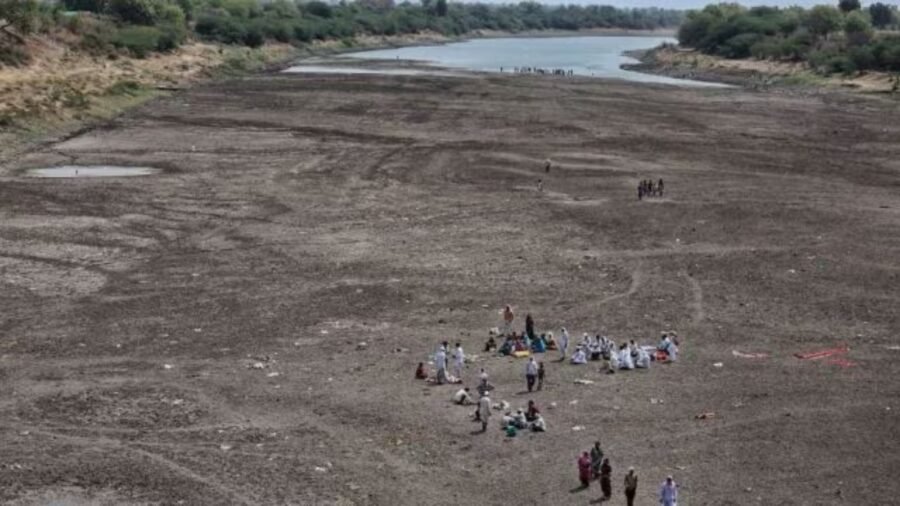
Cut to 2026. Even before the formal conclusion of the monsoon, the state — already constrained by a debt of Rs 11 lakh crore — is securing additional borrowing to fund a Rs 45,000 crore drought relief programme. Although the central government has set a borrowing ceiling of Rs 1.20 lakh crore for the current financial year, the state has already consumed Rs 50,000 crore in loans over five months — much before the drought was officially declared. At the time of the budget presentation in March, a revenue deficit of Rs 40,552 crore and a fiscal deficit of Rs 1.5 lakh crore were projected. This year, the state has allocated a substantial Rs 70,000 crore solely for interest servicing on its borrowings — a figure expected to rise as further debt is incurred. Against this backdrop, Fadnavis, who also holds the finance portfolio, presented supplementary demands totalling Rs 97,000 crore during the first quarter of the current financial year. This is no less than a habitual profligate begging for funds the day after payday.
Welcome to today’s Maharashtra, which is safe to characterise as fiscally imprudent and entrapped in self-imposed challenges. Money matters aren’t the only hurdle the state faces. The state is missing figures like V S Page, who could dream up clever ideas for everyone’s benefit, and opposition leaders such as Krishnarao Dhulap, who showed real generosity by suggesting a tax to help tackle the drought. A discernible shortage of competent personnel and leaders demonstrating public accountability is evident, as Fadnavis is compelled to address every issue personally. He has few ministers on whom he can depend.
Advertisement
The three-party coalition presents significant challenges for the administration. Representatives from the governing parties are predominantly occupied with securing “drought-affected” status for their constituencies. The power-sharing arrangement has fostered a competitive environment concerning the number of regions obtaining this designation. Every prominent leader is endeavouring to ensure their constituency is included. A formal declaration of drought triggers automatic financial, administrative and social support from the state. This enables them to shower political largesse on the electorate at public expense, regardless of whether all areas are genuinely affected.
This, in a state which, despite having the largest number of dams of any state in the country, has just about 17 per cent to 18 per cent of the total cropped area under irrigation. It leaves the vast majority of the farming community reliant on delayed or insufficient rainfall. From 2012, Maharashtra has recorded a negative agriculture growth for quite a few years. Even this year’s Economic Survey projects moderate growth of just around 3.4 per cent compared to the high of 9.1 per cent recorded in the previous fiscal year. It’s worth mentioning that Maharashtra received over 100 per cent rains in the year gone by.
So far this year, the state has announced drought in 265 out of 358 talukas. It’s quite likely the government will soon label the whole state — apart from Mumbai and its nearby suburbs for obvious reasons — as drought-hit. In contrast to 1972, the current expectation is for increased state intervention, given that the administration is aligned with the central governing party. When electoral appeal becomes the overriding imperative for political survival and victory the exclusive objective, it is scarcely feasible for the authorities to remain indifferent. Where the “double-engine” government has struggled to demonstrate tangible development, its commitments will be rigorously tested during drought conditions.
The writer is editor, Loksatta

Aloo vs gobhi vs pyaz paratha: Which is the healthiest breakfast option?
By Sohail Khan · 4 Oct
Tuvalu: Barely above water
By Sohail Khan · 4 Oct
Leave a Reply