House panel might consider recommending measures for cryptocurrency monitoring
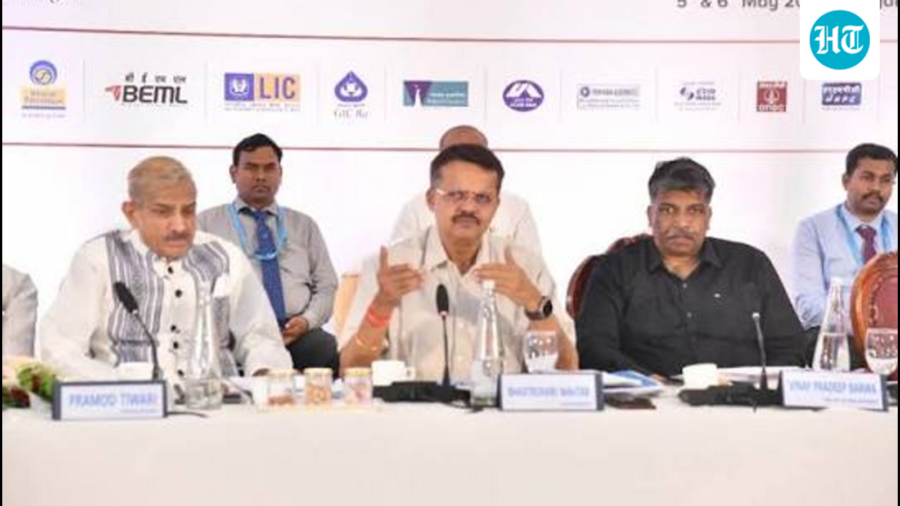
Lawmakers might ask the government to bring in better technology to track crypto transactions, build more blockchain capacity
Published on: Oct 2, 2026, 11:48:31 IST
Prefer HTon Google
Share via
Copy link
Parliament’s standing committee on finance might consider recommending additional measures for better transparency and monitoring of cryptocurrency, and may evaluate the Union government’s current position on the sector.
Functionaries aware of the details told that, in the report the panel is now preparing, lawmakers might ask the government to bring in better technology to track crypto transactions, build more blockchain capacity to strengthen surveillance, and consult stakeholders on whether the country should maintain its current position on crypto assets. A blockchain is the shared digital ledger on which crypto transactions are recorded.
The panel, led by BJP lawmaker Bhartruhari Mahtab, has held eight meetings since September 8 last year on Virtual Digital Assets (VDAs), a legal term that covers cryptocurrencies and non-fungible tokens (NFTs), which are unique digital certificates of ownership of a particular digital item.
As per data from the Financial Intelligence Unit (FIU)-India, the finance ministry agency that tracks suspicious financial transactions, there were 36 million KYC (know-your-customer) verified accounts or users with registered Virtual Asset Service Providers (VASPs), such as crypto exchanges, at the end of April 2025, with estimated crypto holdings of approximately ₹34,000 crore. By May 2026, the number of these accounts increased to approximately 39.3 million, while the estimated value of crypto holdings declined to approximately ₹20,436 crore. Based on these figures, the average holding per KYC-verified account in May 2026 was around ₹5,200.
“India does not have adequate technology that is being used for virtual digital assets. We have to depend on others. That technology is beneficial to the people, but the methodology that is being used, that is of concern. So just by stopping virtual digital assets, the question is, should we deny the technology or it is to be adopted. So, there are a number of other issues also involved, which the committee is looking into,” said a senior lawmaker.
“China has totally stopped crypto and banned it because they can afford to do and they are quite competent enough to have a number of blockchain mechanisms, which we do not possess,” said the lawmaker.
Better blockchain capability can help improve surveillance of cryptocurrency by making transactions easier to track and verify across different networks. The FIU can follow cryptocurrency as it moves from one blockchain to another, but experts have pointed out to the panel that the government needs better tools to trace transaction records across different blockchains.
A second lawmaker said the panel would also look into the current policy and discuss whether it should be changed. Across the globe, countries have taken a heterogeneous approach: some have banned crypto while others have allowed it.
The government’s first prominent position on crypto assets was articulated by then finance minister Arun Jaitley in his budget speech for 2018-19. “The Government does not consider cryptocurrencies legal tender or coin and will take all measures to eliminate the use of these assets in financing illegitimate activities or as part of the payment system. The Government will explore the use of blockchain technology proactively for ushering in the digital economy,” he said. Legal tender is money that must be accepted for settling debts and payments.
In 2022, finance minister Nirmala Sitharaman brought crypto into the tax net with a 30% tax on income from digital assets, with no room for offsetting losses from other transactions. A 1% tax deducted at source (TDS) was added on transfers of VDAs.
Taken together, India currently takes the middle path: taxing what has been declared but denying legal recognition to crypto.
See Less

A lawyer who led India: The Hindu’s collection on Gandhi’s 157th birth anniversary
By Sohail Khan · 2 Oct
Avoid DNA test for correcting father’s name in birth record: Kerala HC
By Sohail Khan · 2 Oct

Leave a Reply