Gandhi’s first fight was for the vote
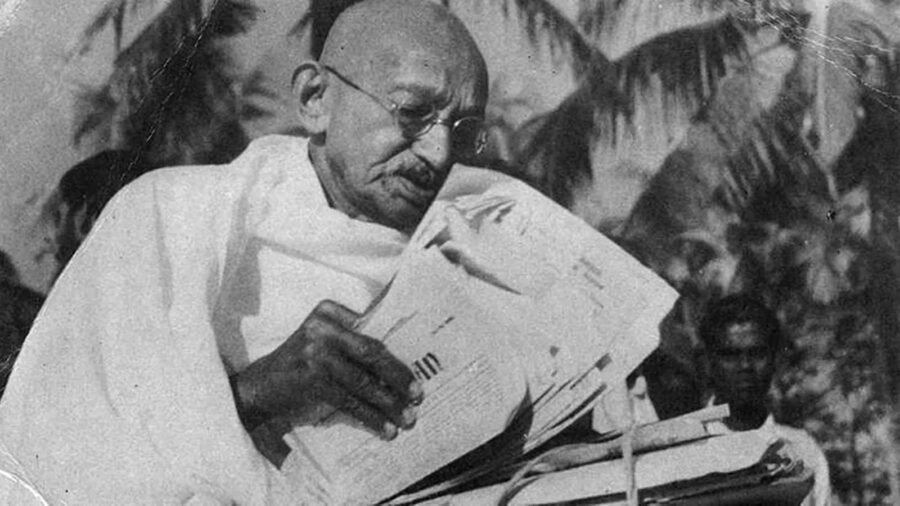
Against the backdrop of the raging SIR controversy, Gandhi Jayanti is an opportune moment to recall the young lawyer Mohandas Gandhi and his travails in South Africa, where a colonial regime was seeking to deny Indians their vote. His first political battle was not satyagraha but the right to vote. In July 1894, the Natal government proposed to disenfranchise Indians as part of colonial policy. In his petition to Lord Ripon, Secretary of State for the Colonies, Gandhi wrote that an Indian without the vote would lose “self-respect, to remain in the Colony”. A year later, he warned that the consequences of disenfranchisement were “too dreadful to contemplate”.
That fight, in a colony, became his template for India and what he envisioned for the free Indian citizen. In the decades preceding 1947, many in Congress and in Whitehall argued that India was too illiterate, caste-ridden and diverse for adult franchise. Gandhi opposed this unequivocally. In Young India and Harijan through the 1920s, he argued that universal adult franchise must be the basis from day one, for it compels the powerful to listen. At the 1931 Round Table Conference, he demanded it without qualification, for men and women, rich and poor, literate and illiterate, irrespective of faith and caste. There, he recounted from personal experience how voters’ lists could be manipulated. In September 1896 in Durban, Mohandas Gandhi found his name on an electoral roll even though he had not applied. A candidate, knowing a few Indians had the vote, had included Gandhi’s name without his knowledge to secure his support. Recalling this 35 years later, he said, “Since then, I have known how voters’ lists are prepared.”
Advertisement
Elections in free India have been plagued by money and muscle power, but never have so many citizens been disenfranchised en masse as by the SIR, tainting the moral sheen that gives equal weight to each voice in the democratic template. Why recall this on October 2? India adopted universal adult franchise at the Republic’s founding in 1950, when even European democracies were hesitant to give women the vote. It was Gandhi’s idea and resolve that later became the law. Today, the SIR has made a mockery of the sanctity of the citizen and the vote.
If rolls are revised in an illegal manner that contracts rather than expands voter lists, this is a repeat of what Natal did in 1894, using venal procedure to narrow the voter base and shrink their rights. On Gandhi Jayanti, those part of the administrative machinery steering the SIR, all sworn to abide by the Constitution, must abide by the Gandhian counsel and the three tests. First, does a revision increase citizen self-respect or diminish it? Second, is the roll prepared impartially or with the “favourable prospects of victory of a particular candidate” in mind, the very manipulation Gandhi saw in 1896? Third, is the vote being treated as a right to be protected or a privilege to be granted?
Voter erasure of this scale is not a technical error. It is selective “civicide” (destruction of citizen rights) leading to “disfranchiside” (intentional mass disenfranchisement). As Gandhi wrote in 1894, an election is not an event but the constitutional guarantee that the weakest still counts. On his birthday, this is the Gandhi India must remember — not just the man with a staff, but the young lawyer who understood that a name on a list is a right, and a name struck off is state-endorsed turpitude.
Advertisement
The writer is director, Society for Policy Studies, New Delhi

To cash in on next tech boom, India needs the right chips
By Sohail Khan · 2 Oct
Indian official attends SCO event in Pakistan: 5 broad takeaways
By Sohail Khan · 2 Oct
Gandhiji was a man of God, hence Mahatma
By Sohail Khan · 2 Oct
Leave a Reply