From the Opinions Editor | America, Israel and an unsettled question: Can war win elections?
Advertisement
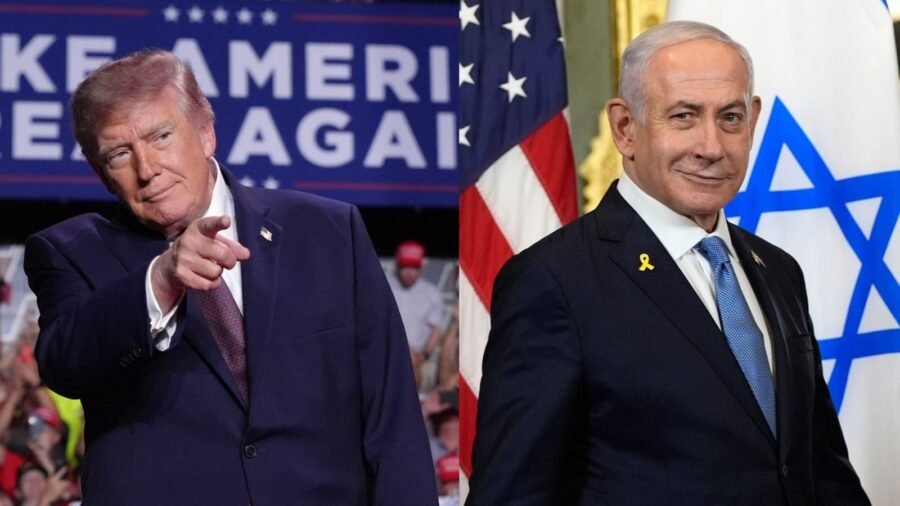
Even as the dramatic details of what happened in the cockpit were emerging, the political and geopolitical implications of the attempted “9/11-like” attack were being discussed. Israel is set to go to the polls later this month, and the fate of the vexed conflict in West Asia may well turn on the result. Benjamin Netanyahu will hope that the threat of terrorism will help him scrape through, and paper over domestic discontents and international opprobrium for his government’s actions in Gaza.
Half the world away, national capitals will watch another set of elections closely. On November 3, all 435 seats in the US House of Representatives and 35 out of 100 Senate seats will go to the polls. Along with several gubernatorial races, these midterm elections will shape, if not determine, the fate of the US war with Iran; the balance of power in the Russia-Ukraine war; and whether the White House’s use of trade and tariffs to bully friends and adversaries alike will be restricted or expanded. Much will depend, according to opinion polls and analysts, on whether Trump can shore up a peace of some sort with Tehran.
The question in Tehran and Washington, and in many other democracies, then, is this: Can war and jingoism help win elections?
Advertisement
The conventional wisdom, coupled with the cliché of the cynical politician and gullible public, would have you believe so. In the 1997 film Wag the Dog, starring Dustin Hoffman and Robert De Niro, a US president caught in a scandal (a distinctly Jeffrey Epstein-esque one at that) hires a Hollywood director to “produce” a fictional war with Albania to get a boost in the polls.
George W Bush, for example, attacked Iraq on the flimsiest of pretexts — WMDs, messages from God, spreading democracy — and won a second term on the back of what could be seen as manufactured consent. And FDR won an unprecedented fourth term during World War II.
In the UK, Margaret Thatcher succeeded in cementing her image and distracting from a substantial amount of discontent with the Falklands War. Ronald Reagan constantly invoked the red spectre, and his “defeat” of communism is a pillar of the conservative icon’s legacy in the US. Even in the developing world, external enemies — whether a “foreign hand” or a neighbourhood dispute — have been used by political leaders to win support. Indira Gandhi, by all accounts, was at the height of her popularity after India’s defeat of Pakistan in 1971.
The problem with trying to establish simple causalities in politics, though, is that “the people” are an amorphous entity. The same person is, depending on circumstances, part of a mob, a crowd, an electorate and a public. External threats, real and imagined, can often unite people behind an incumbent government. But, used too often as tool and a political plank, it will give diminishing returns.
Take Clement Attlee, the man who defeated arguably Britain’s most iconic prime minister at what should have been the height of the latter’s popularity. Winston Churchill was the voice the British people heard throughout WWII, the man who stood against Hitler, and eventually emerged victorious. Yet, in 1945, it was a Labour leader who did not have either Churchill’s charisma nor his love of Empire that the people chose. Attlee, arguably, was instrumental in ending the Raj as soon as it did after the war.
George Bush Sr presided over the first “televised” war — Operation Desert Storm in 1991 — but lost to the charismatic Bill Clinton in 1992.
Closer home, Atal Bihari Vajpayee’s NDA government could not return to power in 2004 despite India’s success in the Kargil war during his term. And, in what is a tragic irony, Donald Trump campaigned — both in 2016 and 2024 — on ending America’s “forever wars”, a promise that lies in tatters as the conflict with Iran inches towards the nine-month mark.
Conflict can, indeed, bring unity and paper over differences. But not always. The Iraq and Afghanistan wars were fought in the aftermath of 9/11, a horrific act that shook a superpower. No similar justification exists for the attack on Iran — the spectre of WMDs redux is cutting less ice now. And, in the age of the internet and social media, trust in governments is, in many countries, at an all-time low. Coupled with a cost of living crisis, the electorate may not be swayed as it once was. Clearly, politicians realise this: Trump, for example, announces an imminent peace deal as often as he calls for mass destruction.
Of course, elections can turn on a moment’s notice. But if a politics of jingoism, of “wag the dog” provides diminishing returns, the world is better off for it.
Till next time,
Aakash Joshi
Recommended Reading
1. In democracy’s journey to future, Gandhi is the wise guide and co-traveller
2. The ghosts of 1945 are being recruited for today’s contest over Asia
3. US, Iran and the missing endgame
4. Between Trump’s US and Xi’s China, the trap India must avoid

Science Snapshots: October 4, 2026
By Sohail Khan · 4 Oct
Gyanesh Kumar row: Key takeaways from Kerala probe, protests against ECI and SIR
By Sohail Khan · 4 Oct
France high school students’ protest: What sparked violence, what’s next
By Sohail Khan · 4 Oct
Leave a Reply