Five-run penalty after three warnings to batters: what other changes ICC make?
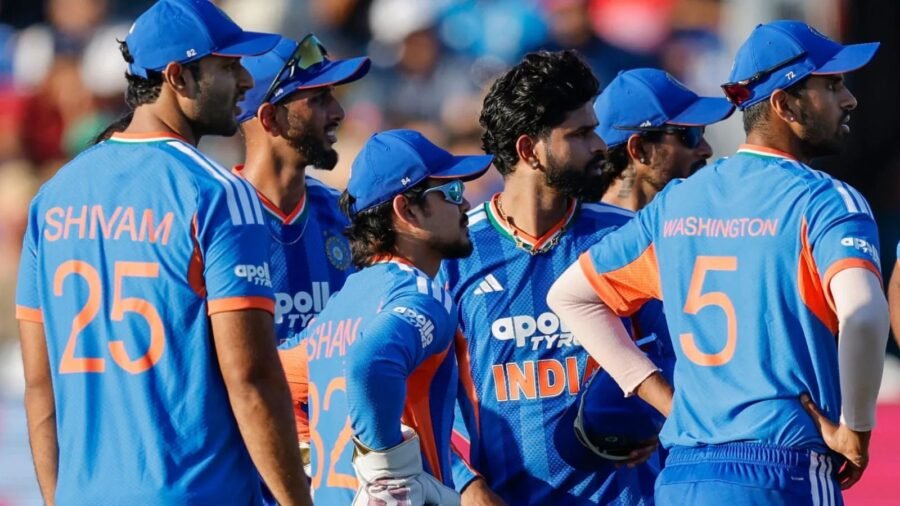
On Thursday, the International Cricket Council (ICC) introduced new rules predominantly related to playing conditions, including time-wasting, certain aspects of fielding and specifications for the ball to be used.
However, the conditions will come into effect starting with the series that begins after today; ongoing series will resume under the previous set of regulations.
Under the new playing conditions, batters wasting time will receive a warning for the first and second instances; five runs will be awarded to the fielding side if the batter repeats the offence a third time.
Story continues below.
Subscribe to see fewer ads.
The ICC decided that the use of pink balls must be mutually agreed upon ahead of a Test match, and it remains binding for the whole contest. “As a trial, pink balls may be used in daytime Tests by mutual agreement to reduce loss of play due to bad light. The use of a pink ball must be agreed before the start of the Test and once agreed, must apply for the duration of the match,” the ICC said in a statement. “The decision cannot be changed after the match has started. Switching from a red to a pink ball is also not allowed once the match has commenced,” it said.
Former Indian captain Sourav Ganguly, now the ICC Men’s Cricket Committee Chair, said a series of steps have been adopted to help the sport keep pace with modern times.
“There are some important changes to the Playing Conditions, including provisions relating to cricket balls, greater clarity around certain aspects of fielding and measures aimed at improving the pace of the game.”
“These changes have been carefully considered to ensure the Playing Conditions continue to reflect the needs of the modern game while maintaining its integrity and consistency,” said Ganguly.
Story continues below this ad
One of those steps is that now the play will no longer automatically end at the fall of a wicket in the last over of the day, if the weather and conditions are fit for play to continue.
This change was made because the old rule did not save time, as the remaining deliveries still needed to be bowled the next day.
Currently the women’s cricketers have been using balls meant for junior cricket, but henceforth differently measured balls will be used for that segment. “For women’s and junior cricket, manufacturers have often produced a single ball for both categories.
New limits have now been introduced, establishing three distinct size and weight specifications for men’s, women’s and junior cricket,” the ICC stated.
Story continues below this ad
As per the new definition, the ball, when new, shall weigh not less than 5 ounces (142 grams), nor more than 5.25 ounces (149 grams), and shall measure not less than 8.46 inches (21.5 centimetres), nor more than 8.66 inches (22 centimetres) in circumference.
(With agency inputs)

Asian Games: India women look to upstage China in hockey final
By Sohail Khan · 1 Oct


Leave a Reply