First international cargo vessel leaves eastern Assam since 1947
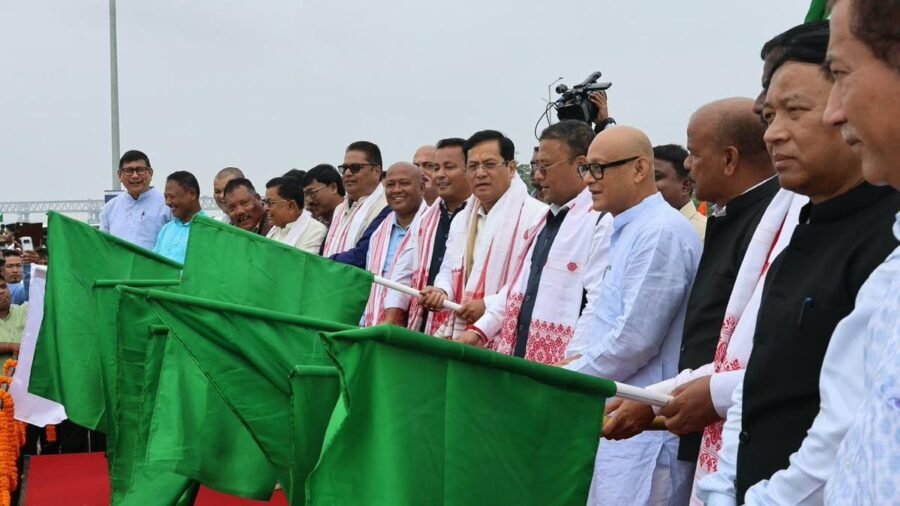
A barge carrying 540 metric tonnes of methanol left the Bogibeel Terminal in Dibrugarh district for Dhaka, Bangladesh, on Monday (October 5, 2025), marking the first international shipment from eastern Assam since India’s independence in 1947.
Sarbananda Sonowal, Union Minister of Ports, Shipping and Waterways, flagged off the vessel DLB Patkai, pushed by the tug Kushal Konwar, carrying methanol produced by the State-owned Assam Petrochemicals Limited in Namrup.
The vessel, destined for Pangaon port in Dhaka’s Narayanganj, will travel about 768 km down the Brahmaputra River (National Waterway-2) to the India-Bangladesh border, and continue along the Indo-Bangladesh Protocol Route in the neighbouring country. The total distance is about 1,300 km.
Mr. Sonowal said the cargo shipment is seen as a test of whether the Brahmaputra can serve as a commercially viable freight corridor linking the northeastern region to overseas markets.
“Our grandparents grew up hearing the steamer whistle at Dibrugarh ghat. For 70 years, that whistle fell silent, and the ships stopped coming. A cargo vessel has left Dibrugarh for the world once again. The river never failed us, but the will to revive the route was lacking for decades,” he said.
Chief Minister Himanta Biswa Sarma, who attended the flagging-off virtually, said the revival of international cargo movement was a “proud day for Assam”.
Inland Waterways Authority of India officials said the shipment became possible after Customs and Immigration complexes were recently set up at Bogibeel and Dhubri. Dhubri, on India’s border with Bangladesh, is metaphorically where the Brahmaputra blends into the Jamuna in the neighbouring country.
Busy past
Dibrugarh was once among the busiest river ports in eastern India. Government-run steamers reached the town from Calcutta, now Kolkata, by 1856.
The vessel DLB Patkai, pushed by the tug Kushal Konwar, is carrying methanol produced by the State-owned Assam Petrochemicals Limited in Namrup. Photo: SPECIAL ARRANGEMENT
In 1882, the Dibru-Sadiya Railway began operating from the Dibrugarh ghat. By 1913, steamers sailed up the Brahmaputra to the town daily, carrying tea, timber and passengers.
The 1947 Partition cut that route, forcing Assam’s goods to pass through the then East Pakistan to reach Calcutta. A 1950 earthquake disturbed the riverbed at Dibrugarh, and regular bookings from Dibrugarh ghat stopped in 1954.
The Dibrugarh ghat closed on October 15, 1956, as western ports on the Brahmaputra — Dhubri and Pandu in Guwahati — continued to handle international cargo occasionally.
The 1965 war between India and Pakistan suspended cross-border river trade. India and Bangladesh signed a river trade protocol in 1972.
In 1988, the 891 km stretch of the Brahmaputra from Sadiya to Dhubri was declared National Waterway 2. Regular cargo service on the waterway resumed in December 2017, when cement moved from Pandu to Dhubri.
According to the Ministry of Ports, Shipping and Waterways, cargo on India’s national waterways rose from 18 million metric tonnes in fiscal 2013-14 to 218 million metric tonnes in 2025-26.
More than ₹68 billion (about $770 million) is being invested in waterways across the northeast, including the development of National Waterway-2, a ship repair facility at Pandu and last-mile connectivity to Pandu port, Mr. Sonowal said.
“Every tonne we move on the river means less fuel burnt and fewer trucks on the highway,” he said, adding that India is working with Bangladesh, Nepal, Bhutan, and Myanmar on regional waterway links.
‘Draft reservation list for polls to rural local bodies ready’
By Sohail Khan · 6 Oct
Fire breaks out on reality show set at Goregaon Film City; no injuries reported
By Sohail Khan · 6 Oct
Mayawati reappoints Akash Anand as national convener in BSP
By Sohail Khan · 6 Oct
Leave a Reply