‘Economic resilience cannot mean global insulation’
Benchmarks
Nifty22,421.95-198.5
FEATURED FUNDS★★★★★
Motilal Oswal Midcap Fund Direct-Growth
5Y Return
19.6 %
Invest Now
Enter search text:
Business News›News›Economy›Policy›Economic resilience cannot mean global insulation; domestic production "may cost more": Principal Secy to PM
Read Today's Paper
Economic resilience cannot mean global insulation; domestic production "may cost more": Principal Secy to PM
Synopsis
PK Mishra emphasized the need for India to remain open to global markets while enhancing economic resilience. He indicated that domestic production could be more expensive than imports, which highlights the need for a better risk assessment. Businesses are increasingly postponing investments and diversifying suppliers due to economic uncertainties. Mishra underlined that building domestic capabilities must focus on competitiveness rather than merely substituting imports.
 ANI
ANIRelated
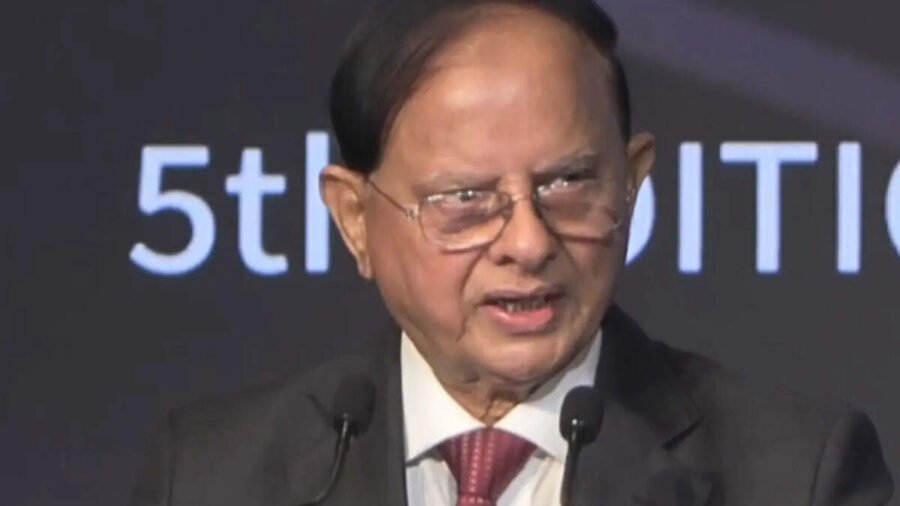
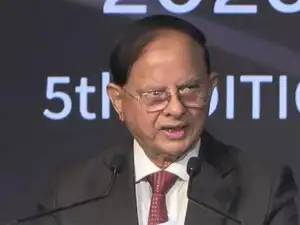
New Delhi: India's push for economic resilience should not mean insulating itself from global markets, said PK Mishra, Principal Secretary to the Prime Minister, highlighting that domestic production may be costlier than sourcing from the cheapest global markets.
Addressing the 5th Kautilya Economic Conclave, Mishra said the benefits of building domestic capacity become evident during periods of disruption.
"Domestic production may cost more than importing from the cheapest global stores. The benefit is realized only when the disruption occurs," he said, adding, "resilience cannot be insulation from the world. It has to mean the ability to remain open to the world without becoming excessively vulnerable to it."
Mishra noted that uncertainty changes economic behaviour as businesses respond to an increasingly unpredictable future by postponing investments, diversifying suppliers, holding larger inventories and maintaining spare capacity.
Governments similarly build reserves, strengthen fiscal buffers and invest in capabilities that may appear costly in normal times but become valuable during shocks, underscoring that building resilience comes at an additional cost.
MORE STORIES FOR YOU✕
RBI Governor Sanjay Malhotra flags rising financial risks, warns against complacency as West Asia conflict adds to inflation pressure
Sanctions, tariffs turn into policy instruments, sometimes weaponised: P K Mishra
« Back to recommendation stories
I don't want to see these stories because
They are not relevant to meThey disrupt the reading flowOthers
SUBMIT
"This means they pay additionally for resilience. This is what we are increasingly seeing across the world today, as economists tell us resilience is not free," he said.
Against this backdrop, he stressed the importance of appropriately pricing risks while balancing the additional costs that economies can afford to bear for greater resilience. Explaining how risks are assessed, Mishra pointed to two broad approaches.
The traditional approach considers the range and probability of possible outcomes, including both gains and losses, while the second focuses on the probability of returns falling below a critical or "disaster" level.
As per Mishra, "the second approach is being adopted by many countries today."
At the same time, Mishra cautioned against pursuing domestic manufacturing merely as a substitute for imports, stressing that resilience must go hand in hand with productivity and competitiveness.
"The purpose of building domestic capability cannot simply be to replace imports at any cost. The ultimate objective has to be to create capabilities that are competitive, scalable, and eventually export-oriented," he noted.
Add 

(You can now subscribe to our WhatsApp channel)
(You can now subscribe to our WhatsApp channel)
Read More News on
Economic resilienceGlobal marketsDomestic productionCost of productionSupply chain diversificationKautilya Economic ConclaveRisk assessment in economicsProductivity and competitiveness


Enter search text:
Stories you might be interested in

India-Pak Asiad final sees no handshakes
By Sohail Khan · 3 Oct
Congress calls all elections illegal
By Sohail Khan · 3 Oct
D-Mart Q2 revenue rise 18% to Rs 19,206 cr; store count at 518
By Sohail Khan · 3 Oct
Leave a Reply