Director Salim Arif Brings Gulzar Back To Stage: ‘His Silence Is More Eloquent Than His Speech’
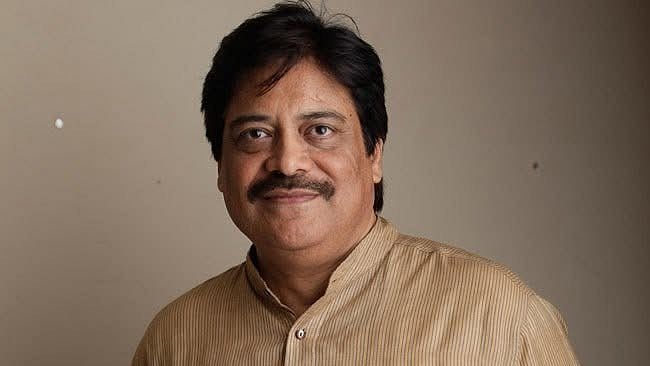
Through conversation, poetry and music, Aab’o-Hawaa brings Gulzar’s thoughts on nature and the environment to the NCPA stage on October 7
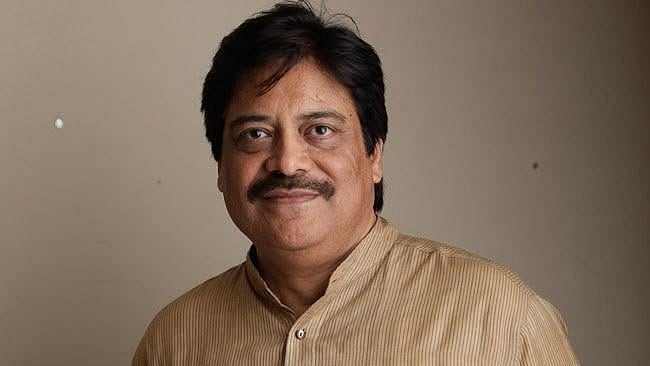
Salim Arif is a multi-talented creative director with quite a few hit theatre productions in his kitty. A National School of Drama alumnus, Arif is associated with institution even today. His eye for detail as a painter helped him design sets, costumes and work as a production designer for serials and films before becoming a full-time director.
Arif’s first association with Gulzar was as a production designer. He also assisted the veteran writer-director for his Maachis. He went on direct plays written by Gulzar based on O Henry stories, adaptation of Pinocchio, productions based on later’s poems and the play Kachche Lamhe, which won accolades from many. He is back with Aab’o-Hawaa: An Evening with Gulzar on October 7 at the NCPA, Mumbai. Arif speaks to The about his journey with Gulzar.
Excerpts from the interview:
You have assisted Gulzar saab, what's that one thing you learned during that stint which has stayed with you over the years?
`;
I was working in Shyam Benegal’s Bharat Ek Khoj as Costume Designer and Period Detail in-charge when Gulzar saab called me and offered me to design his landmark Mirza Ghalib serial. Mirza Ghalib remains a cherished memory and I got to work with some of the finest collaborators of Indian cinema. The unit had stalwarts like Jagjit Singh, Manmohan Singh, Narinder Singh, Subhash Sehgal, and Naseeruddin Shah in lead role. That was my first project with him and put me into close proximity with him.
Later when I was planning to leave Mumbai and go back to Delhi, Gulzar saab asked me to stay back and assist him in his projects. I started with a documentary on Pandit Bhimsen Joshi that he was making in 1991. Kirdar serial and Maachis followed. His relaxed but disciplined approach towards his work has stayed with me since then and is of great use to me when I work with my team on plays and other projects.
Gulzar saab is always in control without being strict or dictatorial. His presence was a great stress reliever on set and work became fun that everyone enjoyed. I have rarely seen him loose his temper or shout at anyone. In fact his silence is more eloquent than his speech most of the time. Maachis film was another experience that is an everlasting memory. The way we worked together in the film from the first schedule till the release in 1996 created a bonding that has remained till today. I have had the longest creative relationship with him that is almost 40 years old.
You have directed plays written by him… assistant to director transition… was it easy?
It was in 2002 that I was called to do a show subsequent to Gujarat Riots on communal harmony. I decided to collate his poems and stories on the subject and created a show titled Kharaashein. He was magnanimous and gave me his entire unpublished poems and stories to select from. He was initially skeptical about the form, but when he saw the play and use of his poems and stories in a seamless fusion, it reinforced his confidence in me and then we created several plays together. The transition from his assistant to a director of plays written by him was pretty smooth as he was always available to me and was willing to re-write and help me create scripts with his poems and stories.
Did the equation between you two change in any which way?
No. Although I lead the action in theatre plays and rehearsals and he keeps calling himself my assistant in theatre, the relationship of affection and his frank opinion on my work remains. I still like to call myself his assistant and that relationship has not changed.
This is the second time you've collaborated for a chat…
Gulzar saab has written several poems and stories on various subjects. I had done a musical play Aatthhanniyan on his poems and stories on Mumbai over the years in 2009. Last year I thought it would be interesting to speak about his journey in Mumbai, his memories, experiences and people that influenced him and interspersed them with musical rendition of his poems and songs. NCPA with Dr. Swarnlata Raoji took the initiative to organize that once in a lifetime show. The show was called Aamchi Mumbai (The title of a book of his stories and poems on Mumbai that came later). Aamchi Mumbai last year became an emotional nostalgic trip for everyone associated with that evening as Gulzar saab travelled down the memory lane of his 70 years in Mumbai with anecdotes and incidents, poems and people. The response of the audience craving for more in that show prompted a request to do another show with Gulzar saab on another chosen subject or theme.
How is this collaboration, Aab’o-Hawaa: An Evening with Gulzar, different?
Environment and Nature has been a major concern of Gulzar saab in his writings and poems. He has used elements of Nature not only as metaphors and similes but in various unusual imageries in his writings. So this time we are going to diiscuss how Gulzar saab perceives various aspects of our environment and nature. Without acquiring the tone of an activist or a preacher, his sensitivity and concerns to our everyday surroundings come across very forcefully in his poems. A few selected poems are also composed by Sandesh Shandilya that will be sung in the show. Apart from a conversation with me Gulzar saab will also recite his chosen poems.
Which is your favourite poem of Gulzar saab and why?
There are several, but one that often amazes me is about a sketch of plant on a matchbox…
“Yaad Hai Ik Din
Meri Mez Pe Baithe Baithe
Ciggerate Ki Dibiyaa Par Tumne
Ek Sketch Banaya Thha
Aa Kar Dekho
Uss Paude Par Phool Aaya Hai..”
(Remember, Once…While Siiting on my table, You sketched a Plant on a Matchbox cover… Come and see, The Plant has a Flower now…)
What's that one thing you wish you could have done as a director?
Maybe make a few films, but the kind of films I like to make will not be supported by market forces. As a Director, theatre gives me complete control to put across my point of view, I can control that medium entirely as a creator and that is a reason I have stuck to theatre, although I have contributed to films in various capacities. If you look at the subjects I have dealt with in my plays , you will understand that the variety of content and styles I have worked in are unique and they have been accepted very well by audiences in India and abroad.

Add As a
Trusted Source 




Leave a Reply