Between empathy and social dominance: sensitising the IITs
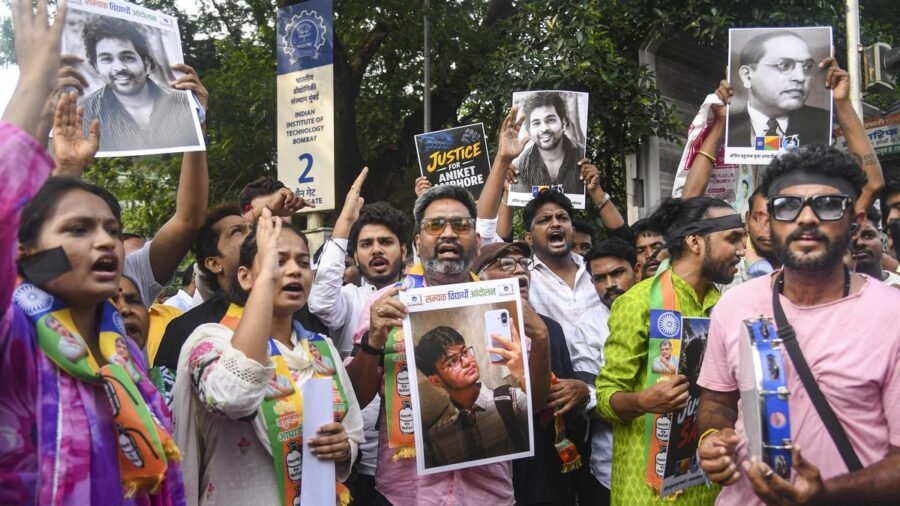
When Rohith Vemula penned his suicide note on January 16, 2016, it was a searing indictment on Indian academia. A decade has passed, and students taking their own lives have become too frequent in elite institutions, especially in the IITs. Very often, the debate is framed in terms of ‘merit’ and the lack of coping mechanisms among students from socially marginalised communities to negotiate the academic rigour in such institutions. These islands of excellence also reflect the larger social, economic and cultural cleavages which exist in our society.
(Sign up for THEdge, ’s weekly education newsletter.)
Thomas Piketty argued that the history of inequality cannot be just “understood in economic terms.” The narrative of inequality, he emphasised, should be located in our “political and social history.” Emphasising on meritocracy and mobility as a means of studying economic development stands in contradiction to the situation on the ground. His argument holds ground in India, particularly in the context of the deeply entrenched caste hierarchy and the rampant culture of discrimination it spawns.
The deeply embedded meritocratic culture has a flip side too. In what is known as the ‘deaths of despair’, Anne Case and Angus Deaton while studying working-class Americans between 2014 and 2017, observed that life expectancy in the U.S. decreased for three straight years. These self-inflicted deaths were caused by drug overdose, alcohol abuse, and suicides. The desolation was not caused solely by material deprivation but was a response to the plight of people struggling to make their way in a meritocratic society without the credentials and honours.
Join THEdge LinkedIn group
A psycho-social study of the interlinkages between caste and suicidal behaviour is a rarity in Indian academia. The students have to negotiate a tough path strewn with parental ambitions, demands of classes and grades, and peer group competition, which begins at the school level and continues in the institutions of higher learning.
The denial of caste
The majority of students from Scheduled Castes, Scheduled Tribes, and Other Backward Classes who enter IITs are often the first-generation learners in their families. This increases the burden of expectations, as often there is no alternative to fall back on in terms of economic or social capital. The social anomie which plagues the lives of many such students forces them either to drop out or kill themselves. Why do we fool ourselves into thinking that caste has disappeared in such ‘meritorious’ institutions and all the stakeholders – teachers, administrators, students are all casteless?
To illustrate, I was part of a fact-finding team to enquire about a complaint on caste discrimination amongst the administration in one of the IITs. One of the top administrators was unaware of the SC/ST Act, which deals with the question under discussion. When students are asked to introduce themselves with their name and rank, it reflects their social location. There are multiple fact-finding reports (Thorat Committee and Mungekar Committee Reports) which reiterate the subterranean working of caste in classrooms, hostels, cultural festivals, and various other campus spaces. In today’s digital world, online caste groups act as gatekeepers to monitor student lives.
Cultivating radical empathy
When, as a social collective, we deny the existence of caste, the solutions that are offered are seldom taken seriously. The first step is to acknowledge that students come with their own histories and subjectivities. A humane classroom which ‘listens’ and makes space for every shade of opinion, even if it challenges established hierarchies, is essential. Secondly, teachers and administrators who are trained to accept diversity and be more inclusive in their dealings with students. One needs courage to go beyond the rule book in exceptional circumstances to foster self-confidence and dignity amongst students. When a hostel seat is denied to a student dealing with mental health issues citing rules; whose mother is humiliated on her child’s vulnerable situation and we are surprised that the student ended his life. Numerous such micro-aggressions are part of the everyday life of students. A convenient silence is maintained around segregated spaces in hostels, mess halls, laboratories, cafetarias which encourage differential treatment and such caste practises are legitimised and normalised.
Isabel Wilkerson succinctly observed that when an accident of birth aligns with what is most valued in a given caste system, it gives that lottery winner a moral duty to develop empathy for those who must endure the indignities they themselves have been spared. This implies that as a society, we need to re-learn a new consciousness, to educate ourselves and to listen with a humble heart, to understand another’s experience from their perspective, not as we imagine we would feel. It is the kindred connection from a place of deep knowing that opens your spirit to the pain of others as they perceive it.
(N. Sukumar is a Professor of Political Science at Delhi University. He is the author of Caste Discrimination and Exclusion in Indian Universities: A Critical Reflection. Views are personal)
For those in distress, counselling is available at Tele MANAS 14416

FSSAI orders recall of Everest cumin powder: What to do if you have used affected batch
By Sohail Khan · 6 Oct
Why a jailed ex-president’s son is leading Brazil election race, and the Trump factor
By Sohail Khan · 6 Oct
Nazis and the bomb: nuclear archaeology finds Werner Heisenberg mistook how close he was
By Sohail Khan · 6 Oct
Leave a Reply