Baththa movie review: Vijay Sethupathi shines in a film that earns every emotion
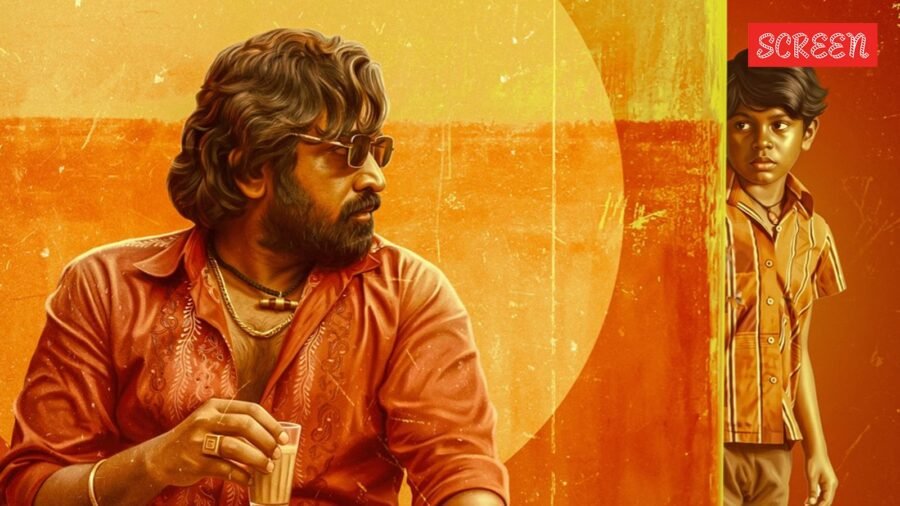
The film, set in 1986 Madras, shows us the life Baththa, played by Vijay Sethupathi, a feared local don who runs a section of the city with violence and intimidation. He has a family, a wife played by Lijomol Jose, a network of loyal men and a reputation that keeps everyone at a distance.
Parallel to Baththa’s world, we are introduced to a timid eight-year-old schoolboy whose daily life revolves around school, homework and the small anxieties of being a child in a neighbourhood where adults are unpredictable and frightening. The two worlds collide when the boy, through a series of circumstances that are as accidental as they are inevitable, locks Baththa inside a deserted school restroom. The gangster, who has spent his life entering and exiting rooms on his own terms, is now trapped in one by a child who did not mean to do it. The rest of the films shows the journey of an unexpected friendship between the duo.
Story continues below.
Subscribe to see fewer ads.
The film’s greatest strength is its patience. Balaji Tharaneetharan does not rush the friendship between Baththa and the boy. He lets it develop in small, organic moments: a shared joke, a reluctant confession, a moment of vulnerability that neither character planned. The school portions, where the gangster is stuck inside the toilet, and the boy keeps returning to it, are the most enjoyable sections of the film. Balaji Tharaneetharan finds humour in the absurdity of the situation, a feared don stuck in a toilet, without turning it into farce.
The emotional core beneath the comedy is what elevates Baththa beyond a clever concept. The relationship between the gangster and the boy slowly becomes the driving force of the narrative, and by the second half, the audience is invested not in whether Baththa escapes but in whether the man who escapes will be the same man who was locked in. The character arc, from a feared don to someone capable of gentleness, is written with care and executed with conviction.
Vijay Sethupathi is excellent as Baththa. This is the kind of role he was born to play: a man who projects toughness but is fundamentally soft underneath, an actor who can shift from menace to vulnerability in a single expression. After a stretch of films where Sethupathi seemed to be coasting, choosing projects for commercial reasons rather than creative ones, Baththa feels like a return to the actor who made Naduvula Konjam Pakkatha Kaanom, Super Deluxe and Vikram Vedha. You laugh when he laughs, and you cry when he cries.
Story continues below this ad
The bigger surprise is young Sabari, the child actor Sai who plays the boy opposite Sethupathi. His acting moves you as you watch him, as he holds his own against one of Indian cinema’s finest actors, matching Sethupathi’s naturalism with a wide-eyed authenticity that never tips into cuteness.
Lijomol Jose brings a weight and groundedness to the domestic portions that prevent them from feeling like filler between the school sequences. Ajay Ghosh and Arjun Chidambaram appear in supporting roles, with Santhy Balachandran and Hari Krishnan rounding out the ensemble.
What makes Baththa work is not one thing. It is everything arriving at the same place at the same time. With an airtight screenplay, Balaji Tharaneetharan constructs the narrative like a puzzle where every piece that seems random in the first 40 minutes clicks into place with devastating precision by the climax.
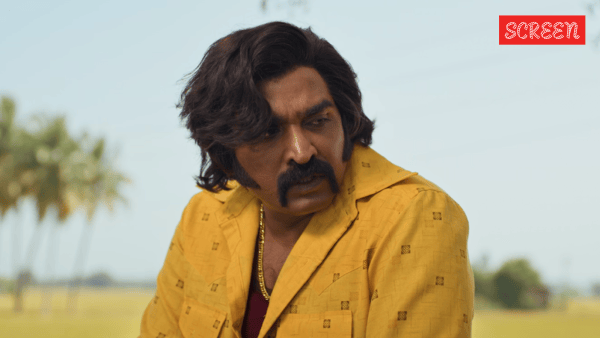 Vijay Sethupathi in a still from the film Baththa
There is a scene in the second half where Sethupathi’s character tells the boy something about his past, and the way Balaji Tharaneetharan writes the boy’s reaction, not with dialogue but with silence followed by a single, devastating question, is the kind of screenwriting that most Tamil films cannot achieve in their best moments, let alone sustain across an entire act.
Story continues below this ad
The centre of all of it, holding every frame together, is Vijay Sethupathi delivering the kind of performance that reminds you why he was once the most exciting actor in Indian cinema and, in the right material, still is. He does not act the transformation. By the time the climax arrives and the gangster makes a choice that the man we met in the opening scene would never have made, you do not applaud because the scene is well-written. You feel something shift in your chest because the film has spent two hours earning the right to put you there. Baththa is a technically precise film grounded by performances so real that the precision becomes invisible.
Sai Abhyankkar’s music and background score have been singled out as one of the film’s strongest elements. The score enhances the emotional moments without overwhelming them, and the songs, while not all necessary, are well-composed and period-appropriate.
Selvakumar SK’s cinematography captures 1986 Madras with a warm, slightly desaturated palette that avoids both the Instagram-filter nostalgia of some period films and the harsh realism of others. The school interiors, in particular, are lit and framed with care, creating a space that feels simultaneously claustrophobic and intimate.
Story continues below this ad
R Kalaivanan’s editing is the best anchor for the film. The movie neither feels rushed, long or slow. T Muthuraj’s production design is a standout, recreating the period with detail that rewards attention.
Baththa is a film that is only as perfect as its emotions, and its emotions are flawless. The friendship between the gangster and the boy is written with warmth, performed with honesty and directed with the kind of patient, unhurried confidence that only comes from a filmmaker who trusts his material.
It is the kind of film that Tamil cinema used to make more often: small in scale, large in heart, driven by characters rather than set pieces, and anchored by a lead performance that reminds you why Vijay Sethupathi became a star in the first place.
Baththa as a film becomes something rare: a Tamil commercial film that is genuinely funny, genuinely moving and genuinely surprising, all at the same time. It does not rely on action sequences, romantic subplots or hero worship to hold the audience’s attention. It relies on two people, a dangerous man and a fearless child, talking to each other in a locked room, and finding comfort in their blooming friendship.
Baththa movie director: Balaji Tharaneetharan
Story continues below this ad
Baththa movie cast and crew: Vijay Sethupathi, Lijomol Jose, Sai Abhyankkar, Selvakumar SK, R Kalaivanan
Baththa movie ratings: 4/5


Verity gets ‘A’ certificate in India after CBFC cuts 23 seconds of intimate scenes
By Sohail Khan · 1 Oct

Leave a Reply