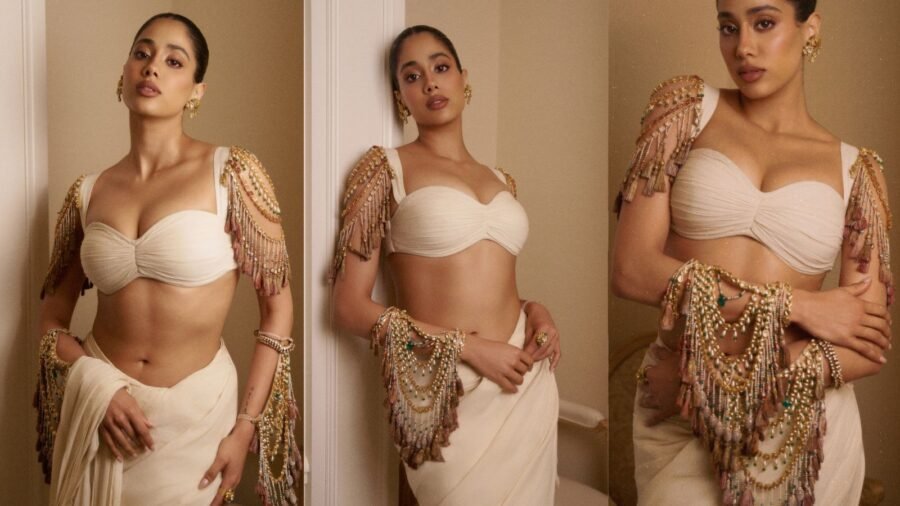
Baft-e-Hawa: Janhvi Kapoor turns heads in a 460-count Bengal muslin sari in Paris
Story continues below.
Subscribe to see fewer ads.
Talking about the look, Sneha Yadav, fashion consultant, brand & image strategist, NIFT alumna, says that the design “involves the tension between the simple muslin fabric and the bold blouse design. The sari possesses a near effortless feel whereas the decorated sleeves bring in formwork, workmanship and theatricality.”
“This opposition prevents the ensemble from appearing too conventional or unduly flashy,” she adds.
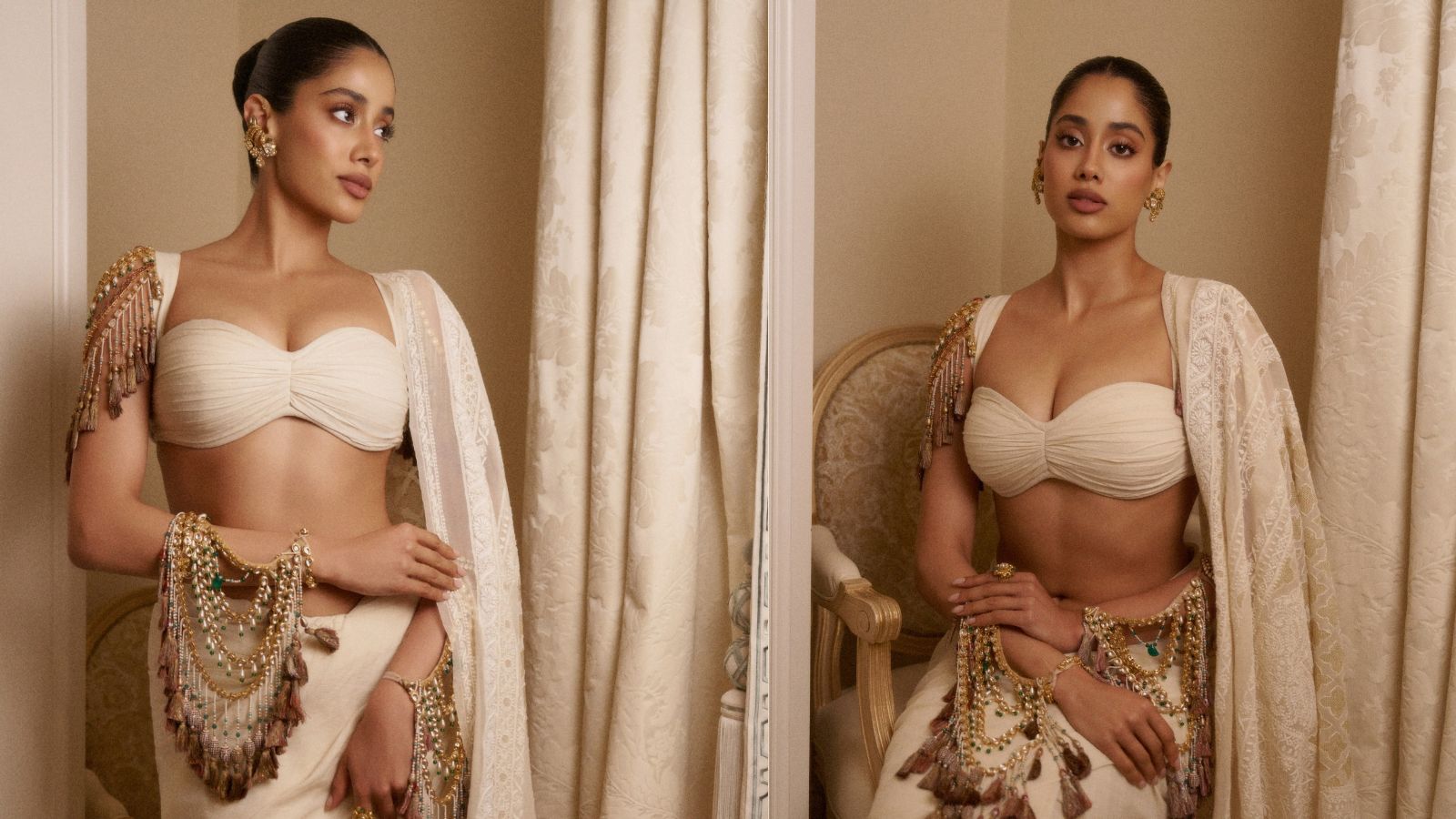 Janhvi Kapoor wore a 460-count Bengal muslin sari by Pankaj S Heritage to the Business of Fashion gala in Paris.
What exactly is Baft-e-Hawa
The name Baft-e-Hawa means ‘woven air’, a description that captures the fabric’s extraordinary lightness.
“It wasn’t a poetic exaggeration. It was a literal description of how the cloth felt in your hand. This was the finest Dhaka muslin we are talking about, spun exclusively from Phuti Karpas, a delicate cotton shrub that grew only along the silty banks of the Meghna River basin, in modern-day Bangladesh,” says Nabanita Ghosh, Co-founder & Director, Abritee.
Story continues below this ad
Making this fabric required extraordinary skill and precision. According to Ghosh, the spinning happened at the most unlikely hours. “Young women with exceptional eyesight worked on boats during the humid hours of dawn and dusk, when the dew and humidity kept the micro-thin threads from snapping. The skill lay in their eyes, their fingertips and their timing,” she says.
The beauty lies not just in the fineness of the weave, but also in the expertise required to create it and the softness and fluidity that it brought to the garment.
“A khud-rang, or unbleached, cloth like this leaves the weaver nowhere a slight irregularity to hide,” says Ghosh. “There is no dye or finishing to cover an uneven thread, so every bit of its quality comes from the hands that made it. A count like 460 sounds technical, but what it really represents is patience.”
What legend says
The most famous story about this cloth dates to the reign of Mughal Emperor Aurangzeb.
Story continues below this ad
“Dhaka was then a Mughal hub, and its finest muslin, malmal khas, was made for the imperial court. The emperor is said to have scolded his daughter, Princess Zeb-un-Nissa, for appearing to wear nothing at all. Her reply was that she was wearing seven layers of it,” says Ghosh.
The story, however, has been retold and modified over generations.
“What gets lost in the retelling is that Baft-e-Hawa was never about transparency. It was about control,” Ghosh says. “Anyone can make a thin fabric. Making one that is fine, even, and still strong enough to be worn is what made it a global benchmark.”
The older names associated with the fabric describe it best. Shabnami, meaning dew, and Chandani, meaning moonlight, were given by people who handled this cloth and described exactly what they felt.
Story continues below this ad
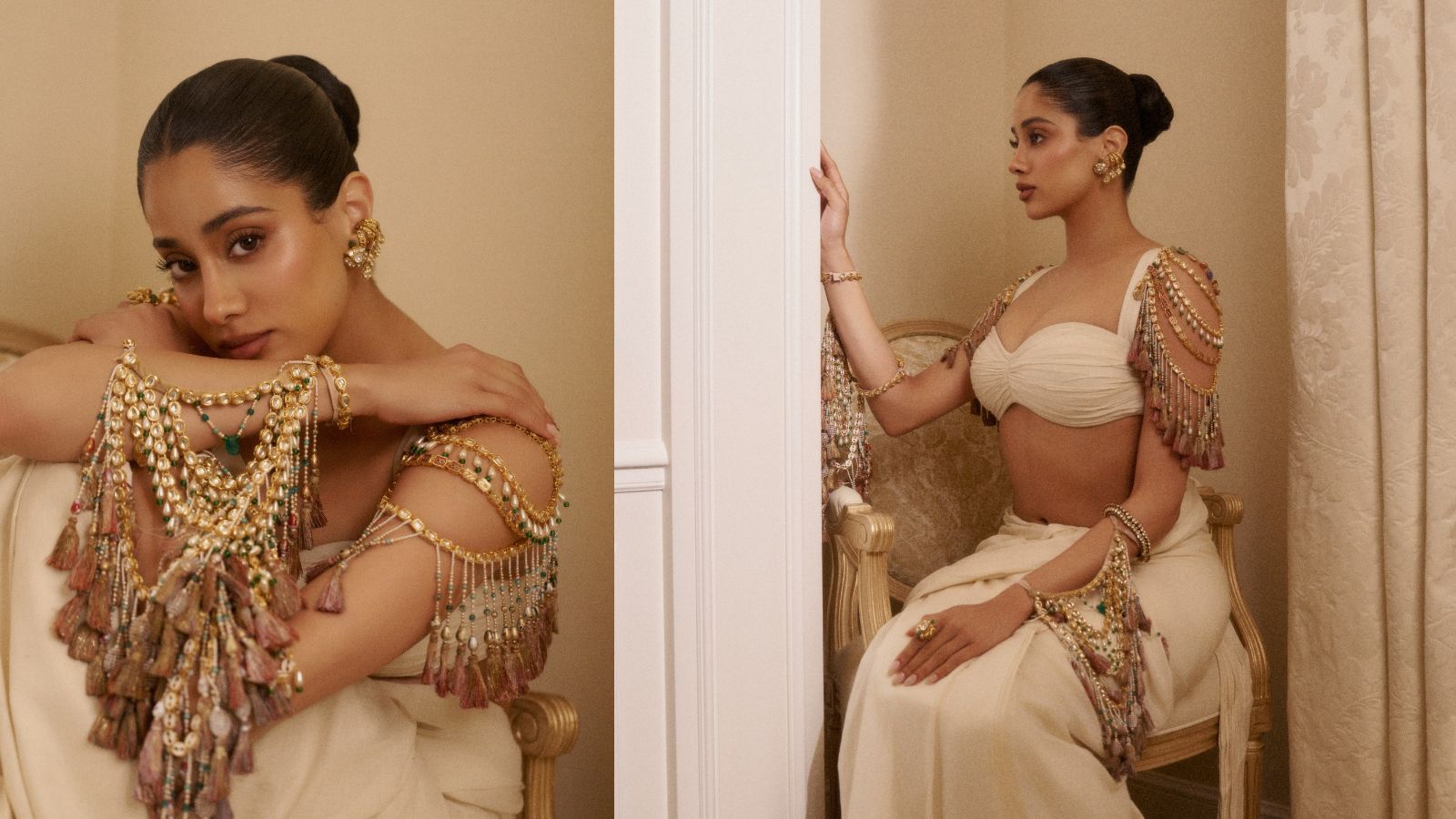 Janhvi Kapoor’s Baft-e-Hawa muslin sari was paired with an ornate blouse featuring polkis, garnets, emeralds and traditional embellishments.
Why the styling works
With a fabric as delicate and visually distinctive as Baft-E-Hawa, adding too much ornamentation can easily overwhelm it. In Janhvi’s look, the relatively simple sari keeps the fabric visible, while the elaborate sleeves add structure and drama.
“When that delicacy is paired with a silhouette and intricate detailing, the result is a dialogue between softness and structure. That balance is what gives Janhvi’s look its character and makes the textile feel very relevant in a contemporary fashion context,” she says.
According to Yadav, this contrast helps bring a historical Indian textile into a contemporary fashion context.
“The sari stays closely linked with craft work, yet the styling imparts a contemporary, sculptural nature, proving that history may be read in a manner that feels present without needing to mask or recreate its roots,” she says.
Story continues below this ad
Janhvi’s Paris appearance brings attention to the extraordinary craftsmanship behind one of India’s most delicate textile traditions — and shows how a historic fabric can be styled without losing its identity.
A quirky touch to her Paris trip
A few days back, while flying to Paris, Janhvi added a quirky touch to her fashion sense. The Peddi star wore a customised tee that said, “If lost, please return to Shikhar Pahariya”
View this post on Instagram
A post shared by Ena and Kim (@enaandkim)

Punjab is among India’s top grain producers. So why is it unable to store it?
By Sohail Khan · 6 Oct
Ashok Lavasa: Can the Election Commission untie knots of its own making?
By Sohail Khan · 6 Oct

Leave a Reply