Why your blood sugar may rise after HIIT or heavy lifting
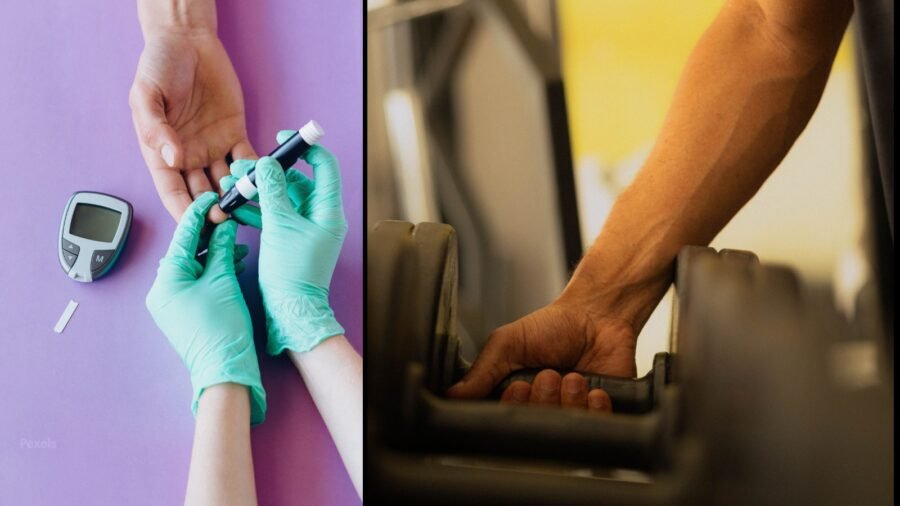
Exercise is often recommended to help manage blood sugar. So, it can be confusing to check your glucose after a workout and find that it has gone up instead of down.
But a temporary rise in blood sugar after exercise does not necessarily mean the workout has done more harm than good. In fact, the type and intensity of exercise can play a major role in how the body responds.
Speaking to indianexpress.com, Dt. Archana Batra, Dietitian and Certified Diabetes Educator, explains that exercise generally helps blood sugar because muscles use glucose for energy. However, during exercise, the body releases stress hormones such as adrenaline, noradrenaline and cortisol.
“These hormones signal the liver to release stored glucose into the bloodstream to give energy for muscles. If the liver releases glucose faster than the muscle uses it, then blood sugar can rise temporarily during or right after exercise,” Dr Batra says.
Echoing the same, Dr Rajiv Kovil, Diabetes & Obesity Specialist at Zandra Healthcare, adds that exercise normally lowers glucose because working muscles take up glucose and become more insulin-sensitive. However, the body can perceive strenuous exercise as a form of physiological stress.
“Stress hormones—particularly adrenaline, noradrenaline, cortisol and glucagon—rise and signal the liver to release stored glucose through glycogenolysis and gluconeogenesis. If this hepatic glucose output temporarily exceeds what the exercising muscles consume, blood glucose can rise,” he says.
Story continues below this ad
For people with diabetes, this effect can sometimes be more noticeable because insulin secretion or insulin action may not be enough to counter the extra glucose the liver releases.
Which workouts are more likely to cause a spike?
Not all forms of exercise trigger the same glucose response. A temporary rise is more commonly seen with high-intensity interval training (HIIT), sprinting, heavy resistance training and very strenuous or competitive exercise. These workouts cause a stronger release of adrenaline and other counter-regulatory hormones, prompting the liver to quickly put more glucose into the bloodstream.
“Adrenaline stimulates the liver to rapidly release glucose so that muscles have immediate fuel available,” says Dr Kovil.
Heavy strength training can have a similar effect, particularly during intense sets or compound exercises. This does not mean that people with diabetes should avoid strength training. Resistance exercise, along with aerobic activity, can improve insulin sensitivity and glucose control over the longer term.
Story continues below this ad
By comparison, moderate-intensity activities such as brisk walking, steady cycling or swimming generally encourage muscles to use circulating glucose and are therefore more likely to lower blood sugar.
The response can still vary from person to person. Other factors, including carbohydrates eaten before exercise, starting blood sugar, dehydration and stress, can also influence the reading.
 It is more common with high-intensity interval training (HIIT), sprinting, heavy resistance training and competitive exercises
When is a post-workout rise normal?
A modest rise immediately after vigorous exercise can be a normal physiological response. As the body recovers and stress-hormone levels fall, blood sugar should generally start moving back towards its usual level.
“What matters is whether blood sugar comes down and what the overall pattern looks like rather than focusing on one post-workout schedule,” says Batra.
Story continues below this ad
A person with diabetes should pay more attention if the rise is persistent, repeatedly very high or accompanied by symptoms such as excessive thirst, frequent urination, nausea, abdominal discomfort, unusual weakness or difficulty breathing.
People with type 1 diabetes need to be particularly cautious when glucose is markedly elevated. Dr Kovil advises checking blood or urine ketones when blood sugar is above 250 mg/dL, particularly if it is accompanied by symptoms. Significant hyperglycaemia with ketones is a reason to postpone strenuous exercise and follow the person’s diabetes sick-day plan, as exercise can worsen high blood sugar and increase the risk of diabetic ketoacidosis.
What if your blood sugar rises after exercise every time?
Regular post-workout spikes are not a reason to abandon exercise. Instead, both experts recommend looking for a pattern.
“If this blood sugar rise happens regularly the person should not stop exercising. First they should look for a pattern they should track blood sugar before and after exercise along with the workout’s intensity and the time difference between meals or snacks eaten before,” says Batra.
Story continues below this ad
Continuous glucose monitoring can also help identify whether certain workouts consistently produce a spike.
Dr Kovil recommends checking glucose before exercise, immediately afterwards and again one to two hours later, while recording the type, duration and intensity of the workout, meals and insulin or other medications.
If spikes mainly occur after HIIT or heavy resistance training, adding 10–20 minutes of moderate-intensity aerobic activity or a post-workout walk may help muscles use circulating glucose. Staying adequately hydrated is also important.
However, people using insulin should not independently take a large corrective dose immediately after exercise. Exercise can increase insulin sensitivity for hours, potentially causing delayed low blood sugar.
Story continues below this ad
“Importantly one should not automatically take insulin to fix every post-workout rise without medical advice because insulin sensitivity can stay high for hours after exercise and may lead to low blood sugar later,” Batra says.
Ultimately, a short-lived rise after an intense workout is not necessarily a sign that exercise is making diabetes worse. What matters more is how quickly glucose comes down, how often the spikes occur and how the body responds to different forms of exercise. Repeated or unexplained spikes should be discussed with a doctor or diabetes educator so that exercise, meals and medication can be adjusted safely.

A Court divided by its own architecture
By Sohail Khan · 3 Oct
India’s Model BIT — a decade later, amid changes
By Sohail Khan · 2 Oct