Why is Big Tech borrowing so much for AI, and could $1.2 trillion in spending push US bond yields higher?
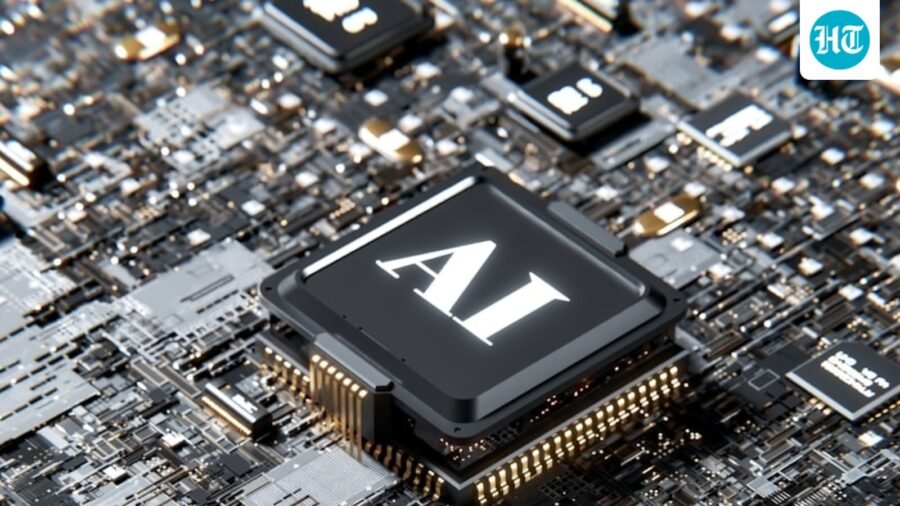
Big Tech's .2 trillion AI spending could drive more borrowing and raise demand for capital, putting pressure on US bond yields and interest rates.
Published on: Sep 27, 2026, 21:10:02 IST
Prefer HTon Google
Share via
Copy link
Big Tech is preparing to spend huge amounts on AI. Alphabet, Amazon, Meta, Microsoft and Oracle are expected to spend about $800 billion on capital expenditure this year. Capital expenditure, or capex, is money companies spend on things such as data centres, chips and other infrastructure.
The spending could rise even more next year. The same five Big Tech companies are expected to spend around $1.2 trillion next year, according to Goldman Sachs. Much of this spending is linked to the race to build AI infrastructure and expand computing capacity.
Big Tech is borrowing more for AI
The massive AI bill is putting pressure on Big Tech's cash. As companies spend more of their own cash on AI infrastructure, they are increasingly looking for other ways to finance the expansion. One major source of funding is the bond market. Instead of paying for all the AI investment from their own cash, Big Tech companies are increasingly borrowing money by selling bonds to investors.
US corporate borrowing has already jumped sharply this year. US companies issued about $1.9 trillion in bonds through August, which was 30% higher than during the same period last year, according to data from the Securities Industry and Financial Markets Association (SIFMA).
AI bond sales cross $400 billion
AI-linked companies are responsible for a large part of the global borrowing boom. Global bond issuance by companies linked to AI has already crossed $400 billion this year. The pace of AI-related borrowing could become even bigger. The current pace of global AI-linked bond issuance is equivalent to more than $500 billion for the full year, according to a quarterly report from the Institute of International Finance (IIF).
US companies make up most of this AI-linked borrowing. American companies accounted for roughly 90% of global AI-linked bond issuance, according to the IIF. The borrowing has not yet become a major problem for Big Tech. So far, the huge amount of debt raised by technology companies has not clearly limited their ability to fund their AI plans.
Could Big Tech crowd out other borrowers?
But the bigger concern is whether the bond market can absorb so much new debt. Investors have to find enough money to buy all these new bonds. That has raised questions about what could happen if Big Tech's financing needs continue growing rapidly.
One concern is a possible “crowding out” effect. If Big Tech companies flood the market with bonds, they could potentially compete with governments and other companies for the same pool of investor money. That could push bond prices down and yields higher. When demand and supply conditions cause bond prices to fall, their yields generally rise. This is why the growing borrowing needs of Big Tech are being watched closely by bond investors.
US Treasury yields rise
The concern comes at a sensitive time for the US Treasury market. The global bond market has already had a difficult week, with Treasury yields climbing sharply. The 10-year Treasury yield reached its highest level since 2007. The 30-year Treasury yield also reached its highest level since 2004, adding to concerns about borrowing costs across the economy.
Warsh flags AI funding pressure
Federal Reserve Chairman Kevin Warsh has also pointed to Big Tech's borrowing as one factor behind higher yields. Earlier this month, Warsh said that the major technology companies, often called “hyperscalers,” are raising money in the market and competing for capital. Warsh said this competition for capital is real. He said the competition for funding “partly explains” the increase in bond yields, highlighting how the AI investment boom could affect financial markets. However, there is not strong evidence that AI companies are directly crowding out US Treasurys. Researchers so far have found little evidence that investors are simply choosing AI-linked corporate bonds instead of US government bonds.
AI bonds and Treasurys are different
One reason is that AI companies and the US government are not issuing exactly the same type of debt. Bonds used to finance AI infrastructure are mainly longer-term bonds, while the US Treasury has shifted more of its borrowing toward shorter-term maturities.
The investors buying the two types of bonds are also different. Treasury bonds and bonds issued by hyperscalers tend to attract different groups of investors, according to Vishwas Patkar, Morgan Stanley's head of US credit strategy, who spoke during an IIF briefing. The wider corporate bond market has not suddenly taken over the global market. The share of global bond issuance coming from nonfinancial companies has remained broadly stable, according to the IIF.
Pimco sees little Treasury impact
Pimco reached a similar conclusion. The asset management company examined the impact of the six biggest recent AI-related debt offerings and found no statistically significant increase in 10-year Treasury yields around those individual bond sales. But that does not mean AI spending has no effect on interest rates. The AI boom can still put upward pressure on rates even if investors are not directly moving money from Treasury bonds into Big Tech bonds.
AI boom increases demand for money
The bigger issue is the overall demand for capital. AI companies need huge amounts of money to build data centres, buy computing equipment and expand their infrastructure. That adds to the total demand for investment capital in the economy. This is happening when Americans are saving less. The US personal savings rate is currently close to a four-year low, meaning there is less household savings available compared with stronger savings periods.
Morgan Stanley's Patkar said the amount of AI-related corporate borrowing may not be the main reason for higher rates. Instead, he pointed to what the borrowing represents: a major investment boom that is helping drive economic growth in the near term.
The key issue is therefore bigger than Big Tech's bond sales. If AI investment keeps boosting economic growth and increasing demand for capital, interest rates could face upward pressure even without a direct crowding-out effect between AI bonds and Treasury bonds. So the $1.2 trillion AI spending plan matters for bond markets in two ways. First, Big Tech needs to raise more money to finance its expansion. Second, the investment itself increases demand for capital across the economy.
The main question for investors is how this massive AI financing cycle develops. So far, there is little evidence of a direct Treasury crowding-out effect, but the scale of AI investment means its broader impact on capital demand, economic growth and US bond yields remains important to watch.
See Less

South Korea demands apology from Ukraine over disclosure of North Korean PoW transfer
By Sohail Khan · 28 Sep

Tense standoff over flashpoint N.Ireland parade lasts into night
By Sohail Khan · 28 Sep
Leave a Reply