What should Germany do about its rising right?
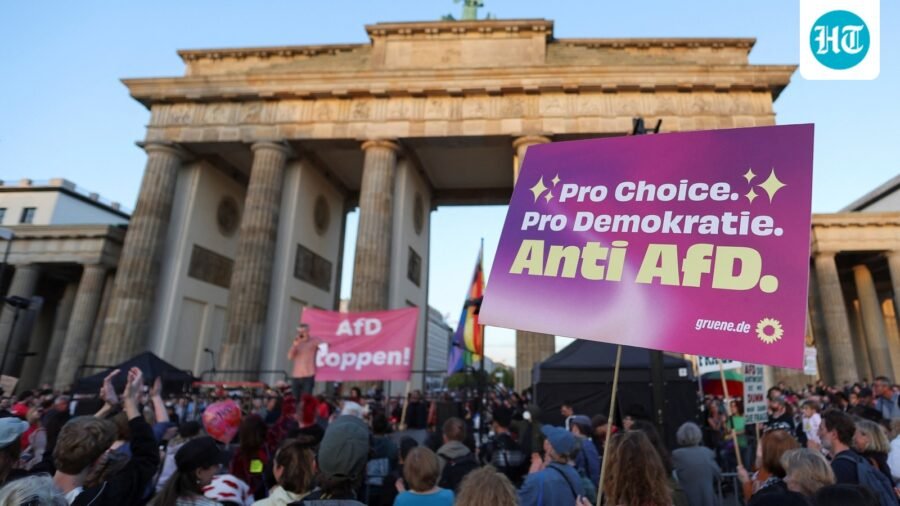
A stunning success for the AfD in Saxony-Anhalt
Published on: Sep 10, 2026, 01:00:50 IST
Prefer HTon Google
Share via
Copy link
IT WAS NOT supposed to happen. For the radicals of the Alternative for Germany (AfD) to secure 44% of the vote in Saxony-Anhalt, one of Germany’s 16 states, has shocked a country that built its postwar identity on the rejection of extremes. A party that employs unrepentant former neo-Nazis and has been formally decreed “extremist” by Germany’s intelligence service is on the cusp of becoming the first populist-right group to run a state since the second world war. For Germany, it is a red alert.
The AfD may yet fall short. Its only paths to power in Saxony-Anhalt rest on shaky alliances or defections from opponents. If it does take office, it may be laid low by its own incompetence and in-fighting. But that should not blind Germany to the scale of the danger. The AfD was always going to outperform in a state like Saxony-Anhalt: depopulated, deprived and in the east, where party loyalties are weaker. But it often breaks records in elections in richer western states such as Baden-Württemberg, too.
Nationally, the AfD now enjoys an eight-point polling lead over the ailing centre-right CDU/CSU, led by Friedrich Merz, the chancellor. An election today would probably require a coalition of every centrist party to keep the AfD out of office. German politics is starting to curdle into pro-AfD and anti-AfD blocs, as has long been the case across much of the east.
Germany’s centrists long thought they could keep AfD at bay. Their Brandmauer (firewall) policy excluded it from coalitions. In the meantime, they hoped, good policy would curb its appeal. But the opposite has happened. Behind the Brandmauer the AfD has radicalised as it has grown, pursuing racist fantasies of “remigration”, rapprochement with Russia and exit from the European Union and euro. Its manifesto for Saxony-Anhalt, which called for a radical reshaping of the state’s education, culture, media and civil service, was a fantasy. Still, close to half the state’s voters were drawn to it.
The AfD’s success in Saxony-Anhalt rested in large part on mobilising people who did not vote in the previous election. Many of them are lost to mainstream politics. This is not to say that, nationally, Germany is fated to fall to the extremes. But the political centre cannot afford to pursue business as usual.
What should it do instead? First, it must not let the AfD stun it into inaction. Before the summer, Mr Merz’s dysfunctional coalition with the Social Democrats (SPD) approved an ambitious set of reforms covering everything from income tax to pensions. But the SPD, which increasingly appears to find governing a burden rather than a blessing, is now considering reversing sensible policies such as ending early retirement. Such was the delicacy of the compromise that unravelling one proposal could imperil others.
True, many of the reforms are unpopular and AfD voters in particular dislike change, but this would be an abdication of responsibility. That is not only because Germany’s creaking economy and welfare state require urgent upgrade. For the coalition to relapse into do-nothing bickering would also bolster the AfD’s claim that the old parties are tired and useless. Germany’s economy is at last showing signs of recovery. The government should lean into it.
Second, it is past time for the CDU to reconsider the rigid Brandmauer. That does not mean kneeling before extremists; the AfD’s stated goal is to destroy the CDU, not to work with it. And the CDU should not enable the entry to government of a party that opposes so much of what it stands for. But if the CDU signalled that it would not dogmatically exclude future co-operation with a party that shed its most radical ideas and politicians, it could eventually help boost the (relative) moderates within the AfD, some of whom are uneasy about their extreme comrades. The AfD’s strength and confidence makes this harder than it once would have been. But an AfD that looks closer to Giorgia Meloni’s Brothers of Italy would be far preferable to the one that now sits on the outer fringe of Europe’s right-wing populists.
Lastly, the time may come to look at the top. Mr Merz has got some things right, notably support for Ukraine and restoring Germany’s armed forces. His reformist instincts are laudable. But he is a clumsy politician, a bad manager and a terrible communicator. His approval rating stands at just 13%, and the 70-year-old chancellor shows no sign of understanding why. Two more state elections on September 20th may bring fresh disaster for the CDU. Germany’s system makes replacing leaders difficult but not impossible, and the CDU has alternatives. If Mr Merz proves unable to articulate a compelling vision for his brand of centrist politics, he should go.
See Less



Leave a Reply