What happens when you walk on your toes

Walking on your toes may seem like a simple way to make an everyday walk more challenging. But does keeping your heels off the ground actually offer any fitness benefits?
“Walking on your toes can activate the calf muscles, ankle muscles and muscles of the feet more than normal walking,” Dr Anup Khatri, Senior Consultant – Orthopaedics, Gleneagles Hospital, Parel, Mumbai, tells indianexpress.com.
Done briefly and correctly, it may help improve lower-leg strength, body awareness and balance. But that doesn’t mean you need to add toe-walking to your daily routine. “It is not a necessary exercise for general fitness,” Dr Khatri says, adding that regular walking, calf raises and balance exercises are generally safer and more effective.
Story continues below.
Subscribe to see fewer ads.
What happens when you walk on your toes?
When you walk on your toes, your heel stays lifted and your body weight shifts towards the front of your foot. This changes the workload on your lower leg.
“This makes the calf and Achilles tendon work harder to keep the body stable and move it forward,” the orthopedician explains. It also increases the load on the ankle and the ball of the foot compared with normal walking.
Which muscles does it work?
Toe-walking primarily engages the calf muscles, particularly the gastrocnemius and soleus, along with smaller muscles around the ankle and foot.
Story continues below this ad
“These muscles have to work continuously to keep the heel elevated and maintain balance.” Compared with regular walking, the calf-Achilles complex and forefoot are therefore under greater demand.
 People with existing Achilles tendon problems or recent lower-limb injuries should avoid it unless advised by doctor (Pexels)
Can it improve calf strength and balance?
In moderation, yes. Toe-walking can strengthen the calf muscles while challenging ankle control and balance. It may also improve awareness of how the foot and ankle move.
However, Dr Khatri cautions against treating it as a complete ankle workout. “It should not be considered a complete ankle-training exercise,” he says. For more balanced strengthening, he recommends combining it with calf raises, single-leg balance and controlled ankle exercises.
But is it better than calf raises? “Calf raises are a more controlled way to strengthen the calf muscles because you can regulate the number of repetitions, range of movement and resistance,” Dr Khatri clarifies.
Story continues below this ad
Toe-walking adds a balance and movement component, but it also places continuous stress on the Achilles tendon and forefoot.
How long should you do it?
No standard duration or frequency is recommended for toe-walking as an exercise.
For beginners, Dr Khatri suggests starting small: “Beginners can start with very short periods, such as 20–30 seconds, followed by normal walking and rest.”
If there is no pain or unusual strain, they can gradually increase the duration. “Quality of movement is more important than doing it for a long time,” he says.
Story continues below this ad
Barefoot or with shoes?
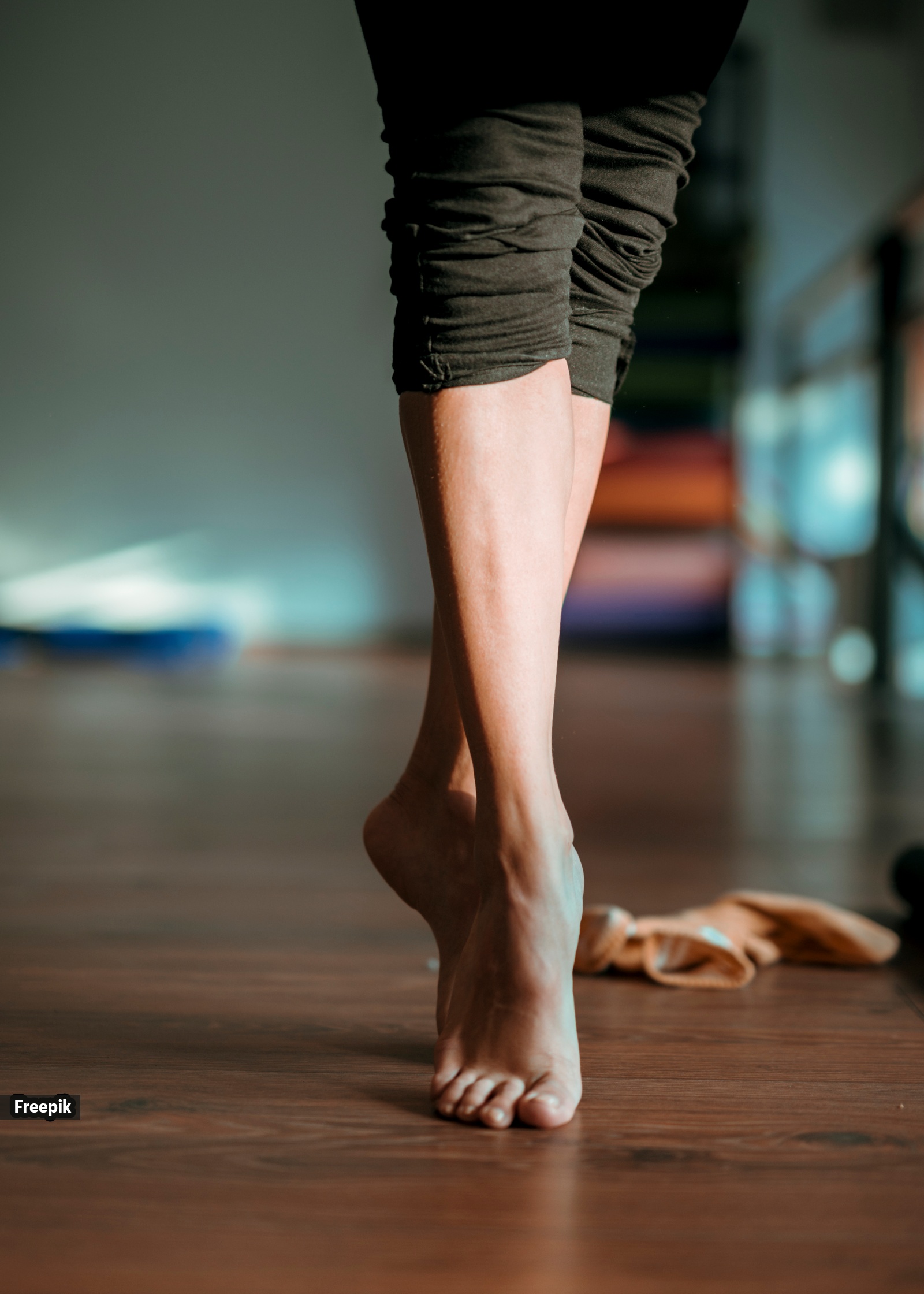 “If someone wants to try it barefoot, they should do so briefly on a safe, flat surface and stop if discomfort develops,” Dr Khatri says.
For most beginners, supportive and comfortable footwear is the safer starting point because it provides cushioning and reduces direct pressure on the ball of the foot.
“Barefoot toe-walking can increase the demand on the feet and Achilles tendon,” says Dr Khatri. If you want to try it barefoot, he recommends doing so briefly on a safe, flat surface and stopping if discomfort develops.
Who should avoid toe-walking?
Not everyone should try toe-walking as exercise. People with existing Achilles tendon problems, significant foot or ankle pain, recent lower-limb injuries or poor balance should avoid it unless advised by a healthcare professional.
“Excessive toe-walking can increase stress on the Achilles tendon, calf muscles and the front of the foot,” Dr Khatri cautions. In some people, altered walking mechanics may also strain the knees.
Story continues below this ad
When should you stop?
A little muscle fatigue can be normal, but you shouldn’t push through pain.
“Sharp or persistent pain in the Achilles tendon, calf, ankle, heel or ball of the foot is a reason to stop,” says Khatri. Swelling, limping, significant tightness or pain that continues after finishing the exercise should also not be ignored.
How can beginners incorporate it safely?
Start on a flat, non-slippery surface and practise for just 20–30 seconds at a time, keeping the movement slow and controlled. Take breaks with normal walking between attempts rather than walking on your toes continuously.
“Start with one or two short sessions and increase gradually only if there is no pain,” Dr Khatri advises. For more controlled strengthening, you can add calf raises and balance exercises to the routine.
Story continues below this ad

Why Shimla monkey menace poses questions beyond human-wildlife conflict
By Sohail Khan · 20 Sep
From the Opinions Editor: AI’s dangers are real. But are we asking the right questions?
By Sohail Khan · 20 Sep
Kareena Kapoor says she and husband Saif ‘tread carefully’ when critiquing each other’s work
By Sohail Khan · 20 Sep
Leave a Reply