What happens when you pull the alarm chain on a moving train? Indian Railways explains
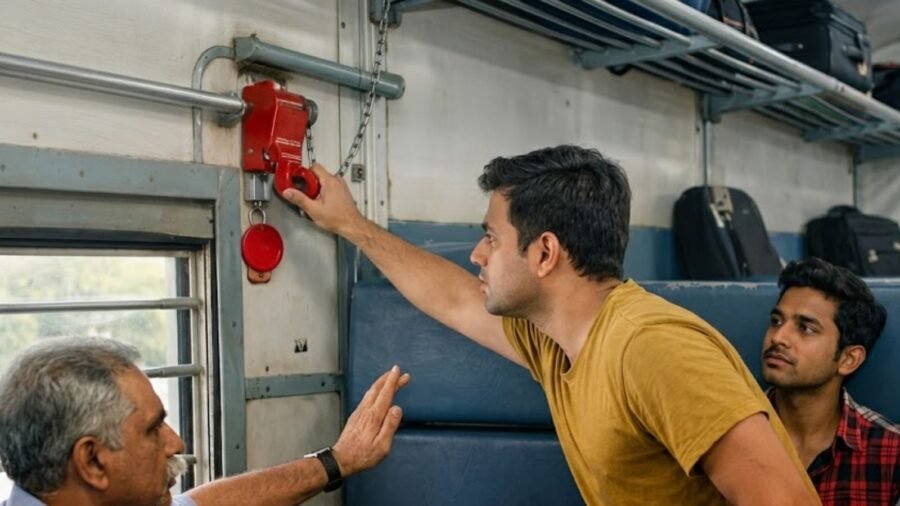
Indian Railways alarm chain rules: The alarm chain in a train is an important safety facility that allows passengers to stop the train in an emergency. However, Indian Railways has repeatedly appealed to passengers to use it only when there is a genuine emergency.
Why It Matters
Alarm Chain Pulling (ACP) is also considered one of the major reasons for train delays. An unscheduled stoppage affects not only the train in which the chain is pulled but can also delay other trains running behind it.
The national transporter has also reported several cases where people accompanying passengers board a train to see them off but fail to get down before the train starts moving. Such incidents can lead to unnecessary alarm chain pulling and inconvenience other passengers.
How does the alarm chain stop a moving train?
Speaking to Indianexpress.com, Dr Shivam Sharma, Chief Public Relations Officer (CPRO), North Central Railway (NCR), said the alarm chains inside railway coaches are connected to the train’s main brake pipe through a vent valve. Normally, the brake pipe maintains air pressure of around 5 kg per sq cm.
Story continues below.
Subscribe to see fewer ads.
He explained that when a passenger pulls the alarm chain, the valve opens and air escapes from the brake pipe. This causes the brake pressure to drop, slowing down the train.
“The change in pressure can be seen by the loco pilot on the pressure gauge. The loco pilot then brings the train to a stop,” he said.
According to Railways, three horn sounds indicate to the guard and security personnel that the alarm chain has been pulled. A train travelling at high speed may take some time to come to a complete stop. This helps avoid the risks associated with bringing a moving train to a sudden halt.
“A strong hissing sound caused by the escaping air can also be heard from the coach where the alarm chain was pulled. This helps railway staff identify the affected coach. Once the reason for the alarm chain pulling is checked and the chain is manually reset, the train can resume its journey,” Sharma added.
Story continues below this ad
When is it actually allowed to pull the alarm chain?
According to Railways, passengers should pull the alarm chain only in a genuine emergency involving the safety of passengers.
The official said such situations may include a serious medical emergency requiring immediate attention, particularly when a station is nearby. The alarm chain can also be used if a passenger falls or slips from the train, in case of a fire, or during a serious criminal or security incident.
“The emergency should be serious enough to require the train to be stopped immediately,” he said.
What happens after the train stops?
When the train stops because of alarm chain pulling, railway staff attend to the situation and find out why the chain was pulled.
Story continues below this ad
If the train is at a station, railway staff deployed on the platform can attend to it. If the incident occurs in a block section between stations, the guard and assistant loco pilot attend to the concerned coach, depending on its location.
The Railway Protection Force (RPF) can also trace the person involved and question them about the reason for pulling the chain.
Can you pull the alarm chain if you miss your station?
No, missing a station or boarding the wrong train does not require you to pull the alarm chain.
“Passengers are expected to reach the station on time and check the train before boarding. If someone misses their station or realises that they are travelling on the wrong train, they should get down at the next station and make alternative travel arrangements.
Story continues below this ad
Stopping an entire train because of a personal mistake can cause delays for hundreds of other passengers and other trains operating on the same route,” the Railway official said.
What is the penalty for unnecessary alarm chain pulling?
Unnecessary interference with the alarm chain is a punishable offence under Section 141 of the Railways Act, 1989. The provision states that a person who uses or interferes with a means of communication provided in a train without reasonable and sufficient cause can face imprisonment of up to one year, a fine of up to Rs 1,000, or both.
“For a passenger convicted of unnecessarily using the alarm chain, the law provides for a minimum fine of Rs 500 for the first offence and imprisonment of three months for a second or subsequent offence, subject to the circumstances specified in the provision,” the CPRO said.
How much does alarm chain pulling affect train operations?
Railways has expressed concern over the misuse of the alarm chain because every unnecessary stoppage can affect train punctuality. According to the Railway records, 6,393 alarm chain pulling (ACP) cases were registered in the Agra, Jhansi and Prayagraj divisions between January and August 2026.
Story continues below this ad
Of these, 6,379 people were arrested, and Railways collected a total fine of Rs 16.63 lakh. The Prayagraj division reported the highest number of cases at 2,517, followed by Agra with 2,493 cases and Jhansi with 1,383 cases.
What should passengers do?
The official advised that passengers should reach the railway station well in advance, check the train and coach details and board the correct train on time.
“If they miss their station or board the wrong train, they should wait until the next station and get down there. They should not pull the alarm chain unless there is a genuine emergency. In case of any assistance required, passengers should call 139 or use Rail Madad app for communicating their grievance,” the official suggested.
The national transporter has also appealed to passengers not to try to board a moving train. The alarm chain is meant to protect passengers during emergencies, not to correct delays or mistakes in their travel plans.
ALARM CHAIN PULLING (ACP) – KEY FACTS
A responsible-use advisory for railway passengers
WHAT IS ALARM CHAIN PULLING (ACP)?
| Purpose | A facility for railway passengers to deal with a genuine emergency situation requiring the train to stop. |
| Caution | Must be used carefully and sparingly – unscheduled stoppage causes punctuality loss for the same train and other trains running behind it, affecting both Railways and passengers. |
WHAT HAPPENS WHEN THE CHAIN IS PULLED?
| Mechanism | The chain is linked to the main brake pipe (maintained at 5 kg/sq cm pressure) via a vent valve. Pulling it opens the valve and releases air, dropping brake pipe pressure and slowing the train. |
| Loco Pilot Alert | The pressure drop shows on the loco pilot's gauge. The pilot halts the train after blowing the horn three times – a signal to the guard and security staff. |
| Identification | A hissing sound of air leakage from the specific coach helps security staff identify the coach – though not the individual who pulled the chain. |
| Restart | After manual resetting of the chain, the train is ready to depart again. |
WHEN IS PULLING THE CHAIN ALLOWED?
| Valid Emergencies | Medical emergency needing immediate help near a station; saving a passenger who has fallen/slipped off the train; fire incident; criminal activity on the train. |
| Test | The emergency must be of a serious nature affecting the personal safety of passenger(s). |
WHEN IS IT NOT JUSTIFIED?
| Missing a station / wrong stop | Does NOT qualify as an emergency. Passengers are expected to reach the platform in time and board the correct train. |
| If wrong train / missed station occurs | Passengers should wait for the next station and deboard there – pulling the chain is not justifiable. |
WHAT HAPPENS AFTER THE CHAIN IS PULLED?
| At a station | Railway staff deployed on the platform attend to the train. |
| In block section | The Guard and Assistant Loco Pilot attend the coach, depending on its location. |
| Enquiry | RPF staff trace the person involved and enquire further. |
PENALTY FOR MISUSE
| Legal Provision | Section 141 of the Railways Act, 1989 – Needlessly interfering with means of communication in a train. |
| General Punishment | Imprisonment up to 1 year, or fine up to Rs. 1,000, or both. |
| First Offence (Alarm Chain) | Minimum fine of Rs. 500, unless special and adequate reasons are recorded by the court. |
| Second/Subsequent Offence | Minimum imprisonment of 3 months. |
RISKS OF MISUSE
| Time Loss | Unscheduled stoppage causes loss of valuable time for passengers, affecting their onward plans. |
| Security Risk | Stopping at unscheduled locations may pose security risks to passengers and the train. |
RAILWAY ADVISORY
| CPRO–Railways Appeal | Do not resort to ACP without a valid reason – it is a punishable offence. |
| Passenger Advice | Be on time and board timely. Do not try to board a moving train. |



‘Politically motivated lies’: MK Stalin responds to CM Vijay’s jaw gesture in assembly
By Sohail Khan · 10 Sep
Leave a Reply