What happens when technology looks inside the brain? The future of personalised mental healthcare explained
What happens when technology looks inside the brain? The future of personalised mental healthcare explainedPublished on: Sep 17, 2026, 19:00:40 IST
Prefer HTon Google
Share via
Copy link
Your brain may offer clues to better mental healthcare. Here’s how technology could use them for better results.
Technology, and now artificial intelligence, has become deeply embedded in our everyday lives, influencing everything from how we work and communicate to how we access information and make decisions. As conversations around mental health increasingly take centre stage, technology is also making its way into the way we understand and approach mental healthcare. From analysing brain data to identifying patterns that may not be immediately visible, emerging technologies could pave the way for more personalised approaches to mental health. In an interview with Lifestyle, Ramya Yellapragada, CEO and co-founder of Marbles Health, revealed how technology can make mental healthcare more personalised.
Also read | Mental health expert explains why good people don't always make happy married couples
Why can the same mental health challenge feel different for different people?
According to Ramya Yellapragada, a brain's biology is shaped by three interlinked processes: electrical, chemical, and behavioural. They aren't separate compartments; they're one system. Shift any one – with medication, with therapy, with a behaviour change – and the biology itself shifts. That interconnection is also why the same condition looks different in different people.
Today, finding what works is largely trial and error. A clinician makes their best judgment, and it can take months of switching medications to land on the right treatment or combination. It's slow, and it's hard on the person living through it. “A personalised approach changes that. If we can read what's actually happening in an individual's brain, we move from guesswork to something data-driven: matching the person to the treatment, not the diagnosis to the average,” said Ramya Yellapragada.
Can technology help people better understand what is happening in their brain?
Ramya Yellapragada highlighted that this is the real shift. For most of history, these states were invisible. You could feel overwhelmed or foggy, but you couldn't see what your brain and body were actually doing, so you were left guessing.
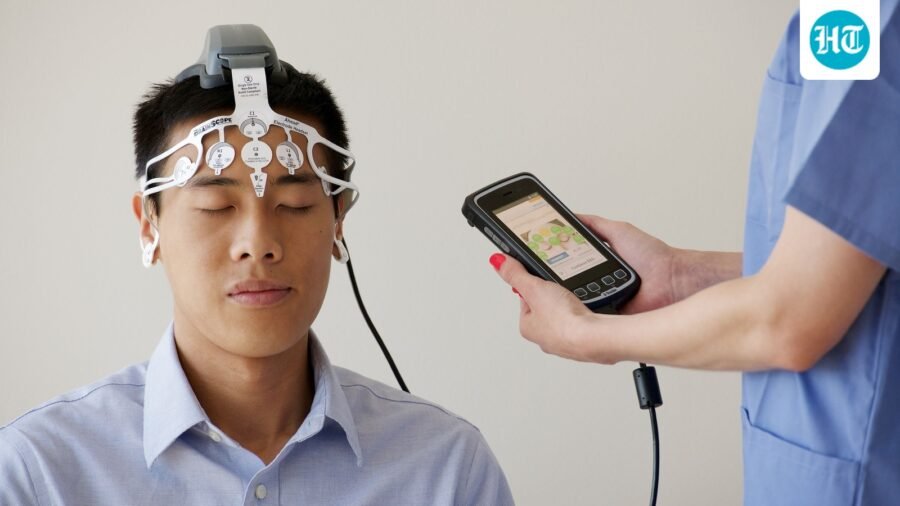
EEG reads the brain's electrical activity in real time – the alarm side of the system. Heart-rate variability, or HRV, reads the body side: it's the tiny variation in time between heartbeats, and it reflects the balance between the nervous system's accelerator and its brake. When you're steady and recovering well, that variability is healthy; when you're under sustained stress or fatigue, it flattens. Together, EEG and HRV turn a vague feeling into two measurable signals – you can see the alarm firing, and whether the brake is actually engaging.

And seeing it isn't just information. When the brain and body get real-time feedback on their own activity, they can learn to regulate – this is the basis of neurofeedback and HRV training. The science is still maturing, and no single reading is a diagnosis, but the direction is clear: we're moving from "I feel off" to “here's what's happening, and here's what shifts it.”
How could personalised mental healthcare change the way people approach their own mental well-being?
“Right now mental healthcare is reactive. We wait until someone is struggling badly enough to seek help – by which point the patterns are deeply wired and harder to shift,” said Ramya Yellapragada. Personalised care flips that. The brain and nervous system change measurably before a person feels overwhelmed: arousal creeps up, sleep quality erodes, the capacity to regulate weakens.
We already accept this logic for the body – we track blood pressure or blood sugar to act early, not after a crisis. Mental well-being can work the same way. When someone knows their own baseline, how their brain looks when they're steady, they can catch the drift early and do the specific thing that resets them, long before it becomes a diagnosis. That changes the whole relationship people have with their minds: from something you fix when it breaks to something you maintain, and from waiting on a label to reading your own trend.
Note to readers: This article is for informational purposes only and not a substitute for professional medical advice. Always seek the advice of your doctor with any questions about a medical condition.
Catch every big hit, every wicket with Crick-it, a one stop destination for Live Scores, Match Stats, Quizzes, Polls & much more. Explore now!.
Catch your daily dose of Fashion, Taylor Swift, Health, Festivals, Travel, Relationship, Recipe and all the other Latest Lifestyle News on Website and APPs.
See Less




Leave a Reply