What does the new Bhopal masterplan look like?
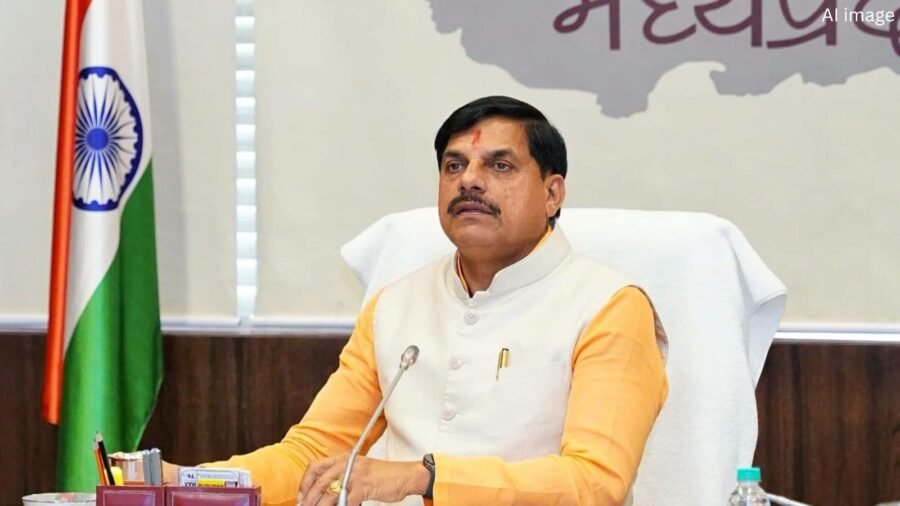
Days after the Supreme Court allowed the Madhya Pradesh government to publish a new masterplan for its capital city, Bhopal, the government on Saturday released the draft of the Bhopal Development Plan-2047. It proposes a new framework for the capital’s expansion with greater emphasis on green areas, mixed land use, redevelopment and metropolitan-scale planning.
This is the first master plan for the city in over two decades, with the last approved plan notified in 1995 for a planning horizon ending in 2005.
The most significant expansion proposal is a 51-km Growth Corridor, with approximately 3,000 hectares earmarked for development. Planned as an economic and urban spine, it will link the proposed Education Knowledge Artificial Intelligence (EKAI) City, airport, proposed CMU, logistics and wholesale areas and suburban developments.
Story continues below.
Subscribe to see fewer ads.
Rather than restricting the corridor to a single activity, the plan envisages a mix of hotels, healthcare, IT and AI infrastructure, logistics, wholesale trade, malls, corporate offices, educational institutions and housing. The corridor is also intended to connect with regional routes towards Vidisha, Raisen, Narmadapuram and Indore, with areas around it as transit-oriented zones.
Despite the scale of proposed expansion, the plan significantly increases the city’s planned green footprint — from approximately 16% in the 2005 plan to 27% under the 2047 plan.
The draft places particular emphasis on protecting Bhojtal and its catchment, forests, hills, ponds, water bodies and tiger movement corridors. Open space at the colony level is proposed to increase from 10% to 12%.
A Green Transfer of Development Rights (TDR) mechanism has been proposed to compensate landowners whose land falls in designated green areas while allowing development rights to be transferred elsewhere.
Story continues below this ad
The plan also proposes developing the existing education hub at Bhauri into an EKAI City, centred on education, research, innovation and an AI-based knowledge economy, and links urban expansion with employment generation, identifying economic activity and investment as key drivers of Bhopal’s growth.
India’s first LNG-diesel dual-fuel DEMU train to start inaugural run today: Check route
By Sohail Khan · 27 Sep

Leave a Reply