Western Ghats protection: Section of residents, environmentalists counter Karnataka politicians’ claims
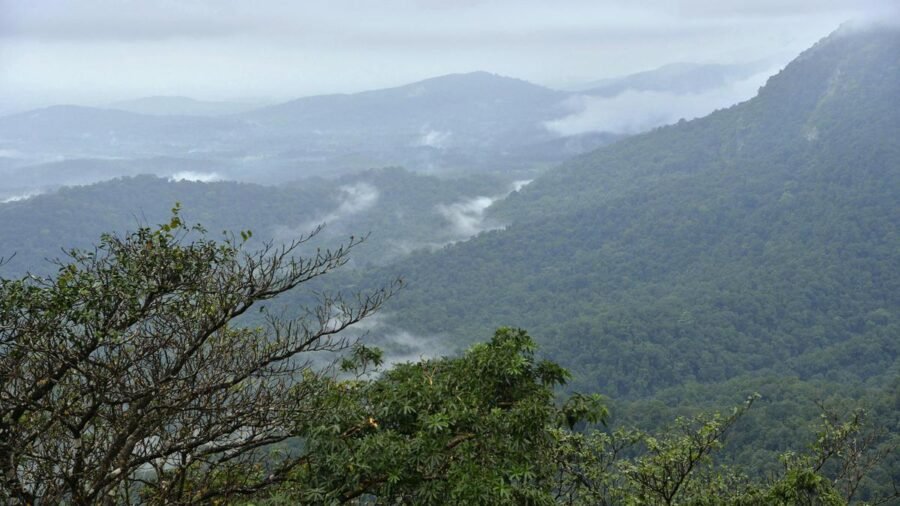
The debate over conservation of the Western Ghats, particularly in Karnataka, is far from over.
While the Karnataka Legislature adopted a unanimous resolution on September 22, urging the Centre to confine the Ecologically Sensitive Area (ESA) identified in the Kasturirangan report to only notified forest areas, sections of residents in Western Ghats districts and environmentalists have termed the claims of ministers and politicians “misleading”.
They have begun creating awareness about the provisions of the report among residents and are urging people to read it to understand why its implementation is necessary for the Western Ghats.
Akhilesh Chipli, an environmentalist based in Sagara taluk, said copies of the draft ESA notification had been printed in Kannada for the benefit of the public. “This issue has been politicised for votes, irrespective of party affiliations. They are trying to protect illegal properties,” he alleged.
Batting for the ESA, he said that over 80% of the area identified in the report is already protected in some form, but legal protection is required for the remaining areas. “In Sagara, for example, a 2,000-acre nuclear power project was proposed a few months ago in Besuru village of Avinahalli hobli. There is no reserve or protected forest here, but it includes the Sharavathi backwaters. By default, it falls under the ESA, which means red-category projects will not be allowed there. There are nearly 4,000 sq. km. of such areas in the Western Ghats of Karnataka that do not enjoy legal protection. Don’t they need protection too?” he asked.
Col. (Retd.) C.P. Muthanna, coordinator of Save Kodagu and Cauvery Campaign, said politicians had lost sight of the reason the report was prepared. “It began with the Gadgil report and was later diluted into the Kasturirangan report. The need is simple. The entire Western Ghats, from Gujarat to Kerala, is a catchment for peninsular India. It is essential for water security. The reality is that there is a lot of money to be made in destruction and construction. These hills have potential for mining, which the ESA seeks to curb. There should be no commercial activities in the catchment area. There is no point in protecting only a part of Kodagu because the entire district is a catchment for the Cauvery. The same applies to other districts as well,” he said. He also termed claims that the report would prevent people from building houses or drying agricultural produce in their yards as “misleading”.
H.A. Kishor, an environmental activist from Hassan, said the Kasturirangan report may not be foolproof but is “desperately needed” to protect what remains of the Western Ghats. “It is the water tank of South India. In Malnad, human-animal conflict has also increased because of habitat and corridor destruction in the name of development, including hydel and river diversion projects. People argue that several legal frameworks already exist, but their implementation has failed. The implementation of the Kasturirangan report will help curb activities such as mining,” he said.
He alleged that the mining and timber mafia were using farmers as a front to oppose such protections. At the same time, he said, the concerns of genuine farmers stem from the fact that many who have cultivated revenue land within the proposed ESA do not possess the required documents, such as hakku patras. “Some also fear that land values in Malnad will decline because of these protections,” he added.

APPSC announces provisional selection list for Botany lecturers
By Sohail Khan · 25 Sep

Mamata Banerjee, CPI(M) bridge decades-old divide over Election Commission concerns
By Sohail Khan · 25 Sep
Leave a Reply