Unchecked infra boom a threat to Powai ecology, say residents
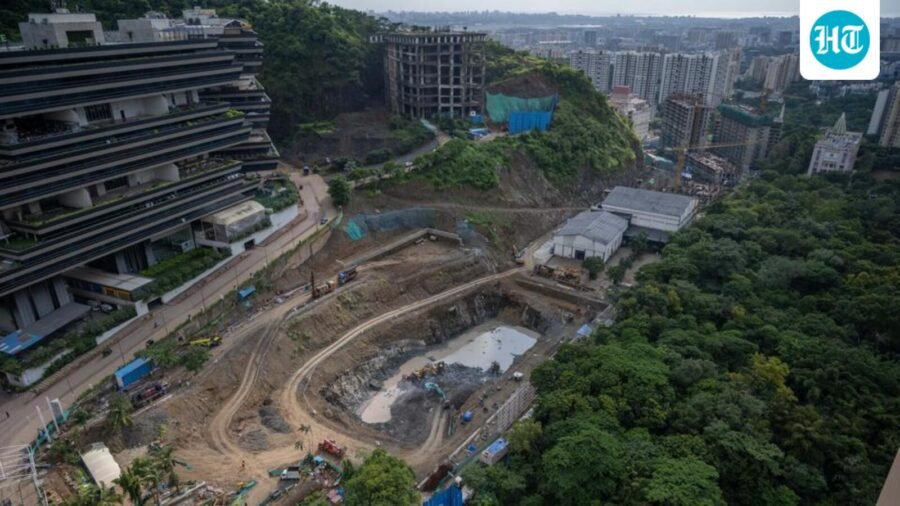
The proposed data centre has stoked concerns about water scarcity, a global conversation starter. “The cumulative impact of such projects needs to be assessed, which has not been done at all,” said a resident who did not wish to be named
Published on: Sep 25, 2026, 08:03:10 IST
Prefer HTon Google
Share via
Copy link
MUMBAI: Time was when Mumbaikars chose to live in verdant Powai – a central suburb of Mumbai – for its planned wide pavements, tree-lined avenues and open spaces. Developed in the early 1990s, it was envisioned as a self-contained township where children could safely walk to school and residents could enjoy the breeze wafting across the hills surrounding the neighbourhood. Today, as that character of the suburb is on the cusp of change, with a proposed 13.40-meter Development Plan Road, a 30,000-seat Global Capacity Centre (GCC), redevelopment and expansion of commercial properties, and a proposed data centre, Powaikars have formed many groups as a collective to push back against the development.
Sunita Gohrani, a nutritionist and naturopath, and an old-time resident of Powai, is spearheading a campaign against the proposed DP Road which will cut through the Pramod Mahajan Urban Forest. More than 120 trees from the roughly 7.65-acre man-made forest will be felled for the purpose, earlier reported by . 3000-odd residents have backed the campaign.
“We had signed up for a Powai that was guarded by hills, clean lakes and forests. All that is being taken away in the garb of development,” said Gohrani.
Gohrani and other residents fear the character of Hiranandani Gardens – the signature enclave of the suburb – with more than 70 buildings, over 50 acres of open green spaces, around one lakh trees planted over the years and 22 recorded rare tree species may be compromised, while also putting additional pressure on roads, parking, water and other infrastructure.
Jayman Khona, who is a part of the campaign said “the proposed GCC has emerged as a particular flashpoint”. Residents have described the project as a “public and ecological disaster in the making” and questioned “the logic of embarking on redevelopment on such a large scale in an already densely populated neighbourhood”.
“Can Powai take this additional pressure? The new development plans are an imposition on us, which have been launched in an undemocratic way,” said Milan Bhatt, secretary of the Powai ALM, pointing to impending collapse of traffic infrastructure as a result of the redevelopment projects, which would bring a large number people into this township. The ALM, along with key members of 15 housing societies, wrote a letter to chief minister Devendra Fadnavis in June, expressing their opposition to the GCC, requesting an in-person meeting with the chief minister. A follow-up letter to the chief minister’s office (CMO) was sent last month – both did not elicit any response.
The proposed data centre has stoked concerns about water scarcity, a global conversation starter. “The cumulative impact of such projects needs to be assessed, which has not been done at all,” said a resident who did not wish to be named.
Residents who have lived in Powai are already witnessing the change.
She pointed to Powai’s already challenging traffic situation, which she feels is being driven by commerce. “More offices and commercial developments translate to more people entering and leaving the township without a corresponding increase in road capacity,” she said.
“This place was once covered with lush green trees; it did not feel like Mumbai at all,” she said.
Environmentalist and long-time Powai resident Debi Goenka also remembers the township for its microclimate. When he came to live here in 1996, he said, residents did not require air-conditioning or even fans. “Today, noise from the construction site next to me continues throughout the day. I have to keep the windows shut and the fans and AC on constantly,” said Goenka, pointing to the redevelopment of the CitiPark — a five-storey commercial structure which will be replaced by an 18-storey building — abutting his building.
Pamela Cheema, chairperson of the Powai ALM, moved to Powai in the early 2000s partly to escape Mumbai’s traffic. “But the ecosystem of that time is gone now,” she said.
Residents also pointed to the infringement on the township’s pedestrian infrastructure, parts of it now taken up for commercial redevelopment. Parking is another concern. “New developments are being planned without adequately accounting for the additional two-wheelers that will drive through these streets. While some newer commercial buildings have parking spaces, the same for two-wheelers remains unclear,” said Ratan Sharda, from Powai Action Forum, questioning whether the scale and pace of new development are compatible with the neighbourhood’s existing capacity and character.
While they are not opposed to development, Powaikars’ collective belief is that it should “not come at the cost of the greenery, open spaces, pedestrian character and liveability that drove people here”.
When sent a text message to Fadnavis regarding the opposition of Powaikars against the rampant development, he texted back saying: “My office is in touch with Mr Ratan Sharda. We will address their concerns.”
Catch every big hit, every wicket with Crickit, a one stop destination for Live Scores, Match Stats, Infographics & much more. Explore now!
Stay updated with all the Breaking News and Latest News from Mumbai. Click here for comprehensive coverage of top Cities including Bengaluru, Delhi, Hyderabad, and more across India along with Stay informed on the latest happenings in World News.
See Less




Leave a Reply